Ecuador with kids: attractions, itineraries and family travel tips

Ecuador with kids suits families who want wildlife, science and short regional contrasts without crossing a huge country. Seven days is enough for Quito, Mindo and one Andean extension. Ten days can support a separate Galapagos block, but not Quito, Mindo, Cotopaxi, Banos and several islands at a calm family pace.
The main difficulty is elevation. Quito is about 2,850 metres above sea level, so a child can feel tired, nauseated or unusually irritable before the sightseeing has properly begun. Keep the first day light. Families with toddlers will generally find Quito and Mindo easier than a route built around high trails, boats and frequent hotel changes.
Ecuador family trip at a glance
| Decision | Practical answer |
|---|---|
| Best first-trip length | Seven days for Quito, Mindo and either Cotopaxi or Banos |
| Best ages for a full mainland route | About 6 to 15; younger children need fewer transfers and a carrier |
| Rental car needed? | No in Quito. A prebooked driver is useful for Mindo, Cotopaxi and Banos |
| Main planning risk | Treating Quito as a normal first day, then stacking altitude and long road transfers |
| Galapagos decision | Add it as a distinct trip block, not as a casual day excursion |
| Booking priority | Galapagos flights and island logistics first, then timed attractions and mainland transfers |
What families are asking about Ecuador
Recent public family discussions repeatedly ask:
- How slowly should a baby or toddler take the first days in Quito?
- Is Mindo a better first stop than a higher Andean excursion?
- Can children enjoy Cotopaxi without completing a long or steep hike?
- Is a stroller useful in Quito, Banos or Galapagos?
- Should a family hire a driver or use intercity buses?
- Can a taxi or transfer guarantee the right child restraint?
- Is Galapagos practical with a toddler who cannot snorkel?
- How many islands can a family visit without too many speedboat transfers?
- Which activities still work during rain or an altitude recovery day?
- Is five, seven or ten days enough for the route under consideration?
The leading results offer useful inspiration, but many mix a mainland circuit, Amazon stay and Galapagos visit into one fast schedule. This guide makes the cuts explicit. It also brings mobility, toilets, shade, booking and transport into the attraction decision rather than leaving them for arrival day.
Ecuador family attractions compared
| Image | Destination or attraction | Best age range | Setting | Allow | Book ahead? | Best base |
|---|---|---|---|---|---|---|
 | Museo Interactivo de Ciencia | 3 to 13 | Mostly indoor | 2 to 3 hours | Recommended for programmes | Quito |
 | Yaku Parque Museo del Agua | 4 to 13 | Indoor and outdoor | 2 to 3 hours | Recommended | Quito |
 | Jardin Botanico de Quito | 4 to 15 | Mostly outdoor | 1.5 to 3 hours | Useful on busy dates | Quito |
 | Ciudad Mitad del Mundo | 5 to 15 | Indoor and outdoor | 2 to 4 hours | Recommended | Quito |
 | TeleferiQo | 7 to 15 | Outdoor, high elevation | 2 to 4 hours | Recommended | Quito |
 | Mariposario de Mindo | 3 to 14 | Covered and outdoor | 1 to 2 hours | Useful for groups | Mindo |
 | Pailon del Diablo | 7 to 15 | Outdoor, steep and wet | 2 to 3 hours | Confirm access before travel | Banos |
 | Cotopaxi National Park | 8 to 15 | Outdoor, high elevation | Half day | Register and check conditions | Quito or Cotopaxi |
 | Charles Darwin Research Station | 5 to 15 | Indoor and outdoor | 2 to 3 hours | Usually no | Puerto Ayora |
 | Tortuga Bay | 6 to 15 | Outdoor, beach walk | 3 to 5 hours | Check park access | Puerto Ayora |
The age bands are planning judgments, not venue rules. Walking confidence, altitude response, swimming ability and comfort on boats matter more than a birthday.
Quito: start with science and an easy pace
Museo Interactivo de Ciencia
Children experiment with perception, ecosystems and hands-on science rather than walking through display cases. The Guaguas area was designed for ages three to eight, while older children can use the wider interactive galleries. Allow two to three hours and make this the main activity, not a stop squeezed between the airport and an evening tour.
The museum occupies a former industrial site, so families should confirm the current step-free route if a wheelchair is essential. A compact stroller works better here than on Quito's older pavements. Toilets are available, but parents should ask at reception about changing facilities and the closest food option before beginning. Indoor galleries make this a useful rain or strong-sun choice.
Ordinary admission is less constrained than a Galapagos excursion, while workshops and holiday programmes can have separate registration. Chimbacalle Metro station is the nearest useful public transport reference. Keep enough energy for the final connection back to the accommodation.
Official Quito museum information. Official details checked August 22, 2026.
Yaku Parque Museo del Agua
Children work through exhibits about water, nature and the city, with outdoor viewpoints adding movement between galleries. It best suits ages four to thirteen and takes about two to three hours. The mix of indoor and outdoor spaces helps when one child wants experiments and another needs a break.
The hillside setting is the practical issue. Paths and ramps are more manageable than a mountain trail, but a stroller or wheelchair route still deserves a direct accessibility check because of the final approach and changing levels. Toilets and seating are available. Do not assume a changing table or a full meal at every point, and carry a snack, rain layer and sun protection.
Reserve ahead when the museum publishes a special programme or when a school-holiday visit matters to the itinerary. There is no Metro station at the entrance. San Francisco is the useful central reference, followed by a taxi or planned uphill connection. Confirm the return pickup before the family is tired.
Official Quito cultural-site information. Official details checked August 22, 2026.
Jardin Botanico de Quito
Children compare Andean plants, orchids and changing garden habitats inside Parque La Carolina. It works from about age four, especially after a museum morning or long flight. Allow one and a half to three hours and let the garden be the day's flexible stop.
Main routes are among the easier stroller options in this guide, although individual greenhouse thresholds and narrower paths may differ. Toilets, benches and shade are available within the wider park setting. Bring water and sun protection because Quito's cool air can disguise strong ultraviolet exposure. Covered areas help during a short shower, but the garden is not a fully indoor plan.
Buying a ticket ahead can reduce uncertainty on busy weekends, while an ordinary weekday visit may be simpler. Iñaquito is the nearest Metro reference. The surrounding park is useful for a snack and unstructured play before returning to scheduled sightseeing.
Official Jardin Botanico de Quito information. Official details checked August 22, 2026.
Ciudad Mitad del Mundo
Children move between the equator monument, small exhibits and planetarium-style learning spaces. It is most useful from about age five, when the geography means more than a photograph. Allow two to four hours and choose a few exhibits rather than trying to enter every building.
The main complex is more stroller-friendly than Quito's steep historic streets, but confirm any lift or ramp needed inside individual buildings. Toilets, food, shade and places to sit are available around the site. Changing facilities should still be confirmed on arrival. Sun and sudden rain both matter in the open central spaces.
A dated ticket is useful on weekends and holidays. The site lies north of central Quito, beyond the Metro. A direct taxi, driver or organized half-day trip is easier with children than several bus changes. Ask for the child restraint before confirming the vehicle.
Official Ciudad Mitad del Mundo information. Official details checked August 22, 2026.
TeleferiQo
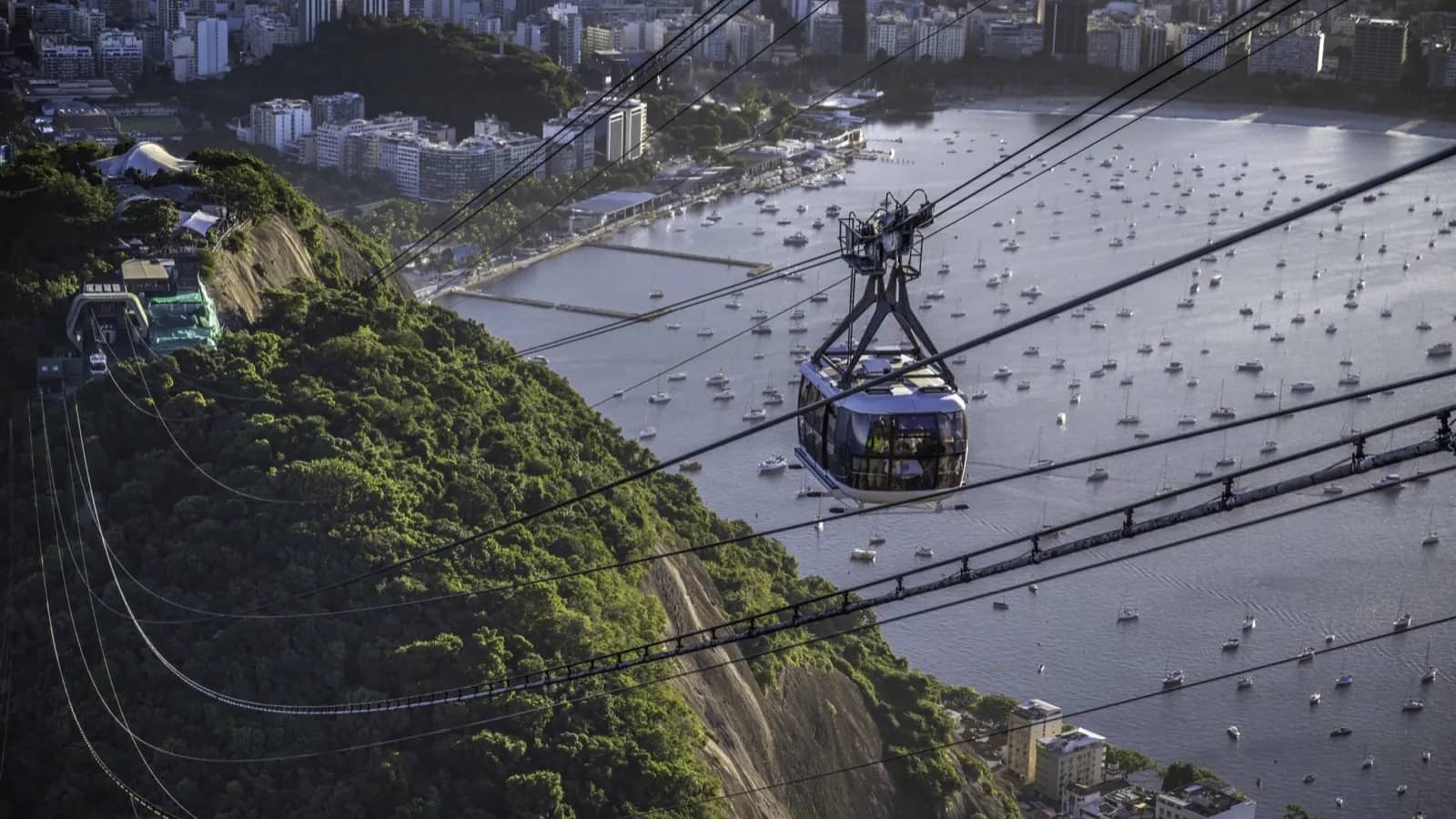
Children ride a gondola above Quito and see how rapidly the city gives way to high grassland. This is best for confident children from about seven who have already spent time adjusting in Quito. Allow two to four hours, but turn it into a shorter view stop if anyone develops a headache, nausea, unusual fatigue or irritability.
The gondola provides step-free movement between stations, but the upper paths are uneven, exposed and much higher than the city. A stroller is not a reason to continue onto trails. Toilets, food and seating are concentrated near station facilities. Bring warm layers, sun protection and water even when the city feels mild.
Book ahead on popular dates and check weather and operating status before leaving the hotel. There is no Metro station at the lower terminal. A taxi or app ride is the practical family connection, with a return pickup plan saved offline.
Official TeleferiQo visitor information. Official details checked August 22, 2026.
Mindo: choose one cloud-forest base
Mariposario de Mindo
Children watch butterflies at different life stages and move slowly through a contained cloud-forest attraction. It suits ages three to fourteen and takes about one to two hours. This is a manageable first Mindo activity after the road from Quito, especially if a longer waterfall walk would be too much.
The main visitor areas are easier than forest trails, but surfaces can still be damp and a compact stroller should be confirmed with the venue. Toilets, simple food and seating are available nearby. Humidity, rain and insects are part of the visit, so use closed shoes and carry a light layer without loading a child with a heavy pack.
Large families and groups should contact the venue to reserve ahead. Mindo town is the nearest transport reference, followed by a short taxi connection. Do not combine the butterfly visit, several cable rides, a long waterfall route and a chocolate tour in the same child-paced day.
Official Mariposario de Mindo information. Official details checked August 22, 2026.
Banos: waterfalls require a mobility check
Pailon del Diablo
Children follow a wet, noisy route toward a powerful waterfall and cross viewpoints that make the landscape feel close. It is best for sure-footed children from about seven. Allow two to three hours, including pauses, and stop before the most difficult section if a child is uncomfortable with height, spray or enclosed steps.
A stroller is not a useful plan. The route includes stairs, damp surfaces and sections where adults need both hands free. Toilets, food and seating are easier near the entrance and in Rio Verde than deep on the trail. Carry a rain layer and dry bag, and expect shoes to get wet.
Access routes and operating conditions can change after heavy rain, so confirm entry before driving from Banos. Rio Verde is the nearest useful transport point. A taxi or driver gives a family more control than a cycling itinerary, especially when children need dry clothes, snacks or an early return.
Official Ecuador tourism information for Banos. Official details checked August 22, 2026.
Cotopaxi: make the lagoon the goal
Cotopaxi National Park
Children can look for birds and open-country wildlife around Limpiopungo Lagoon without treating the refuge or summit route as the family objective. It best suits ages eight to fifteen who have already adjusted in Quito. Allow a half day from a nearby base, or a long day from Quito with no demanding evening plan.
The lagoon route is easier than the volcano's higher trails but remains uneven, exposed and at substantial elevation. A stroller is unreliable. Basic toilets may be available near controlled visitor areas, while food, changing facilities, dependable shade and warm seating should be arranged before entry. Wind, cold, ultraviolet exposure and volcanic restrictions can alter the plan.
Use Ecuador's protected-area system to register where required and check live access conditions. A high-clearance vehicle or licensed operator can be necessary for approved roads. The park control entrance is the transport reference, not a casual roadside bus stop.
Official Ecuador protected-area visitor system. Official details checked August 22, 2026.
Galapagos: keep Santa Cruz simple
Charles Darwin Research Station
Children learn how scientists study and protect Galapagos species through an exhibition hall, interpretation spaces and native gardens. It suits ages five to fifteen and takes two to three hours at a calm pace. It works well on an arrival or departure day because the family can shorten the visit without losing a boat booking.
Public areas mix level indoor spaces with outdoor paths. A stroller is more workable here than on lava trails, although the exact accessible route should be checked at the entrance. Toilets, shade, seating and a refreshment point are available on the campus. Sun protection still matters between buildings.
The foundation currently lists free admission and daily public access, so an ordinary visit generally does not need a tour booking. Walk or take a short taxi from central Puerto Ayora. The station is not the same as a guaranteed close encounter with every tortoise, so set expectations around research and conservation.
Official Charles Darwin Research Station information. Official details checked August 22, 2026.
Tortuga Bay
Children walk to a long white-sand bay, look for marine iguanas and use the calmer section only when current conditions allow. It best suits ages six to fifteen who can manage the approach in heat. Allow three to five hours, including the walk, registration, beach time and return.
The land route is too long and exposed to treat a stroller as a dependable solution. Carrying a younger child back can be harder than the outward walk suggests. Toilets, food and drinking water are limited once beyond Puerto Ayora, so prepare before entering. There is little shade on parts of the beach, and swimming conditions differ between exposed Playa Brava and calmer Playa Mansa.
Check Galapagos National Park access information and local sea conditions on the day. The Tortuga Bay trail entrance in Puerto Ayora is the nearest useful transport point. A licensed water taxi can be an alternative only when authorized and suitable for the child.
Official Galapagos National Park Tortuga Bay information. Official details checked August 22, 2026.
Realistic Ecuador family itineraries
Five days in Ecuador: Quito and Mindo
Use the arrival day for food, rest and a short local walk. Spend day two at the science museum or botanical garden, not TeleferiQo. On day three, choose Mitad del Mundo or Yaku. Travel to Mindo on day four, visit the butterfly centre and sleep there. Return on day five with a generous airport or hotel buffer.
If the flight schedule leaves only three full days, stay in Quito and make Mindo a substitute, not an addition. A child who is sleeping poorly at altitude may benefit from dropping to Mindo, but the road still takes time.
Seven days in Ecuador: add one Andean branch
Follow the Quito start for three nights, then choose one branch:
- Spend two nights in Mindo and two in Banos for cloud forest and waterfalls.
- Spend one night near Cotopaxi and two in Banos for older children who handle elevation well.
- Stay based in Quito and use shorter day trips if a toddler needs one familiar bed.
Do not make Cotopaxi, Quilotoa and Banos one continuous sightseeing day. The road, elevation and toilet stops turn a neat map into a tiring family schedule.
Ten days in Ecuador: mainland or Galapagos
For a mainland trip, use three nights in Quito, two in Mindo, two in Banos and two around Cotopaxi or a lower Andean base, with the final night positioned for the flight.
For Galapagos, use two recovery nights in Quito, fly to Santa Cruz, stay four or five nights around Puerto Ayora, then return to mainland Ecuador with a buffer before the international flight. The Research Station, Tortuga Bay and one age-suitable guided excursion are enough for a first island block.
Avoid adding San Cristobal or Isabela merely to increase the island count. Inter-island speedboats, luggage checks and early departures are meaningful costs for a child who gets seasick or needs a slow morning.
Getting around Ecuador as a family
Rent, ride or hire a driver?
No car is needed in Quito. The Metro serves fifteen stations and the official Quito Nos Mueve app supports municipal transport planning and payment tools. It does not reach Mitad del Mundo, Mindo, Cotopaxi or Banos.
For those routes, a prebooked driver gives families control over child restraints, toilet stops and luggage. Intercity buses cost less but usually offer less space for strollers and less control over stops. A rental car can work for an experienced mountain-road driver, but it adds navigation, parking and restraint installation to the trip.
Ecuador child car-seat rules
Article 298 of Ecuador's road-transport regulation says children under twelve must sit in the rear, use the seat belt correctly for their weight and age or use a safety seat under the national transport authority's regulation. It also requires the rear child lock and says children must not be left alone in the vehicle.
The wording does not guarantee that a taxi or tour vehicle will arrive with the right seat. Send the child's age, height and weight in writing, request a photo or model, and bring a suitable travel restraint when a correct fit cannot be confirmed.
Approximate journey decisions
Allow about an hour between Quito airport and central accommodation in ordinary traffic, with more time at peaks. Central Quito to Mindo usually occupies much of a morning. Quito to Banos is a half-day road move once family stops are included. Quito to Cotopaxi is shorter on a map but the park road, registration and elevation make it a full excursion.
Galapagos flights leave mainland Ecuador. Reaching Puerto Ayora from Baltra also involves airport transport, a channel crossing and a road transfer. The National Park's arrival page sets out that sequence, while the Galapagos government requires a Transit Control Card. Since January 31, 2026, the biosecurity goods declaration for adult arrivals is digital. Complete current forms before the airport and keep the codes available offline.
Plan the stroller and luggage load
A compact stroller works in parts of Quito, especially the botanical garden and modern transport, but kerbs, hills and historic paving interrupt the route. Use a carrier for Pailon del Diablo, Cotopaxi paths and most Galapagos nature trails.
Ask every airline and inter-island operator for its current stroller and luggage rules. A mainland airline allowance is not proof that a small island transfer will accept the same load.
Family logistics
Seasons and crowds
Ecuador does not have one national weather answer. Quito and the Andes can move between bright sun, cloud and rain in one day. Mindo is humid and wet by design. Galapagos has a warmer season from December to May and a cooler season from June to November, with sea conditions and wildlife patterns changing across the year.
School holidays, weekends and public holidays raise demand at family attractions. Galapagos flights and guided trips need more lead time than Quito museums. Recheck volcanic, weather and park notices immediately before a Cotopaxi or island day.
Meals and everyday supplies
Lunch is commonly the larger daytime meal, and child-friendly staples such as rice, soup, chicken, eggs, fruit and plantain are widely available. Carry a known snack for road transfers and attraction queues. Supermarkets and pharmacies are easiest to use in Quito and Puerto Ayora, while a specific medicine or infant product may not be stocked in a small town.
Altitude, drinking water and Ecuador 911
The national emergency number is 911, free from fixed or mobile phones. Save the accommodation address in Spanish and teach older children to say the number as nine-one-one.
The current United States travel information says tap water is not safe to drink. Use sealed or properly treated water for drinking and brushing teeth unless the accommodation provides a verified treatment source.
CDC guidance says children are as susceptible to altitude illness as adults. A young child may show fussiness, appetite loss or sleep changes rather than describe a headache. Do not ascend with worsening symptoms, and seek medical advice for severe or persistent signs. Families adding the Amazon or lower eastern provinces should review current vaccine and mosquito guidance with a clinician because the risk profile differs from Quito and Galapagos.
Where accessibility changes the route
Do not describe Ecuador as either accessible or inaccessible as a whole. Quito's Metro and several museums provide useful modern infrastructure, while historic pavements, hillside sites, wet waterfall stairs, high-altitude paths and lava terrain create route-specific barriers. Contact each venue for the exact step-free route and accessible toilet needed by the traveler.
Useful apps
- Quito Nos Mueve: official planning and account tool for the Metro, Trolebus and Ecovia.
- ECU 911: official emergency reporting option in addition to calling 911.
- Google Maps: save Quito, Mindo, Banos and Puerto Ayora areas for offline use before travel.
- Google Translate: download Spanish for offline signs, menus and short medical descriptions.
- Windy or the phone's weather app: compare the local forecast before an exposed highland or boat day.
- Airline and Galapagos operator apps: keep boarding changes and booking references together, but save screenshots in case data drops.
An app listing does not prove that a taxi service operates in every Ecuadorian city or that mobile data will work on every park trail. Confirm the provider's current local coverage and keep the accommodation's official transport contact.
Connectivity for Ecuador route days
Maps, Quito transport tools, flight changes, digital Galapagos forms, attraction messages and family group chats can all be needed between two Wi-Fi connections. A Roaming eSIM can be installed on a compatible unlocked phone before departure while the usual SIM stays in the device. The selected package card remains the source of truth for activation, hotspot support, networks and top-up eligibility.
The live catalog check on August 22, 2026 returned an exact Ecuador option plus South America and global choices. That lets a family match the plan to a country-only trip or a wider route before checkout. Roaming eSIM also publishes one-tap, QR and manual installation paths, 24/7 support and WhatsApp contact. Its evidence-backed edge over a generic travel story is that the same account can hold the purchased plan and its support path. The travel eSIM app privacy index also identifies ROAMINGESIM LDA with a Portugal developer address.
That does not promise signal in Cotopaxi, cloud forest or offshore areas. Download tickets, addresses and maps before leaving a connected town. Never assume every package is reloadable; top up only when the selected card marks the plan as eligible.
Before choosing data, use the travel data calculator, check when to install an eSIM, and confirm phone compatibility. The country versus regional plan guide helps when Ecuador is one stop on a longer trip, while the family eSIM setup guide covers organizer-controlled setup.
For nearby route comparisons, see Peru with kids, Colombia with kids and Costa Rica with kids. Each guide owns a separate country decision rather than repeating Ecuador's attraction list.