Kyrgyzstan with kids: attractions, itineraries and family travel tips

Kyrgyzstan with kids suits families who enjoy outdoor days and can accept rough roads, simple toilets and quick weather changes. Five days is enough for Bishkek, Ala Archa, Burana and one Issyk Köl base. Seven days can continue to Karakol. Ten days can add either a carefully assessed Song Köl stay or more time around the lake, but not every famous mountain stop.
The hard part is judging what a route costs in energy. A short line on a map may involve hours on uneven roads. A yurt night can mean shared outdoor toilets, no changing space and limited heating. A lake marked as a family attraction may sit above 3,000 metres. This guide makes those tradeoffs visible before the scenery sells the plan.
Operational facts were checked against current travel advice, WHO, CDC, UNESCO, airport and destination sources on September 1, 2026. Age ranges, visit lengths and drive windows are editorial planning estimates unless a source states otherwise. Confirm roads, weather, toilets, meals, activity limits and medical access with the venue or operator before paying.
Kyrgyzstan family decisions at a glance
| Decision | Practical starting point |
|---|---|
| Lowest complexity trip | Bishkek, Ala Archa, Burana and the Issyk Köl north shore |
| Strongest seven day route | Two Bishkek nights, two north shore nights and three Karakol nights, plus a final airport buffer |
| Best for toddlers | Bishkek parks, a short museum visit and one lake base with confirmed facilities |
| Best for school age children | Burana, petroglyphs, Jeti Oguz and short guided nature walks |
| Best for teenagers | Skazka, longer valley walks and a separately assessed Song Köl stay |
| Rental car needed? | No in Bishkek; a vetted driver is usually simpler for a family lake circuit |
| Main planning risk | Treating Song Köl, Ala Köl and the full Issyk Köl loop as easy additions |
| Passenger restraints | Seatbelts are required for all passengers; the latest WHO profile does not record a national child restraint law, so arrange an appropriate seat anyway |
| Emergency numbers | 112 rescue, 103 ambulance, 102 police and 101 fire |
| Remote travel warning | Mountain weather changes quickly, phone coverage can be limited and rescue resources are basic |
Which Kyrgyzstan stops fit your children?
| Image | Destination or attraction | Best ages | Indoor or outdoor | Allow | Booking requirement | Best base |
|---|---|---|---|---|---|---|
 | State History Museum | 6 and older | Indoor museum | 60 to 120 minutes | Check current opening | Bishkek |
 | Ala Archa National Park | 6 and older | Outdoor valley | Half day | Driver first | Bishkek |
 | Burana Tower | 6 and older | Outdoor heritage site | 60 to 90 minutes | Driver first | Bishkek or Tokmok |
 | Issyk Köl north shore | Any age with supervision | Outdoor lake | Half day to full day | Accommodation in peak season | Cholpon Ata |
 | Cholpon Ata petroglyphs | 7 and older | Outdoor museum | 60 to 90 minutes | Guide optional | Cholpon Ata |
 | Skazka Canyon | 8 and older | Outdoor canyon | 90 minutes to 3 hours | Driver first | Bokonbaevo or Tamga |
 | Karakol city heritage | 5 and older | Indoor and outdoor | Half day | Check worship access | Karakol |
 | Jeti Oguz valley | 6 and older | Outdoor valley | Half day | Driver first | Karakol |
 | Song Köl | Older school age and teenagers | Outdoor highland stay | 2 to 3 days | Yurt and transport required | Kochkor or Naryn |
These ages are planning suggestions, not safety or accessibility ratings. Weather, altitude, edge awareness, road tolerance and the operator's own limits matter more than age alone.
Ten questions families ask before booking Kyrgyzstan
- Is Kyrgyzstan manageable with a toddler? Yes around Bishkek and one well equipped lake base. Remote yurts and long mountain roads need a separate facilities and medical plan.
- Can five days include Song Köl and Issyk Köl? It can be drawn, but the transfers leave little useful family time. Choose Issyk Köl for the lower complexity first trip.
- Should we hire a driver or self drive? A vetted driver removes navigation, road and parking work. Self driving requires confidence on poorly lit, damaged and sometimes unmarked roads.
- Will a taxi or rental company have a child seat? Do not assume it. Send the child's height and weight, request the exact seat and get written confirmation.
- Will a stroller work? It helps in central Bishkek. A carrier is more dependable at ruins, canyons, valleys and on broken pavements.
- Is Song Köl suitable for young children? It is a high altitude, remote stay, not a default toddler stop. Ask a clinician about the itinerary and confirm heating, toilets, road access and evacuation options.
- Can children ride horses? Operator rules vary. Ask about minimum age, helmet fit, handler control, route length, terrain and what happens if a child wants to stop.
- What is a yurt stay actually like? Facilities vary from comfortable camps to shared outdoor toilets and limited hot water. Confirm every item that matters to your family.
- When do high roads and camps operate? Snow can affect roads outside winter, and seasonal camps do not share one calendar. Confirm the exact route shortly before travel.
- Can we rely on mobile service in the mountains? No. Save maps, bookings and emergency details offline before leaving a town or lake base.
Bishkek and the Chüy Valley
State History Museum
Use the museum as a short orientation rather than an encyclopedic history lesson. School age children can look for changes in clothing, writing, transport and daily life across the galleries. It also gives the family an indoor block after a flight or during poor weather.
Allow 60 to 120 minutes. The reviewed public material does not establish current changing facilities, stroller rules, food service or a complete step free route. Confirm those details and opening before setting out. Pair the museum with one central park, not a full market and monument circuit.
The museum is on Ala Too Square in central Bishkek. The State History Museum website was last checked on September 1, 2026.
Ala Archa National Park
Ala Archa lets children see a Tian Shan valley without committing to a multi day trek. Make the river and lower valley the goal. A family does not need to reach a named summit for the outing to count.
Allow half a day including the transfer from Bishkek. Paths become rougher as the family moves away from the developed entrance area. Bring a carrier rather than relying on a stroller. Toilets, food, seating and shelter vary by the exact area, so confirm what is open and pack water, layers and a return time.
Weather and altitude can change the plan quickly. The Ala Archa destination page was last checked on September 1, 2026.
Burana Tower
At Burana, children can compare the restored tower, stone figures and the open Chüy Valley. The narrow stair is not necessary to understand the site. Families uncomfortable with steep enclosed steps can keep the visit at ground level.
Allow 60 to 90 minutes. Uneven ground favors a carrier. Confirm toilet, food, shade and current tower access before arrival. Burana combines naturally with the drive toward Issyk Köl, which is more efficient than treating it as a separate return trip from Bishkek.
UNESCO includes Burana within the Silk Roads: Zarafshan Karakum Corridor property. The record was last checked on September 1, 2026.
Issyk Köl north shore
Issyk Köl beach time
The north shore is the simplest place to build a genuine rest day. Children can paddle, play on the shore and reset between road days. Choose a named beach or accommodation with confirmed toilets, shade and safe access instead of assuming every stretch of shore has services.
Allow at least half a day. Water conditions, supervision and facility standards vary. Follow local warnings, use a life jacket for boating and do not rely on a pretty map pin as evidence of lifeguard coverage.
Cholpon Ata is the practical north shore base for a first trip. The Issyk Köl destination page was last checked on September 1, 2026.
Cholpon Ata petroglyphs
Turn the open air museum into a pattern hunt. Children can look for animals, hunting scenes and differences between natural marks and carved lines. Keep the route short because the exposed boulder field offers little reason to push through heat or wind.
Allow 60 to 90 minutes. The surface is uneven and exposed, so a carrier, closed shoes, water and sun protection are more useful than a stroller. Confirm toilets, shade, seating and guide availability before the visit.
Pair the petroglyphs with lake time, not another long drive. The Cholpon Ata destination page was last checked on September 1, 2026.
South shore and Karakol
Skazka Canyon
Skazka is a short geology stop, not a playground. Children can compare colors and erosion shapes from a conservative route while adults keep them away from crumbly edges. Skip exposed ridges if wind, footwear or attention makes the route uncertain.
Allow 90 minutes to three hours. There is little dependable shade. Bring water and closed shoes, and confirm road condition, toilet access and any entry arrangement. A stroller is not useful on dusty and uneven ground.
Use Bokonbaevo, Tamga or another south shore base. The Skazka Canyon guide was last checked on September 1, 2026.
Karakol city heritage
Karakol works as a recovery half day between outdoor trips. Children can compare the timber construction of the Dungan Mosque with the city's Russian Orthodox architecture, then stop for a meal and supplies.
Allow half a day. These are active religious places, so confirm visitor access, clothing expectations and photography rules. The reviewed sources do not establish shared stroller access, toilets or changing space across the circuit. Choose a planned cafe and pharmacy stop.
Karakol is the best base for the eastern lake and Jeti Oguz. The Karakol destination page was last checked on September 1, 2026.
Jeti Oguz valley
The red formations give school age children an immediate visual target. Stop at the main viewpoint, then decide whether the family has energy for a valley walk. Horse riding is a separate activity that needs an operator and equipment check.
Allow half a day from Karakol. Trails, toilets, food and phone coverage change as the route goes deeper into the valley. Bring layers and a carrier for a younger child. Ask the driver where the surfaced road ends and agree on a pickup point.
Jeti Oguz is about 28 kilometres from Karakol according to the current destination page. The Jeti Oguz guide was last checked on September 1, 2026.
A separate highland decision
Song Köl
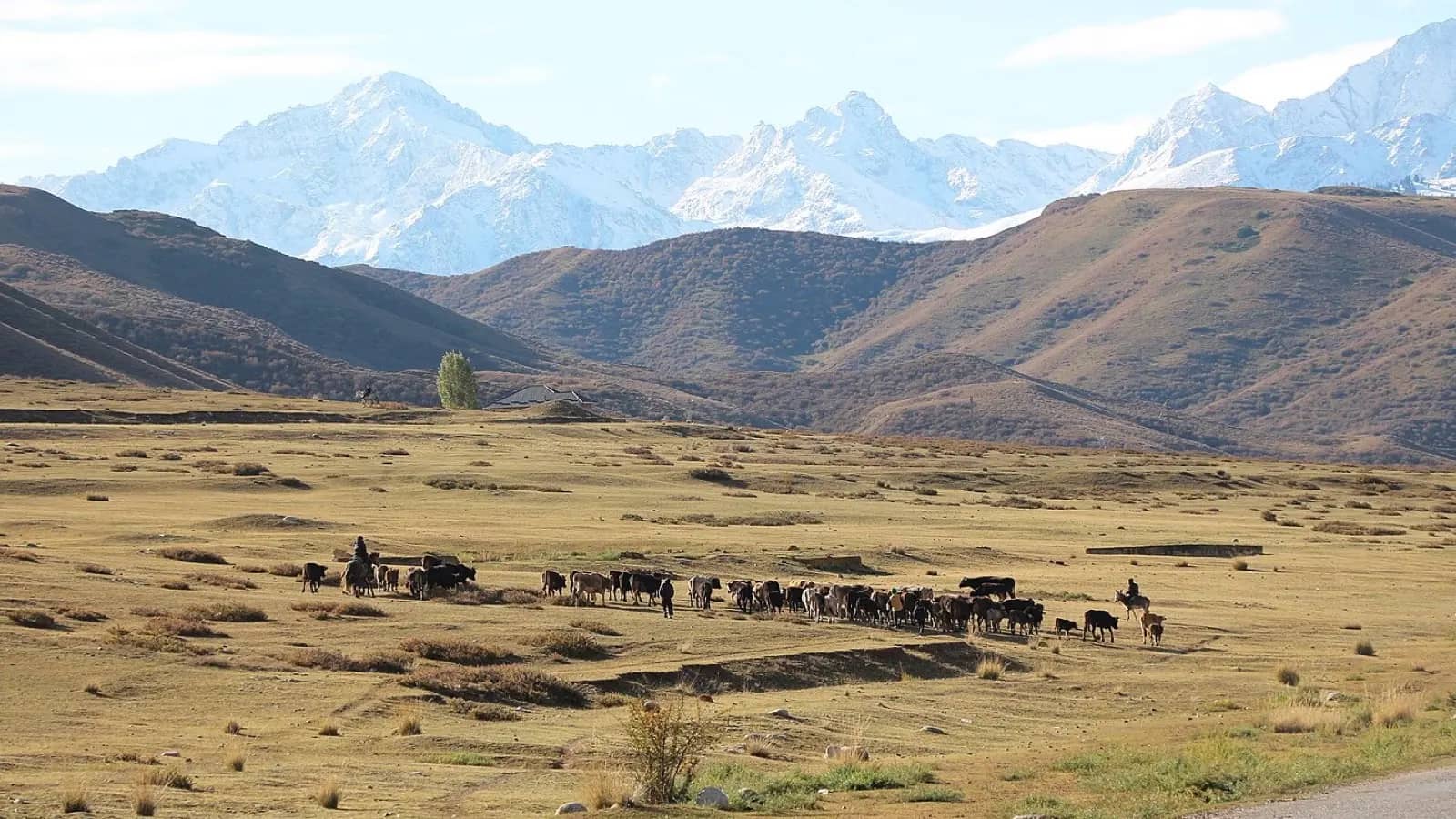
Song Köl is not an ordinary lake add on. The family travels to a remote highland basin, sleeps around 3,000 metres and depends on seasonal roads and camp facilities. Older children may enjoy horses and herding life, but the trip only works when adults are comfortable with altitude, cold nights and limited medical access.
Allow two to three days from Kochkor or Naryn. Ask for the exact driving route, vehicle, camp altitude, bedding, heating, toilet type, washing water, food storage, allergy handling and emergency plan. Do not book a child horse ride without a correctly fitted helmet and a clear stop procedure.
CDC advises gradual ascent for high altitude travel, and current travel advice warns that weather can change quickly while rescue capacity is limited. The Song Köl destination page was last checked on September 1, 2026.
Realistic Kyrgyzstan itineraries with children
Five days: Bishkek and one north shore base
Spend day one recovering in Bishkek. Use day two for a short central museum and park block. Visit Ala Archa on day three. On day four, travel through Burana to Cholpon Ata. Keep day five for the lake or petroglyphs, then sleep near the departure airport if the flight is early.
Do not add Karakol or Song Köl to this route. The value comes from one mountain taste and one lake base, not from completing a circuit.
Seven days: add Karakol without racing around the lake
Follow the first three days above, then travel through Burana to the north shore. Use day five for lake time and petroglyphs. Continue to Karakol on day six. Choose city heritage or Jeti Oguz on day seven, then add a Bishkek airport buffer outside the counted sightseeing days when the flight timing requires it.
If seven calendar days must include both international flight days, remove Karakol. Do not turn the last day into a six hour road gamble.
Ten days: complete the lake route or choose Song Köl
Spend two nights in Bishkek, two on the north shore and three in Karakol. Use one south shore night for Skazka and one final Bishkek night. That is the lower altitude route.
Families considering Song Köl should replace part of the Issyk Köl circuit, not bolt it on. Keep two nights for the highland journey and retain a final recovery night before flying. Ala Köl, Altyn Arashan and remote border routes are separate trekking or expedition decisions.
Getting around Kyrgyzstan with children
Airport to Bishkek
Manas International Airport is outside central Bishkek. Use the current airport site to check arrivals and ask the accommodation for a named transfer. Licensed preordered taxis are preferable to hailing a car. Send the child's measurements when requesting a restraint.
Driver, rental car or marshrutka
A private driver is usually the clearest family choice for Issyk Köl because stops, luggage and nap timing stay under your control. Get the vehicle, driver, seat and daily route in writing. A self drive trip gives flexibility, but current travel advice warns of poorly lit and damaged roads, weak signs, snow closures and limited rural fuel.
Marshrutkas can reduce cost, but they do not guarantee luggage space, restraints or toilet stops. Current UK travel advice recommends avoiding local buses and minibuses where possible because maintenance can be poor and pickpocketing occurs.
Child restraints
Kyrgyzstan requires seatbelts for drivers and passengers. WHO's latest country profile does not record a national child restraint law. That absence is not a safety recommendation. Bring an approved travel seat when practical or secure written confirmation of a suitable restraint from the provider.
Family logistics
Seasons and weather
June through September is the main period for lake and mountain routes, but snow can still affect high places. July and August bring more visitors around Issyk Köl. Spring and autumn need conservative road and camp checks. Winter is a different trip with short daylight, snow closures and possible power cuts.
Food, water and pharmacies
Lagman noodles, rice dishes, dumplings, bread and soups give many children familiar choices. Confirm meal times and allergies with a yurt camp before arrival. CDC advises travelers to avoid contaminated water. Use safely sealed or properly treated water, especially for formula and remote travel.
Pharmacies and medical care are easier to find in Bishkek and Karakol than in mountain valleys. Current travel advice says medical facilities are basic. Carry essential medicine and insurance that covers evacuation and planned activities.
Toilets, accessibility and altitude
Bishkek offers the best chance of smooth surfaces and indoor toilets, though broken pavements remain common. Heritage sites, canyons and camps may have uneven ground, steps or basic outdoor toilets. Ask for photographs and exact descriptions rather than relying on the word accessible.
Altitude sickness is a risk in Kyrgyzstan. CDC identifies travel above 8,000 feet, about 2,438 metres, as a potential risk and recommends gradual ascent. Symptoms in a child need prompt attention and descent may be necessary. Ask a qualified clinician about your family's route.
Apps to save before leaving a Kyrgyzstan town
Use an offline map app for saved roads, accommodation and medical points. Keep a second navigation option because rural mapping can be incomplete. Save the airport, driver and camp contacts in both adults' phones. A translation app with downloaded Russian and Kyrgyz packs helps with menus and transport questions.
Check official travel advice and the chosen weather service before mountain transfers. Store booking confirmations, passports, insurance and the 112, 103, 102 and 101 emergency numbers offline. No app replaces a driver briefing or a paper pickup address.
Staying connected without making the route depend on signal
Mobile data helps with driver messages, maps, translation and last minute weather checks. It does not create coverage in a remote valley. Download the day's route before leaving Bishkek, Cholpon Ata or Karakol and agree on what the family will do if messaging stops.
A Kyrgyzstan Roaming eSIM can be installed before travel on a compatible phone, so the family can connect without replacing the usual SIM after arrival. The practical edge over airport SIM shopping is preparation: compatibility, installation and the selected plan can be checked while there is reliable Wi Fi, with support available if setup needs attention. Compare the exact country plan with a Central Asia or Asia plan only when the wider itinerary justifies it. Package features, hotspot support, start timing and reloadability vary, so use the product card rather than assuming every plan behaves the same.
Before choosing data, use the travel data calculator, check the phone compatibility guide and save the installation timing guide. Families crossing from Kazakhstan can compare the distinct route decisions in Kazakhstan with kids. For connectivity focused border and visitor news, see the separate Kyrgyzstan eSIM guide.
The content gap was consistent: many itineraries make remote stops look adjacent and describe high altitude stays without a firm route cut. This guide therefore prioritizes fewer bases, explicit transfer recovery, facility questions and the option to leave Song Köl out.