Thailand tourist fee 2027: what travelers need to know

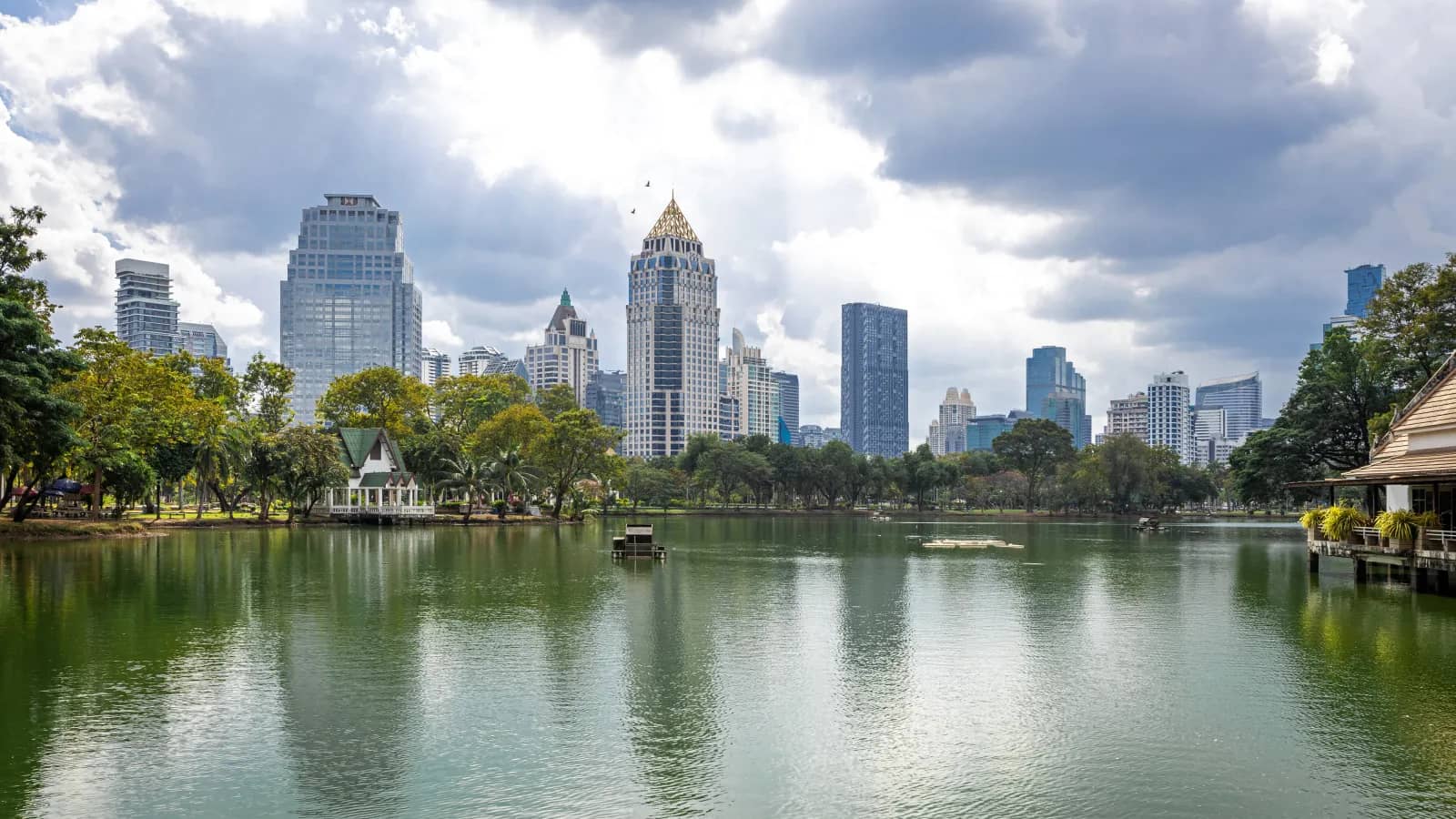
Photo: David McKelvey via Wikimedia Commons, CC BY 2.0. It shows Suvarnabhumi Airport, not a tourist-fee checkpoint.
Thailand has proposed a 450-baht fee for foreign visitors, but travelers do not need to pay it yet. The National Tourism Policy Committee approved draft principles on August 14, 2026. A 30-day public hearing, another committee review, Cabinet consideration and publication in the Royal Gazette still have to happen before collection can begin.
The proposal starts with air arrivals. Current reports put the earliest launch in early 2027, with the Bangkok Post naming April as the ministry's target. Neither date is a legal start date. The controlling notice has not been published, the payment method is not settled, and the current exemption list has not been released.
The traveler decision: do not pay a website, agent or airport counter that claims the new 450-baht fee is already due. Complete the separate Thailand Digital Arrival Card through the official Immigration Bureau site for free when required. Check the Royal Gazette and official Thai travel guidance again before departure.
This article was checked at 07:15 WEST on August 15, 2026. It will be updated when the public hearing, Cabinet process, Royal Gazette notice, payment route or exemption list changes.
Thailand tourist fee at a glance
| Question | Current answer on August 15, 2026 |
|---|---|
| Is the 450-baht fee active? | No. It is a proposal going to public consultation. |
| Proposed amount | 450 baht per foreign visitor. |
| Who may be charged? | The draft direction covers foreign visitors arriving by air, land or sea. Final exemptions are not published. |
| Earliest reported air rollout | Early 2027. One current report names April, but no legal start date exists yet. |
| Land and sea rollout | Proposed for a later phase, around 360 days after the relevant notice is published. |
| What starts air collection? | The current proposal says 180 days after the relevant Royal Gazette publication. |
| How would travelers pay? | Undecided. Options include airfare, a website or app, kiosks or another approved mobile route. |
| Is the TDAC the same fee? | No. The TDAC is a separate arrival form and the official submission is free. |
| Does the fee replace travel insurance? | No final policy has been published. Keep suitable travel insurance. |
| What should a traveler do today? | Use the official TDAC route, ignore premature payment demands and recheck official sources before travel. |
What Thailand approved, and what it did not
The August 15 report from The Nation says the National Tourism Policy Committee endorsed draft principles and a draft notification. The next step is a 30-day public hearing. The proposal then returns for review before going to the Cabinet if it proceeds.
That is meaningful progress after years of delays, but it is not a live charge. The committee did not publish a payment portal, a final list of exemptions or a fixed collection date. Travelers should not turn a policy target into a border rule.
The proposed sequence is:
- Hold the 30-day public hearing.
- Review the proposal again after consultation.
- Seek Cabinet approval if the proposal proceeds.
- Publish the controlling notification in the Royal Gazette.
- Wait 180 days before the first air-arrival phase begins.
- Start land and sea collection later, currently proposed at around 360 days after publication.
The Royal Gazette matters because it will supply the text and date that headlines cannot. Until that publication exists, an early-2027 or April target can still move.
Why older pages still say 300 baht
Thailand approved an earlier framework in 2023. The Government Public Relations Department described 300 baht for air arrivals and 150 baht for land or sea arrivals, with several exemptions. That version never became an operating collection system.
Search results written in 2025 and early 2026 often repeat the old amount, say the fee will be included in airfare or name a mid-2026 launch. Those pages describe earlier proposals. They should not be used to decide what to pay in 2027.
The revised 450-baht amount is based on a new model that officials say reflects current economic conditions and proposed insurance costs. The amount, collection route and exemptions still need to survive the remaining process.
When could the fee start?
The most useful date is not "April 2027." It is the date of the final Royal Gazette publication.
The current proposal says air collection would begin 180 days after that publication. Land and sea collection would follow after around 360 days. If the notice is delayed, amended or rejected, the rollout moves with it.
Before a 2027 trip, check these in order:
- Look for an official update from Thailand's government, Tourism and Sports Ministry, Tourism Authority or Immigration Bureau.
- Find the final notification in the Royal Gazette.
- Confirm the effective date and the traveler's exemption category.
- Follow only the payment route named by the final official notice.
- Ask the airline whether the fee is included only after the government confirms an airline collection model.
Do not use a payment receipt from an unofficial site as proof that an entry requirement has been met.
How might travelers pay?
No collection method is final. Officials have discussed including the fee in airfare, taking payment through a government website or mobile app, using kiosks, or providing another approved mobile route.
Each option has a practical problem. Airline systems do not always collect the nationality, residence and visa details needed to separate chargeable travelers from exempt passengers. A separate online route creates another step and another opportunity for impersonation sites. Kiosks can create queues if many travelers arrive without payment.
The article should be treated as outdated if it tells every traveler that the fee is already included in a ticket. That has not been decided. Check the fare breakdown and the final Thai instructions once collection begins.
The TDAC remains free and separate
The Thailand Digital Arrival Card is not the proposed tourist fee. It is an online arrival form that replaced the paper card. The official Immigration Bureau guide says non-Thai nationals must submit it within the three days before arrival, including the arrival date. The official FAQ says children need their own TDAC and a new form is required for each entry. A traveler remaining in transit without passing immigration does not submit one.
Thai immigration has also warned that the official TDAC submission is completely free. Use tdac.immigration.go.th, not a sponsored lookalike that charges to submit the same form. The Thailand THIM app and TDAC guide explains the app's current optional status and the direct official website fallback.
The future tourist fee may eventually use a digital system, but that does not make a paid TDAC service official. Keep the two processes separate until Thailand publishes a final collection route.
Children, transit passengers and other exemptions
The 2023 draft excluded children under two, transit passengers who met its conditions, diplomatic and official passport holders, and certain work-permit holders. The 2026 committee report does not publish a final exemption schedule for the revised 450-baht proposal.
Do not assume the old list will carry over unchanged. A family should budget for the possibility that each non-exempt traveler will be charged, then check the final notice before paying. A transit traveler should verify whether clearing immigration, changing airports or collecting baggage changes the category.
Frequent visitors also lack a final answer. Officials are considering a multiple-entry arrangement linked to the period of proposed insurance cover, but the duration, proof and eligible entry routes are not settled.
Does the proposed fee include travel insurance?
Officials say part of the money would support insurance, safety, healthcare and tourism development. That does not give a traveler a policy today. The final insured events, medical limits, exclusions, claim process, participating hospitals and start and end times have not been published.
Keep separate travel insurance that fits the trip. Do not cancel a policy because a news report says the future fee will fund visitor protection. If the fee later includes a defined benefit, compare the actual policy wording with the cover already held.
Do not confuse it with the airport departure charge
Thailand already has other travel charges. Airports of Thailand increased the passenger service charge for outbound international passengers at its six airports to 1,120 baht from June 20, 2026. That AOT notice covers Suvarnabhumi, Don Mueang, Chiang Mai, Chiang Rai, Phuket and Hat Yai.
The passenger service charge is not the proposed 450-baht foreign-visitor fee. The TDAC is a third, separate process. A visa or visa exemption is another decision again. Read the current Thailand visa-exemption status before relying on an older entry-rule headline.
A safe payment checklist for 2027 travel
- Search the Royal Gazette for the final notification and effective date.
- Use only the collection route named by an official Thai authority.
- Check whether an airline ticket already includes the fee before paying again.
- Confirm the final exemption list for children, transit, work permits and other categories.
- Submit the TDAC free through the official Immigration Bureau site when required.
- Keep the TDAC confirmation, booking details and any future fee receipt available offline.
- Treat insurance as unconfirmed until the policy wording and claims route are published.
- Keep enough payment flexibility for a new official process, but do not prepay an unofficial agent.
- Ask the airline or Thai embassy about a passport-specific issue rather than a general forum.
- Recheck the rules close to departure because the proposal can still change.
Where Roaming eSIM fits into a Thailand trip
A Roaming eSIM does not pay the tourist fee, complete the TDAC, provide insurance or grant entry. Its useful role starts with mobile data. A compatible unlocked phone can use data for official pages, airline messages, maps, transport apps and accommodation contact while the usual SIM remains installed.
The public Roaming eSIM catalog returned 34 Thailand packages when checked on August 15. These fixed-data examples were live at that time:
| Plan | Retail price | Validity | Published network details | Top-up |
|---|---|---|---|---|
| 1 GB | USD 1.40 | 7 days | 3G/4G/5G; AIS, dtac and TrueMove H listed | Supported |
| 3 GB | USD 3.40 | 15 days | 3G/4G/5G; AIS, dtac and TrueMove H listed | Supported |
| 5 GB | USD 5.40 | 30 days | 3G/4G/5G; AIS, dtac and TrueMove H listed | Supported |
| 10 GB | USD 9.40 | 30 days | 3G/4G/5G; AIS, dtac and TrueMove H listed | Supported |
Prices and inventory can change. The selected card remains the source for allowance, validity, speed, activation, hotspot and top-up terms.
Roaming eSIM's practical advantage: travelers can compare a Thailand plan with Asian and global coverage before departure, see the current allowance, validity, retail price, listed operators and plan-level top-up field, then use the published 24/7 support route if setup needs attention. A news article cannot supply or manage that connection. Roaming eSIM still cannot guarantee reception, create network capacity or resolve an immigration or payment dispute.
Compare Thailand Roaming eSIM plans for a one-country trip. Use the country versus regional plan guide when Thailand is one stop in a wider route. Before buying, estimate the trip with the travel data calculator, confirm phone compatibility and read when to install a Roaming eSIM. Families can use the Thailand with kids guide for itinerary planning.
Ten Thailand tourist-fee questions travelers are asking
1. Is Thailand's 450-baht tourist fee active now?
No. On August 15, 2026, it was a proposal moving into a 30-day public hearing. No official payment was due.
2. How much is the proposed Thailand tourist fee?
The revised proposal is 450 baht per foreign visitor. The older 300-baht and 150-baht amounts belong to an earlier framework.
3. When will Thailand start collecting it?
Reports name early 2027 and April as targets. The proposal says air collection would start 180 days after the final notification is published in the Royal Gazette. No controlling publication means no fixed start date yet.
4. Will the fee be included in my airline ticket?
Possibly, but that method is not final. A website, app, kiosk or another government-approved route is also under consideration. Check the final notice and ticket breakdown before paying.
5. Do I have to pay for the Thailand Digital Arrival Card?
No. The official TDAC submission is free. Use the Immigration Bureau site and submit within the three days before arrival when required.
6. Will children pay the 450-baht fee?
The final 2026 exemption list is not published. An old draft excluded children under two, but families should wait for the revised notice before assuming any age exemption.
7. Will transit passengers pay?
The final rule is not available. A traveler who stays airside and does not pass immigration does not need a TDAC, but that does not by itself establish the future tourist-fee exemption.
8. Does the fee give me travel insurance?
No usable policy has been published. Officials plan to direct some revenue to visitor insurance and safety, but travelers should keep separate cover unless the final benefits are sufficient for their trip.
9. What happens at a land border or on multiple entries?
Land and sea collection is proposed for a later phase, around 360 days after publication. A multiple-entry arrangement is being considered, but its duration and eligibility are not final.
10. Should I carry 450 baht in cash at the airport?
Not for this fee today. The final payment route may be digital or included in a ticket. Keep a normal backup payment method for travel, but do not hand cash to an unofficial collector.
Sources and updates
The August 14 committee decision, 450-baht amount, public-hearing step, proposed 180-day and 360-day phases, possible payment methods and multiple-entry idea came from current reports by The Nation and Bangkok Post. The 2023 Government Public Relations Department page was used only to explain the old 300-baht framework and why older search results are stale. It was not treated as the final 2026 rule.
The TDAC timing, one-entry limit, child requirement and transit treatment came from the Immigration Bureau manual and FAQ. The free-submission warning came from an official provincial immigration page. The separate outbound passenger service charge came from Airports of Thailand.
Current ranking pages are strong on policy history but often weak on present status. Several state a launch date, airline payment route or exemption list more confidently than the current process supports.
Update policy: We will revise this page after the public hearing, Cabinet action, Royal Gazette publication, payment instructions, exemption list, insurance terms or rollout schedule changes. The page will keep this single Thailand tourist-fee intent rather than creating a new URL for each announcement.