Bolivia with kids: attractions, itineraries and family travel tips

Bolivia with kids suits families who can slow down, change plans and treat altitude as a route-design problem rather than a footnote. School-age children and teenagers have the widest choice. A trip with a toddler is possible, but a high-altitude circuit is not the place for constant hotel changes or ambitious hiking. Five days works for one base. Seven days can join Sucre and Uyuni, or stay around Santa Cruz and Samaipata. Ten days can connect Sucre, Uyuni and La Paz with proper recovery time.
The main difficulty is the combination of elevation and unpredictable transfers. La Paz and Uyuni are both above 3,600 metres, while roadblocks, fuel disruption, rain and rough roads can alter an intercity plan. The calmest first trip starts lower, keeps the first two days light and places a buffer before the international flight home.
This guide was checked against official attraction, museum, protected-area, transport, police, health and travel-advice sources on August 27, 2026. Ages, visit lengths and journey ranges are editorial planning estimates unless an official rule is named. Check current health advice, road conditions, opening notices and the exact vehicle before paying.
Bolivia family trip decisions at a glance
| Decision | Practical starting point |
|---|---|
| Best first highland route | Sucre, then Uyuni, then La Paz, so the sleeping altitude rises more gradually |
| Best lower-altitude route | Santa Cruz and Samaipata, with no highland add-on unless the family has time to adapt |
| Best ages | Seven and older for the classic highland route; younger children need fewer bases and medical advice |
| Car needed? | Not in central La Paz or Sucre; use a verified driver or tour for remote sites |
| Main difficulty | Altitude plus long, changeable road journeys |
| Daily rhythm | One substantial morning, lunch and rest, then one short indoor or nearby stop |
| Child restraint | Bolivia has no national child-restraint law in the cited PAHO comparison; book a suitable seat and usable belt anyway |
| Emergency numbers | Police 110, traffic police 111, fire and rescue 119; ambulance 118 is listed in current UK travel advice |
| Health planning | Travel-health consultation, altitude plan, safe food and water, sun protection and lowland mosquito precautions |
Which Bolivia attractions fit your children?
| Image | Destination | Best ages | Indoor or outdoor | Allow | Book ahead? | Best base |
|---|---|---|---|---|---|---|
 | Mi Teleferico | 4 and older | Enclosed cabins and stations | 90 minutes to 3 hours | No; check line status | La Paz |
 | Museo Nacional de Etnografia y Folklore | 7 and older | Indoor museum and courtyards | 90 minutes to 2 hours | Confirm current entry | La Paz |
 | Museo Nacional de Arqueologia | 8 and older | Indoor | 60 to 90 minutes | Confirm current entry | La Paz |
 | Valle de la Luna | 7 and older | Outdoor trail | 60 to 90 minutes | No; confirm weather closure | La Paz |
 | Tiwanaku | 8 and older | Outdoor site and museums | 3 to 5 hours on site | Arrange transport; confirm entry | La Paz |
 | Parque Cretacico | 4 and older | Outdoor park and indoor displays | 2 to 3 hours | Confirm guided footprint access | Sucre |
 | Museo del Tesoro | 7 and older | Indoor | 60 to 90 minutes | Confirm tour language | Sucre |
 | Salar de Uyuni day trip | 8 and older | Outdoor 4x4 day | 8 to 11 hours | Yes; verify operator and vehicle | Uyuni |
 | Torotoro National Park | 9 and older | Outdoor trails | 1 to 3 days | Yes; register and use an accredited guide | Torotoro |
 | Fuerte de Samaipata | 7 and older | Outdoor archaeological circuit | 2 to 3 hours | Arrange transport; confirm entry | Samaipata |
The age bands reflect elevation, exposure, concentration, walking surfaces and transfer length. They are not admission rules. A carrier is more dependable than a stroller at archaeological and natural sites. Ask each venue about current toilets, changing space, step-free access and food rules when those details determine whether the visit works.
Ten questions families keep asking about Bolivia
Public family discussions repeatedly return to altitude and route cuts, not simply attraction ideas. These ten questions shaped the guide.
- Is Bolivia reasonable with children under five? A lower-altitude Santa Cruz route is the simpler choice. Ask a travel-health clinician before taking a young child to La Paz, Uyuni or another high sleeping altitude.
- Should we start in Santa Cruz or fly directly to La Paz? Santa Cruz gives a lower-altitude beginning. A direct La Paz arrival demands a deliberately empty first day and a plan for symptoms.
- How slowly should children gain altitude? There is no one schedule that guarantees prevention. The CDC says unacclimatized travelers sleeping at 2,450 metres or higher can be at risk, and children are as susceptible as adults.
- Is a one-day Uyuni trip better than the three-day circuit? For most first-time families, yes. It avoids consecutive remote nights, extreme elevations and long daily 4x4 stages.
- Will a stroller work? It can help inside selected museums and cable-car stations. It is not a complete plan for steep La Paz streets, eroded trails, archaeological ground or salt-flat stops.
- Should we fly or take overnight buses? With limited time, flights can remove an exhausting night and protect a rest day. Keep schedule buffers because domestic operations can still change.
- Can we count on a child seat in a taxi? No. Reserve the restraint, belt arrangement and vehicle in writing, then inspect them before departure.
- What paperwork does a child travelling with one parent need? Rules depend on citizenship, residence, custody and border direction. Confirm with the relevant Bolivian consulate and every country on the route.
- Can La Paz, Sucre, Uyuni and the Amazon fit into ten days? Not responsibly for most families. Choose the highlands or a lowland route and leave the other for a separate trip.
- How much disruption buffer is enough? Keep at least one uncommitted night before the international flight and avoid a remote tour ending on departure day.
La Paz: use transit and museums before a trail
La Paz is not a gentle arrival. El Alto airport is higher still, and the drive drops into a steep city. Keep arrival day free of tours. The next day can use an enclosed cable-car ride and one museum, provided everyone feels well. Valle de la Luna and Tiwanaku belong later, not in the first hours after landing.
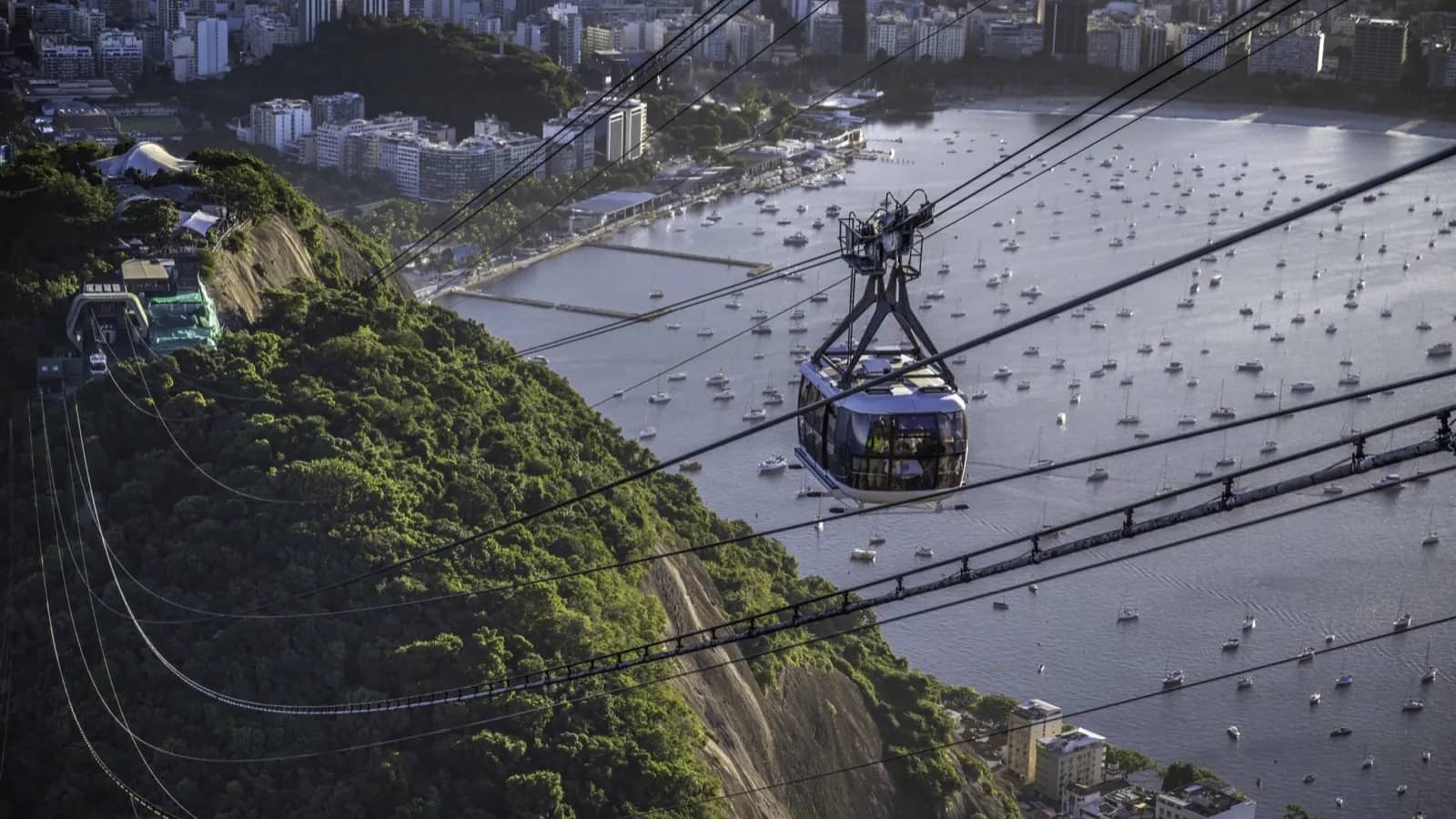
Mi Teleferico
Children can watch the city change beneath an enclosed cabin, trace coloured lines on the network map and compare La Paz's bowl with the flatter streets of El Alto. Ages four and older usually have enough patience for a short loop. Allow 90 minutes for one or two lines, or up to three hours when changing lines and stopping at stations.
The Ministry of Public Works reported ramps, tactile paving and operating lifts across the system, but it also noted that some lifts had maintenance problems. A station being designed for access does not prove every lift works that day. A compact stroller can enter the system more easily outside commuter peaks. Ask staff where to board and keep children behind platform markings.
The official Red Line page lists toilets, a pharmacy, food and other services at Central Station. Facilities differ by station, so use the official line pages rather than assuming every interchange has the same amenities. Carry water, but do not turn the ride into an altitude test by adding a steep El Alto walk.
No advance ticket is normally needed. Check the official service channels for maintenance, wind or event changes. Central Station is a useful starting point near the former railway station; the Red Line's published in-cabin stages total roughly eleven minutes before waiting and transfers. Read the official network guide and Red Line station details. Official details checked August 27, 2026.
Museo Nacional de Etnografia y Folklore
Children can compare masks, textiles, ceramics and objects from Bolivia's many cultural traditions. Give ages seven and older a short visual task, such as finding three ways colour or animal forms repeat, instead of demanding a full label-by-label visit. Allow 90 minutes to two hours.
MUSEF occupies a historic building with courtyards and a later expansion. That mix can create thresholds, stairs and route changes. Ask the museum directly about the working lift or step-free route, stroller storage, accessible toilets and seating. Do not infer complete access from the modern addition.
The museum website confirms its La Paz address and collection role but does not provide enough current family-facility detail to promise changing space or food. Plan a meal outside the museum and bring only a small bag. The indoor galleries make a good rain, cold or strong-sun fallback.
Confirm current opening, admission and any guided session before arrival. MUSEF is on Calle Ingavi in the historic centre, where drop-off can be easier than a long uphill walk. Pair it with one nearby stop, not a cross-city afternoon. Read the official MUSEF website. Official details checked August 27, 2026.
Museo Nacional de Arqueologia
Children can study ceramics, carved stone and other archaeological material before seeing Tiwanaku in the landscape. Ages eight and older benefit most, especially when each child chooses one object to sketch or explain. Allow 60 to 90 minutes.
The museum's official site presents six rooms and a renewed permanent exhibition. It does not establish a complete stroller or wheelchair route, changing facilities, cafe or bag-storage policy. Contact the museum when step-free access or a quiet space is essential. A carrier and a small day bag are safer assumptions than a large stroller.
The visit is indoors, useful during cold rain or intense midday sun. The official schedule currently separates morning and afternoon sessions on listed weekdays, so check the day rather than relying on a generic maps panel. Do not place this visit immediately after a delayed flight.
The museum is at Calle Tiahuanacu and Federico Zuazo in central La Paz. Use the exact entrance pin and allow extra road time. Read the official MUNARQ visitor page. Official details checked August 27, 2026.
Valle de la Luna
Children walk among narrow clay ridges, identify erosion shapes and look through a native cactus area. Ages seven and older are a better fit because the trail has exposed edges and uneven ground. Allow 60 to 90 minutes once inside.
This is a carrier site, not a dependable stroller outing. The municipal tourism page describes walking terrain and a roughly 20-minute route to one feature, but it does not promise a step-free circuit, changing table or complete handrail system. Ask about the shortest open route and current toilets before setting out.
Take water, sun hats and layers. The municipality recommends the drier April to October period; rain can make clay surfaces awkward. There is little reason to push through poor weather. Leave a family member with a headache, nausea, unusual tiredness or breathing concern at the hotel and seek medical advice rather than testing them on a trail.
The municipal page places the site around 20 to 25 minutes from central La Paz in favourable conditions, but road traffic can stretch that estimate. Use a prearranged return ride and keep the driver details offline. Check the official La Paz tourism page. Official details checked August 27, 2026.
Tiwanaku
Children can walk around the Akapana area, identify carved figures and compare the surviving stone structures with objects in the site museums. Ages eight and older can sustain the travel plus a three to five-hour visit. Younger children may enjoy the open space but struggle with the long historical explanation.
The ground includes exposed archaeological surfaces rather than a uniform paved circuit. A stroller may work on limited approaches but cannot be treated as full-site access. Ask the site about ramps, museum entry, toilets, seating and the current route. Bring sun protection, water and a packed snack if official food options are not confirmed.
Tiwanaku's official site publishes daily opening information and identifies the museums and archaeological complex. Book transport rather than entry alone: the site is near Lake Titicaca at about 3,850 metres according to UNESCO. Cold, wind, sun and altitude can all matter on the same day. Do not schedule it as the first full day after flying into La Paz.
Road time from central La Paz is commonly around two hours each way but varies with traffic, stops and road conditions. A private driver gives a family more control over rest and turnaround time than an inflexible group. Use the official Tiwanaku site and UNESCO property record. Official details checked August 27, 2026.
Sucre: use the lower highland base for a gentler start
Sucre sits lower than La Paz and Uyuni, though it is still high enough for some travelers to notice the elevation. It is the most practical highland starting base in this guide. Keep the first afternoon around Plaza 25 de Mayo, then give the dinosaur park its own half-day.
Parque Cretacico
Children can compare full-size dinosaur models, see the Cal Orck'o track wall from designated viewpoints and join the current guided access when available. Ages four and older have a clear visual hook. Allow two to three hours, with more time only if the family's guided slot demands it.
The park mixes outdoor slopes, viewing areas and exhibits. Do not assume a stroller reaches the close footprint route. Ask about the current accessible path, toilets, changing space, shade and seating. The official visitor information places the park about five kilometres from central Sucre.
The track wall is an active conservation site. Guided approach, viewing distance and access can change, particularly after weather or preservation work. Confirm the day's track-viewing arrangements and any construction before leaving the city. Sun protection and a wind layer matter even on a bright morning.
The themed Dino Bus has historically connected central Sucre with the park, but the timetable can change. A confirmed taxi return removes the risk of waiting with tired children. Check the official Parque Cretacico site and visitor schedule page. Official details checked August 27, 2026.
Museo del Tesoro
Children can follow the path from Bolivian minerals to metalworking and jewellery through models and display cases. Ages seven and older are the strongest fit, especially those interested in rocks, mines or making things. Allow 60 to 90 minutes.
The museum is inside a restored building on Plaza 25 de Mayo. Contact it about stairs, lift access, stroller storage, toilets and seating before relying on a step-free visit. The public visitor page does not establish a changing table or cafe, so use the plaza for the family's meal and toilet plan.
Confirm the tour language and start time. The museum currently publishes a split-day opening pattern, which makes an old all-day listing risky. Indoor rooms provide a useful rain or midday-sun alternative, and the central location avoids another vehicle transfer.
The entrance is at Plaza 25 de Mayo number 59. Walk from a central hotel if the family's altitude response and pavement permit; otherwise arrange a short drop-off. Check the official Museo del Tesoro website. Official details checked August 27, 2026.
Uyuni: make the salt flat a day, not a survival test
Uyuni is a high, remote base. Arrive early enough to rest, check the vehicle in daylight and sleep before the tour. Families with younger children should default to a day trip rather than the three-day southwest circuit, which reaches higher elevations and has long stretches far from care.
Salar de Uyuni day trip
Children can walk on the salt surface where the operator confirms it is safe, make perspective photographs and see how water changes reflection and access. Ages eight and older are better placed to manage the long vehicle day, cold, glare and limited toilets. Allow eight to eleven hours from Uyuni for a typical full-day circuit, but get the actual plan in writing.
A stroller has little use. Ask for a safe step into the 4x4, working seat belts in every occupied position, the exact child restraint, headrests, spare tyre, first-aid kit, oxygen policy, driver rest, satellite or radio backup and toilet stops. Confirm whether roof luggage is weatherproof. A private vehicle can stop for nausea, toilets or a child's change in condition.
Advance booking is sensible, but operator quality matters more than the lowest price. Request the named operator, vehicle registration, insurance, driver and route. Rain can create the mirror effect while closing parts of the salar; dry-season cold and wind can be severe. Never pressure a driver to enter water or an area they judge unsafe.
Bolivia's official tourism page places the salar at an average altitude of 3,663 metres and gives broad air, road and rail approaches to Uyuni. It does not certify a tour company. Check the official Salar de Uyuni destination page and current travel advice before paying. Official details checked August 27, 2026.
Torotoro: choose footprints before caves
Torotoro deserves a separate trip from the classic La Paz and Uyuni route. Reaching the town consumes time, and park routes vary sharply in difficulty. Families should choose a short dinosaur-track or geology route with an accredited guide rather than treating the cave as the default highlight.
Torotoro National Park
Children can look for dinosaur footprints, compare fossils and walk through folded rock scenery on a route selected with park staff. Ages nine and older are the clearest fit for a short guided trail. The Umajalanta cave involves darkness, confined spaces and technical movement, so it is not included as a general family recommendation.
The park is not stroller terrain. Ask the guide about distance, elevation change, exposed edges, water crossings and the nearest toilet before choosing a route. Carry water, food, sun protection and layers, but follow protected-area rules on waste and wildlife.
SERNAP requires visitors to register and follow ranger instructions. The park regulation says authorized routes can close because of adverse weather, capacity or safety, and it requires appropriately licensed tourism services and guides. Book ahead, then reconfirm at the control point rather than assuming a blog's old route remains open.
Use Torotoro town as the base and give the area at least two nights. The road journey from Cochabamba is long enough that an out-and-back day is unsuitable for most children. Read the SERNAP visitor reminder and park tourism regulation. Official details checked August 27, 2026.
Santa Cruz and Samaipata: a lower-altitude alternative
Families who do not want a highland circuit can fly into Santa Cruz and spend several nights in Samaipata. This is not merely a waiting room for La Paz. It offers a different climate, a road-based pace and an archaeological site without sleeping above 3,600 metres.
Fuerte de Samaipata
Children can follow the circuit around a carved sandstone rock, locate building remains and compare the site's ceremonial and settlement areas. Ages seven and older can manage a focused two to three-hour visit. Use a scavenger list based on shapes and building zones rather than asking children to absorb every historical period.
The open archaeological circuit has uneven surfaces, sun exposure and few guarantees for stroller access. Ask the local site office about the shortest current route, toilets, shade, seating and step-free limits. Bring water and hats; keep food away from the protected remains.
Arrange a driver from Samaipata and confirm the return. Rain and road conditions can alter access, while midday heat reduces children's patience. UNESCO identifies the property as a ceremonial centre and settlement with Chane, Inca and Spanish-period evidence; the listing does not provide live opening or facility status.
Samaipata is the practical base, roughly a half-hour road journey away in normal conditions. Santa Cruz to Samaipata is a much longer intercity transfer and should have stops. Read the UNESCO Fuerte de Samaipata record and confirm current local access before travel. Official details checked August 27, 2026.
Realistic Bolivia itineraries for five, seven and ten days
These plans leave space for meals, late starts and symptoms. Do not combine them into one compressed circuit.
Five days: one La Paz base
- Day 1: Arrive, settle in and rest. No timed attraction.
- Day 2: One or two Mi Teleferico lines, then lunch and hotel time.
- Day 3: MUSEF or MUNARQ, not both, followed by a free afternoon.
- Day 4: Valle de la Luna only if everyone is well and weather is suitable. Use a museum as the fallback.
- Day 5: Buffer day or departure. Tiwanaku does not fit safely before a same-day flight.
This plan is for a family that accepts La Paz's elevation and has obtained suitable health advice. If arrival symptoms persist or worsen, the itinerary stops being the priority.
Seven days: Sucre and Uyuni
- Day 1: Arrive in Sucre and stay near the centre.
- Day 2: Plaza area and Museo del Tesoro, with a long rest.
- Day 3: Parque Cretacico in the morning; free afternoon.
- Day 4: Transfer to Uyuni by the safest practical confirmed option. No tour on arrival.
- Day 5: Rest, operator and vehicle check, then a short town walk only if everyone feels well.
- Day 6: Private or small-group Salar de Uyuni day trip with a family-agreed turnaround plan.
- Day 7: Buffer or onward travel. Do not attach an international departure to the tour return.
The transfer can be by road or a routing involving a flight, depending on current schedules. Compare total door-to-door time, not just the advertised in-vehicle time.
Ten days: Sucre, Uyuni and La Paz
- Days 1 to 3: Follow the Sucre plan above.
- Day 4: Transfer to Uyuni and rest.
- Day 5: Vehicle check and an easy day.
- Day 6: Salar de Uyuni day trip.
- Day 7: Fly or use the safest practical transfer to La Paz, then rest.
- Day 8: Mi Teleferico and a nearby meal.
- Day 9: One museum or Valle de la Luna, based on health and weather.
- Day 10: Departure buffer.
Tiwanaku needs another day. Torotoro, Lake Titicaca and the Amazon each need their own extension. Cutting those names is what makes this ten-day route usable.
Seven days without the highlands: Santa Cruz and Samaipata
- Days 1 and 2: Settle in Santa Cruz and keep the programme local.
- Day 3: Road transfer to Samaipata with planned stops.
- Day 4: Fuerte de Samaipata.
- Day 5: Rest or a locally verified short nature activity suitable for the children's ages.
- Day 6: Return to Santa Cruz.
- Day 7: Departure buffer.
Low elevation changes the health profile, not the need for travel-health advice. CDC guidance identifies malaria and yellow-fever considerations in lower parts of Bolivia, including Santa Cruz department, so discuss the exact route with a clinician.
Getting around Bolivia as a family
Should families drive in Bolivia?
No for central La Paz or Sucre. Mi Teleferico and short verified transfers cover the selected city stops. A self-drive car becomes a liability when the route includes rough roads, fuel shortages, protests or unfamiliar mountain driving. Current UK advice warns about road conditions, driving standards, poorly maintained vehicles and rainy-season blockages.
For Uyuni, Tiwanaku, Torotoro and Samaipata, use a reputable licensed operator or driver whose vehicle and safety equipment you can verify. Save the company name, registration and emergency contact offline.
Child restraints and seat belts
The cited PAHO road-safety comparison reports no national child-restraint law for Bolivia. That is a legal gap, not evidence that a child is safe without a restraint. Current UK travel advice also warns that many taxis and buses rarely have seat belts.
Reserve a restraint matched to the child's size and a seating position with a working three-point belt or the anchor system the seat requires. Ask for photographs of the exact seat and installation point. Inspect the belt, buckle, seat condition and installation before loading luggage. Bring your own restraint when practical and when the airline and ground operator can accommodate it.
Urban transit, bags and wheels
Mi Teleferico is the most predictable city option in this guide. Minibuses and shared taxis can be crowded and may lack usable belts. A compact stroller helps inside selected stations and museums but becomes difficult on steep pavements and rough ground. A carrier should have sun protection and fit the adult securely.
Airline, bus and rail luggage policies differ. Confirm the stroller as cabin, gate-check or hold baggage with the operating carrier, not a reseller. Keep medicines, warm layers, food, water and one clothing change in the family's hand luggage.
Airport and intercity timing
El Alto airport sits above La Paz. The road into central La Paz can take roughly 45 to 90 minutes depending on traffic and conditions. Viru Viru airport to central Santa Cruz commonly needs around 30 to 60 minutes. These are planning ranges, not promises.
Domestic flights can save a night, but they still need airport buffers and a backup. Official tourism information gives broad examples of about one hour by air between La Paz and Uyuni and about seven hours by road, but disruption can change either. Never schedule a remote tour or long road arrival against an international check-in.
Family logistics that matter in Bolivia
Match Bolivia's weather to the route
The highland dry season generally brings clearer travel conditions from around May through October, but nights around Uyuni can be very cold. The wetter period can create reflections on the salt flat while also disrupting roads and access. Santa Cruz has a warmer, wetter climate and different health considerations.
Check the Bolivian weather service, road authority, airline and attraction on the same day. A seasonal average cannot confirm tomorrow's route.
At this review, the UK FCDO advises against all but essential travel to the Chapare region of Cochabamba Department, including the named Highway 4 and 24 sections. That can affect how a family reaches or bypasses parts of central Bolivia. Check the current Bolivia warning map and notice before fixing a Cochabamba road transfer, and follow the advice issued for your own nationality.
Meals and food
Lunch is often the easiest substantial family meal. Common foods such as rice, potatoes, chicken, soup, bread and fruit give cautious eaters workable choices, but preparation varies. Carry a familiar snack for long drives and ask about allergens in Spanish.
CDC guidance for children stresses safe food and water because diarrhea can dehydrate young children quickly. Use sealed or properly treated water when safety is uncertain, including for formula preparation and tooth brushing. Do not publish or trust a country-wide tap-water promise; treatment and plumbing differ by place.
Altitude, sun, cold and lowland insects
The CDC states that children are as susceptible to altitude illness as adults. Young children may not describe a headache or nausea clearly, so watch for unusual quietness, irritability, poor appetite, vomiting, sleep changes or reduced activity. Do not rely on fitness as protection.
Discuss the route with a travel-health clinician, especially for a baby, a child with heart or lung conditions, or anyone with a previous altitude problem. If symptoms worsen, stop ascending and seek medical help. Severe symptoms require urgent descent and care. Medication decisions belong with a qualified clinician.
High-altitude sun and cold can arrive together. Pack UV-protective sunglasses, hats, sunscreen and layers. For Santa Cruz or other lower areas, obtain current advice on yellow fever, malaria and mosquito-bite prevention for the exact department and elevation.
Medicines, clinics and an emergency plan
Bring enough prescription medicine plus a delay margin, original packaging and documentation. Current UK advice notes that private clinics exist in main cities but remote emergency care is limited and treatment may require payment up front. Insurance should cover the planned altitude, activities and evacuation.
Save police 110, traffic police 111, fire and rescue 119, and ambulance 118. Ask the hotel which private clinic is appropriate for a child and save the address offline. In a remote tour, ask how the operator communicates and evacuates when cellular coverage fails.
Plan mobility access stop by stop
Bolivia's steep cities and outdoor sites create real barriers. A venue describing ramps or a museum having a modern wing does not prove that every gallery, trail or toilet is accessible. Contact the exact venue, describe the mobility device and ask for the usable route from drop-off to exit. Build an indoor alternative that does not depend on stairs.
Six Bolivia tools to prepare offline
- Mi Teleferico official channels: use the line map and service updates for La Paz. Save the network map before leaving Wi-Fi.
- Offline maps: download La Paz, Sucre, Uyuni, Santa Cruz and the road corridors before travel. Save hotel entrances rather than only neighbourhood names.
- Offline Spanish: download a Spanish language pack and save phrases for allergies, altitude symptoms, restraint installation, toilets and emergency care.
- Airline app or mobile site: keep the operating carrier's booking and alerts available, plus a screenshot of every ticket.
- Weather and road checks: use official forecasts and the Bolivian road authority's current status where accessible. A general map app is not proof that a road is open.
- Secure document storage: keep encrypted offline copies of passports, consent documents, insurance and prescriptions while the originals stay separately protected.
Set a family meeting point at every station and museum. Put the hotel name and an adult contact number in each child's pocket. Screenshots matter because a remote tour, power cut or network gap can make a live app unavailable.
Keep Bolivia's travel handoffs online
Data is useful for the handoffs: a changed flight, a driver message, an offline-map update, a museum notice or a clinic search. Download the critical route before departure, then treat mobile data as an extra layer rather than the only safety plan.
A Bolivia Roaming eSIM can be installed on a compatible unlocked phone before travel, while the usual SIM remains in the device. That is simpler than waiting to find and register a local SIM after arriving at elevation. It also gives the family one account and support route for the Bolivia plan or a regional plan used across Peru, Chile or another covered stop. Coverage still depends on the selected package, local partner network, terrain and device, and an eSIM does not create signal on a remote salt-flat or park route.
Roaming eSIM's practical edge over a generic travel news story is execution, not hype: the live product page shows currently available plans, the app provides a place to manage the purchase, and support is available when setup needs attention. Check the specific package for data, validity, hotspot, activation and reloadability. Never assume every plan can be topped up.
At the bottom of this guide, the shared layout shows no more than four current options: Bolivia, South America, Caribbean 20+ areas and Global 120+ areas. The Caribbean-labelled plan appears only because the live catalog currently lists Bolivia among its covered destinations; compare the actual coverage list before choosing it. A country plan is usually the clearer starting point for Bolivia-only travel.
Before checkout, estimate usage with the travel data calculator, read the Roaming eSIM installation guide, and check phone compatibility. The country versus regional Roaming eSIM guide owns the broader plan-choice question.
For connected regional planning, compare Peru with kids and Chile with kids. Each guide owns a separate country decision. Peru provides the Lake Titicaca and Cusco comparison; Chile covers the Atacama side of a cross-border route. Do not create another Bolivia page for family travel, toddlers or a keyword variation. Update this one when the evidence changes.
Research and operational details last reviewed August 27, 2026. Review again before the next highland dry season, and sooner after a material health, transport, protected-area or travel-advice change.