Brazil with kids: attractions, itineraries and family travel tips

Brazil with kids works best for families who choose a region before they choose attractions. Five days is enough for Rio de Janeiro at a child-friendly pace. Seven days can connect Rio with Foz do Iguaçu. Ten days can add São Paulo, but three bases should be the limit.
The main difficulty is distance. A short domestic flight still includes packing, airport travel, check-in, luggage collection and another hotel transfer. Trying to add the Amazon, Bahia and Iguaçu to one short trip gives children more terminals than wildlife, beaches or museums.
This guide compares ten places that help families make route decisions. It is not a ten-stop itinerary. Choose one Rio cluster, add Foz when the falls matter, and treat São Paulo or Praia do Forte as alternatives rather than compulsory extras.
Brazil family trip at a glance
| Decision | Practical answer |
|---|---|
| Best first-trip length | Seven days for Rio plus Foz do Iguaçu, or ten days with São Paulo added |
| Best ages for this route | About 6 to 15; toddlers are easier on a one-region trip |
| Car needed? | No in Rio or central São Paulo; a reserved transfer helps in Foz and Praia do Forte |
| Main planning risk | Counting flight time but not the complete door-to-door transfer |
| Best daily pace | One booked anchor, one proper meal and one flexible weather block |
| Emergency numbers | 190 police, 192 medical emergency and 193 fire |
| Water rule | Use treated water from a source the accommodation confirms; do not assume every building has the same supply |
| Weather rule | Check the exact city and attraction, because Brazil does not have one national dry season |
Pick the region before the plane tickets
| Route or base | Strongest family fit | Transport choice | Leave out when |
|---|---|---|---|
| Rio de Janeiro | First-time landmarks, science, an aquarium, gardens and flexible indoor swaps | Metro, VLT, official attraction transport and a booked taxi or app ride | The family wants a quiet nature trip rather than a large city |
| Foz do Iguaçu | The falls and close wildlife viewing from one compact base | Airport transfer, city bus or booked vehicle; park transport is included with entry | Spray, stairs and a substantial walking day are poor fits |
| São Paulo | Interactive museums and a dependable bad-weather block | Metro plus a short taxi or app ride for the final leg | It would add a flight for only one museum morning |
| Praia do Forte | Turtles, a beach base and a slower Bahia extension | Pre-arranged transfer from Salvador airport | The trip already has Rio, Foz and São Paulo in ten days |
The Amazon, Pantanal, Lençóis Maranhenses and Fernando de Noronha all deserve separate route research. They involve distinct seasons, transfers, health questions and operator choices. This first-trip guide does not pretend that one paragraph can make those journeys child-ready.
Ten Brazil attractions compared for families
| Image | Destination or attraction | Best age range | Indoor or outdoor | Recommended visit time | Booking requirement | Best base city |
|---|---|---|---|---|---|---|
 | AquaRio | 3 to 12 | Indoor | 2.5 to 4 hours | Timed online ticket recommended | Rio de Janeiro |
 | Museu do Amanhã | 6 to 15 | Indoor | 2.5 to 4 hours | Advance ticket useful on busy dates | Rio de Janeiro |
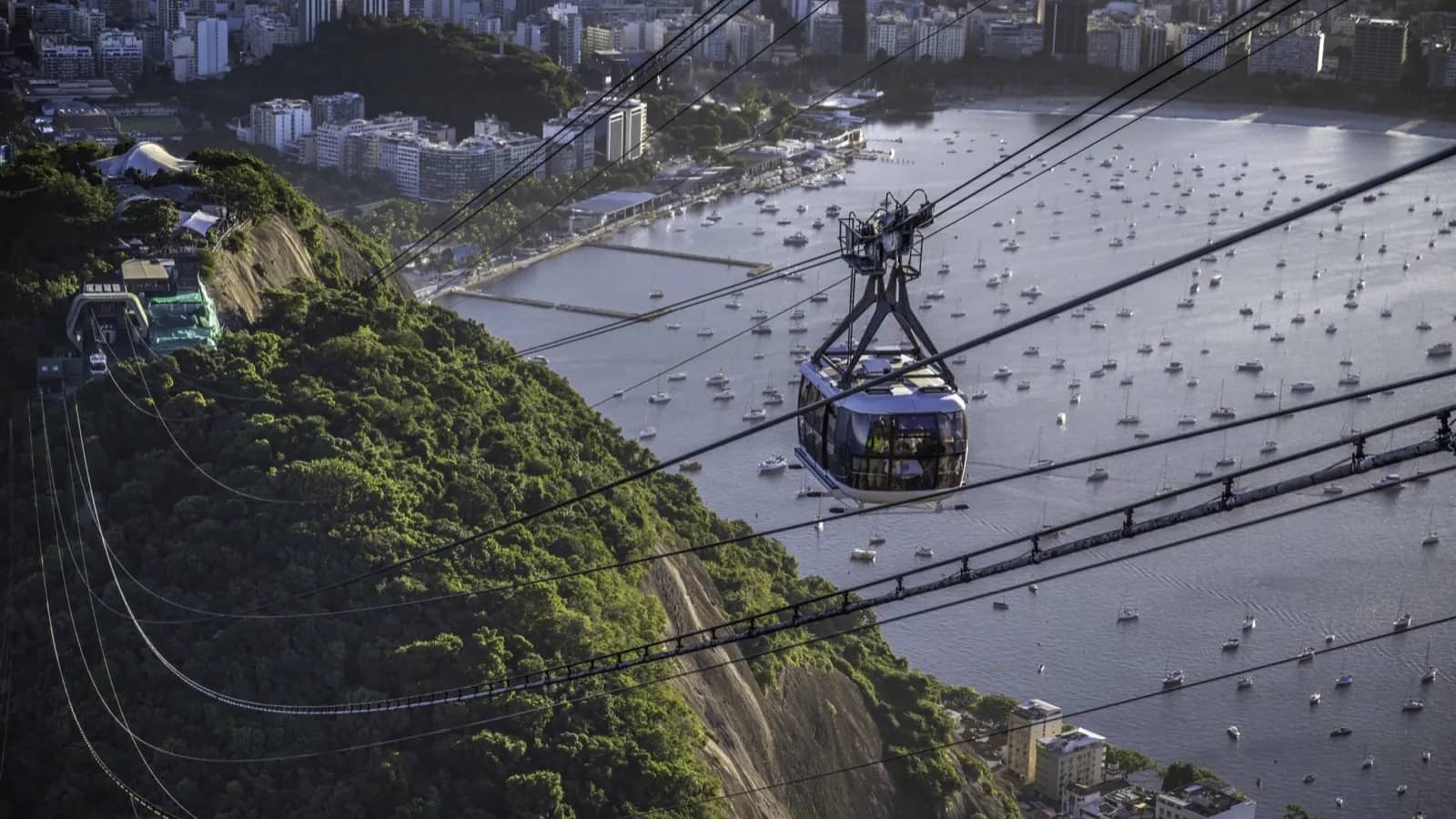
 | Parque Bondinho Pão de Açúcar | 4 to 15 | Mostly outdoor | 2.5 to 4 hours | Timed ticket recommended | Rio de Janeiro |
 | Trem do Corcovado | 5 to 15 | Train and outdoor monument | 3 to 4.5 hours | Timed train ticket essential | Rio de Janeiro |
 | Jardim Botânico do Rio de Janeiro | 3 to 14 | Outdoor with indoor museum option | 2 to 4 hours | Online entry useful, not always essential | Rio de Janeiro |
 | Iguaçu National Park | 6 to 15 | Outdoor | 3 to 5 hours | Timed entry should be booked | Foz do Iguaçu |
 | Parque das Aves | 3 to 15 | Shaded outdoor trail | 2 to 3.5 hours | Advance ticket useful in holidays | Foz do Iguaçu |
 | Museu Catavento | 7 to 15 | Indoor | 3 to 5 hours | Buy entry; reserve limited activities separately | São Paulo |
 | Museu do Futebol | 6 to 15 | Indoor | 2 to 3 hours | Walk-up or online ticket | São Paulo |
 | Projeto Tamar Praia do Forte | 4 to 14 | Mostly outdoor | 2 to 3 hours | General entry plus advance booking for special programs | Praia do Forte |
The age ranges and durations are planning judgments, not admission rules. They account for attention span, heat, stairs, spray, long transfers and whether children can follow wildlife instructions. The official venue remains the source of truth for entry and access.
Ten questions families ask about Brazil
Publicly indexed Reddit discussions were strongest on route load, toddler transport, Iguaçu flight days and city-specific safety. The sample identifies planning friction; it is not a representative survey. Official sources settle the operational answers below.
- Can Rio, Iguaçu and the Amazon fit into ten days? They can fit on a flight search screen, but most families lose too much time to transfers. Choose Rio plus Foz, then add one third base only when the child handles flight days well.
- Is Iguaçu worth the extra flight with children? Keep it when the falls are a trip priority and the family can give Foz two nights. Cut it when the airfare, connection or early departure would turn two of seven days into airport days.
- Which region is easiest for a first family trip? Rio has the broadest mix of indoor and outdoor choices. Foz is the easiest nature add-on because the two main venues sit beside each other and use one hotel base.
- Can families travel around Rio without renting a car? Yes. Metro and VLT work for several clusters, but Corcovado, Urca and airport trips still need a bus or final road transfer. Group days by neighbourhood instead of crossing the city repeatedly.
- Will a taxi or ride app supply a child seat? Do not assume it will. Brazil's restraint rule has exemptions for some paid passenger services, but an exemption is not a safety recommendation. Reserve the correct restraint in writing with the transfer operator.
- How much of a day does a domestic flight really use? Often most of it. Count packing, hotel checkout, airport travel, check-in, luggage collection and the next transfer, not only the scheduled time in the air.
- Should a family add Paraty or Ilha Grande to Rio? Add one only when road or boat handoffs leave a weather buffer. Neither is a casual city day trip with tired children and luggage.
- Do safety habits change between Rio, Foz and smaller stops? Conditions and transport choices vary by place and time. Ask the accommodation about the immediate area, use official advice and plan each evening return rather than applying one slogan to the whole country.
- What works for teenagers who do not want another viewpoint? Museu Catavento, Museu do Futebol, the science questions at Museu do Amanhã and the immersive bird trail add activity and discussion to the landmark days.
- What travel documents do children need? Rules depend on nationality, residency, who is travelling with the child and whether the child is a Brazilian citizen. Confirm the case with the airline and the relevant Brazilian consulate before buying a nonrefundable ticket.
Rio de Janeiro: build days by neighbourhood
Rio's five entries should become three or four days, not one landmark marathon. AquaRio and Museu do Amanhã share the port area. Sugarloaf needs its own weather window. Corcovado starts from Cosme Velho. Jardim Botânico provides a slower green day and can replace an exposed viewpoint when low cloud hides the city.
AquaRio
Children move through marine habitats and a large ocean tank rather than reading a sequence of display cases. Ages three to twelve have the clearest fit. Allow two and a half to four hours, with the shorter end for preschoolers and the longer end for children who stop at every tank.
Baby strollers are allowed, and the venue says rental strollers are available. Its route uses wide corridors, ramps and lifts. Wheelchairs are available subject to capacity, while accessible toilets and baby-changing facilities are documented. A family with a specific transfer or sensory need should still read the current accessibility guide before paying.
Food points are available in the lobby and along the circuit, and lockers are offered subject to availability. This is the strongest indoor fallback in the guide when rain or midday heat disrupts the outdoor plan. School holidays and wet weekends can concentrate visitors around the largest tanks, so an early timed entry is worth considering.
Buy from the official channel and check the live visit rules. Praça Muhammad Ali is the useful taxi or app-ride destination; families using public transport should verify the final walk from the Utopia AquaRio VLT stop. Use AquaRio's official visitor questions and accessibility information. Official details checked August 28, 2026.
Museu do Amanhã
The long-term exhibition asks how people shape the future through science, climate and society. Ages six to fifteen can engage with the questions, although younger children may respond more to the building and interactive stations than the full narrative. Allow two and a half to four hours.
The museum documents ramps, lifts, tactile flooring and models, adapted toilets, baby-changing rooms and a limited number of wheelchairs. It also offers sensory planning materials and self-regulation kits subject to availability. A stroller can follow the main accessible route, but crowded interactive areas may be easier with a compact model.
There is a restaurant area and places to pause, yet a child may need a meal before the main exhibition rather than halfway through it. The museum is indoors, while the walk across exposed Praça Mauá is not. Put the visit into the hottest or wettest part of the day and leave time outside only if conditions are comfortable.
Advance entry is useful on weekends and school breaks. The VLT Parada dos Museus is about 200 metres away, which makes this one of the simpler Rio attractions without a car. Read the official accessibility page, sensory visit guidance and directions. Official details checked August 28, 2026.
Parque Bondinho Pão de Açúcar
The activity is the journey: children board two cable-car stages, watch the city change below them and explore the summit viewpoints. Ages four to fifteen usually understand the wait and the height. Allow two and a half to four hours, longer if the family schedules a meal at the top.
Strollers are permitted under the park's published rules. The main stations and cable cars provide an accessible route, but the operator notes that some restaurant and woodland areas require stairs. Ask the park about the exact route when a visitor cannot transfer or manage steps.
Food, toilets and seating are available across the park, but not every viewpoint is shaded. Strong wind, lightning or poor visibility can interrupt the operation or make an expensive slot disappointing. Keep this day movable and check the live forecast before leaving the hotel.
Book a timed ticket through the official site. The entrance is at Avenida Pasteur in Urca. The park's directions use Botafogo metro followed by bus 513 and a short walk, while a taxi or app ride simplifies the last leg with a stroller. Check the official questions and operating notices and stroller rules. Official details checked August 28, 2026.
Trem do Corcovado
The rack railway through Tijuca Forest is part of the attraction, not only transport to Christ the Redeemer. Ages five to fifteen are a good fit for the train, the city view and the monument. Allow three to four and a half hours from Cosme Velho, including check-in and queue time.
Baby strollers must stay folded during the train journey. The tourist complex documents lifts and accessible toilets, but works and maintenance can change the final route to the platform. The live purchase page currently describes mobility assistance where stairs remain, so families with limited mobility should confirm the arrangement directly.
Toilets are available at the complex. Food and shade are less predictable once the family joins the busiest viewing flow, so use the facilities before the last ascent and carry water. Cloud can hide the city even when the railway runs. Crowds are part of the experience at popular slots, and a carrier is usually easier than unfolding a stroller at the monument.
Reserve the train date and time, arrive before the stated check-in deadline and bring the required child documents. The departure point is Rua Cosme Velho 513; there is no metro station at the door, so use a bus, booked taxi or app ride for the final approach. Read the official Trem do Corcovado practical information and check the live access notice before travel. Official details checked August 28, 2026.
Jardim Botânico do Rio de Janeiro
Children can look for giant palms, water plants, birds and changing textures rather than following a fixed exhibit script. Ages three to fourteen fit, with different goals: preschoolers need a short nature walk, while older children can connect the collections to Brazil's ecosystems. Allow two to four hours.
The main routes include broad paths, but roots, distance and side collections can make the garden less uniform than a museum. The institution asks visitors who need a wheelchair to contact its visitor centre in advance. A sturdy stroller works on the principal route; a carrier helps when a child wants to explore a narrower section.
Snacks are restricted to designated tables near the children's area and the cafes. Toilets and rest points exist, but the site is large enough that families should use them when they pass rather than wait. Tree cover helps with sun, not with a tropical downpour. The free Museu do Jardim Botânico can become part of a rain plan when its current entry is available.
Tickets can be bought online or at the designated gates, with payment methods varying. Rua Jardim Botânico 1008 is the useful entrance for drop-off and visitors with mobility needs. Check the official visiting rules and gate information. Official details checked August 28, 2026.
Foz do Iguaçu: pair two neighbours, not two rushed halves
Iguaçu National Park and Parque das Aves sit beside each other, but each deserves time. Two nights in Foz is the practical minimum after a flight. Use one full day for the falls and keep the bird park for the arrival afternoon or the second morning. A same-day combination is possible, but only if children can manage a long walking day.
Iguaçu National Park
Children ride the park bus, follow the Brazilian-side waterfall trail and reach viewpoints where spray and sound become the main experience. Ages six to fifteen are best placed to manage wet surfaces and stay behind barriers. Allow three to five hours for the standard visit, including internal transport and stops.
The park says its transport and principal viewpoints are accessible. The full waterfall trail includes stairs and about a kilometre of walking, so the official accessibility route sends visitors with reduced mobility to Porto Canoas for the panoramic lift and passarela. Wheelchairs are available free at the visitor centre. A stroller is possible on selected areas, but it is not a reason to promise a step-free full trail.
Food areas, toilets, lockers and places to pause are available at the visitor centre and Porto Canoas. Spray can soak a child even on a dry day, while heat, rain and slippery ground change the effort. Pack a light rain layer and dry bag, not disposable plastic that becomes litter. Never feed or approach the park's wildlife.
Book timed admission and check the live trail condition. Regular private cars do not enter the visitor route; the ticket includes internal park transport. City bus 120 links the urban terminal, airport and park, while a booked transfer is simpler with a child seat. Use the official general information and accessibility route. Official details checked August 28, 2026.
Parque das Aves
Children walk through immersive aviaries and observe toucans, macaws and other Atlantic Forest species. Ages three to fifteen have a clear reason to engage, and the route rewards slow observation. Allow two to three and a half hours rather than treating it as a quick stop after the falls.
The two-kilometre trail is paved and described by the park as accessible for wheelchairs and baby strollers. Wheelchairs are available, and rental child strollers are offered. The park documents benches along the trail, which is important when a younger child needs a reset between aviaries.
Accessible toilets, baby-changing facilities and free drinking-water points are available, along with food options. Much of the trail is shaded, but it remains an outdoor forest visit with humidity, insects and rain. Flight aviaries can be loud or intense for a child with sensory sensitivities, so leave space to step back.
Advance entry is useful during Brazilian school holidays. The park is beside Iguaçu National Park on Avenida das Cataratas, so the same airport or park bus corridor serves both. Read the official frequently asked questions and visit planner. Official details checked August 28, 2026.
São Paulo: two indoor anchors, not a token stopover
São Paulo earns its place when the family wants interactive indoor time or already uses the city as an international gateway. It does not need to be added merely because a flight connects there. Give it at least two nights so a delayed arrival does not erase the reason for stopping.
Museu Catavento
Children experiment across science sections devoted to the universe, life, engineering and society. The museum itself recommends the visit from about age seven, which matches the reading level and patience needed for more than 200 installations. Allow three to five hours and choose priority sections before arrival.
The museum states that the infrastructure provides access for people with disabilities, but it does not publish enough detail to guarantee every historic-building route. A compact stroller can help between sections. Contact the museum before booking if the family needs a specific lift, toilet or step-free path rather than assuming every optional activity is accessible.
A cafe sells drinks, snacks and light food. Food is generally not allowed in exhibition spaces, with limited exceptions for young children and medical needs. There is no public locker service, so do not arrive from the airport with family luggage. Most galleries are indoors; the butterfly activity may be suspended in rain.
General family groups under twenty do not need a group booking, but entry should still be secured and several limited activities use separate free reservations or same-day capacity. The Parque Dom Pedro II bus terminal is nearby; São Bento and Dom Pedro II are the useful metro references, followed by a walk or short ride. Check the official visit rules and directions. Official details checked August 28, 2026.
Museu do Futebol
The museum uses games, sound, film and football stories beneath Pacaembu's stands. Ages six to fifteen can participate even when they do not follow a Brazilian club. Allow two to three hours, with time for interactive stations rather than requiring children to read every historical panel.
All public floors are served by lifts and escalators. The museum documents tactile flooring and models, wheelchairs, audio and video guides, accessible toilets and baby-changing spaces in unisex toilets. That makes it one of the clearest accessibility choices in this guide, although families should still ask about any temporary gallery.
Toilets and rest points are available, while food should be planned around the museum rather than inside the exhibition. The visit is indoors and works well during heavy rain or the hottest afternoon. Match days and major events around Pacaembu can change traffic and crowd conditions outside even when the museum operates normally.
Tickets are available at the box office and through the official online route. Praça Charles Miller is the destination; Clínicas on metro line 2 is the useful rail reference, with a final walk that may feel long with a tired preschooler. Read the official hours, entry and accessibility page. Official details checked August 28, 2026.
Bahia alternative: a slower turtle and beach stay
Praia do Forte should replace São Paulo in a ten-day route, not sit after it. It works for a family that wants a slower final base and is comfortable arranging the road transfer from Salvador airport.
Projeto Tamar Praia do Forte
Children see regional marine life, learn how turtles are protected and can watch scheduled feeding or interpretation activities. Ages four to fourteen fit the general visit. The separate child version of the Biologist for a Day program has its own stated age range and limited group size. Allow two to three hours for general entry.
The public page does not provide enough current detail to promise a completely step-free circuit or stroller access to every activity. The main visitor centre is an open attraction, but sand, outdoor paths and program-specific spaces may change the route. Contact the centre before payment when accessibility determines the visit.
The official page lists a restaurant and visitor facilities, but it does not clearly promise a baby-changing station or shade at every tank. Use the toilet on arrival, carry sun protection and check whether a feeding activity has seating. Hatchling walks depend on the biological season and daily conservation work. They are never a guaranteed show.
Buy general entry through the official centre and reserve special programs separately. The centre is in Praia do Forte, about 50 kilometres from Salvador airport by the route described by Tamar. A pre-arranged transfer with the correct child restraint is easier than changing buses with beach luggage. Read the official Projeto Tamar Praia do Forte visitor page. Official details checked August 28, 2026.
Five days: Rio without a landmark sprint
Day 1: Arrive, eat near the accommodation and take a short local walk. Do not attach a timed viewpoint to an international arrival.
Day 2: Visit AquaRio in the morning. Eat before moving to Museu do Amanhã or Praça Mauá. Stop after the museum rather than adding another distant landmark.
Day 3: Use the clearest weather window for Parque Bondinho. Keep the second half of the day light, with a beach walk or hotel rest.
Day 4: Take Trem do Corcovado at a reserved time. A long lunch and nap block make more sense than crossing the city for another ticket.
Day 5: Use Jardim Botânico for a slower outdoor morning. If rain is heavy, switch to the museum option or return to an indoor attraction the family shortened earlier.
Seven days: Rio and Foz do Iguaçu
Days 1 to 4: Follow the Rio outline but choose either Sugarloaf or Corcovado if the children tire easily. Leaving one viewpoint for a future trip is better than turning both into obligations.
Day 5: Fly to Foz do Iguaçu. Count the complete transfer as the day's main event. If arrival is early and everyone is rested, use Parque das Aves for the afternoon; otherwise eat and stop.
Day 6: Visit Iguaçu National Park at the reserved time. Keep dry clothes and a simple dinner ready.
Day 7: Use Parque das Aves if it did not fit on day five, then depart. Do not book the park and an airport departure so tightly that a long queue breaks the plan.
Ten days: Rio, Foz and São Paulo
Days 1 to 4: Rio with one port-area day, one clear-weather landmark, one garden or beach block and one flexible day. Families do not need both famous viewpoints unless both children want them.
Day 5: Fly to Foz and settle in. Protect the evening.
Day 6: Iguaçu National Park.
Day 7: Parque das Aves in the morning, followed by a flight to São Paulo only if the schedule leaves a calm airport handoff. Otherwise stay a third night and fly on day eight.
Days 8 and 9: Give Museu Catavento the longer day. Pair Museu do Futebol with a neighbourhood meal and early return.
Day 10: Depart. If the flight is late, choose a nearby low-risk activity rather than crossing São Paulo with luggage.
For a beach ending, replace São Paulo with Praia do Forte and fly to Salvador. Do not add both branches to a ten-day family itinerary.
Transport in Brazil with children
When driving actually helps
No for this core route. Rio and São Paulo have useful rail networks, while taxis and app rides cover the final leg. Foz uses airport transfers, a city bus corridor and the national park's internal transport. Praia do Forte is easier with a reserved airport transfer.
A rental car becomes useful for a road itinerary outside these hubs, but it also creates parking, toll, navigation and restraint questions. Avoid collecting a car for one city day. If you rent, photograph the seat and installation before leaving the lot and keep the contract support number offline.
Reserve the child seat, not just the car
Brazil's CONTRAN Resolution 819 covers children under ten who have not reached 1.45 metres and sets device categories by age, height and weight. The same resolution contains exemptions for some passenger transport categories. An exemption is not evidence that travelling unrestrained is safe.
For a rental car or private transfer, reserve the correct seat in writing and give the child's height and weight. Ask for a photo or model if the provider can supply one. For taxis and app rides, do not assume a seat will be available on demand. Families who bring their own must still confirm that it can be installed in the vehicle.
Use the official CONTRAN resolution for the current legal text. This guide is practical travel information, not legal advice.
Airports, domestic flights and strollers
RIOgaleão lists BRT, regular and special buses, official taxis and a designated app-ride pickup area. A direct taxi or pre-booked transfer is simplest after a long flight with children. The public option can work for a lightly packed family, but it may require another transfer before the hotel.
For domestic flights, compare the airline's stroller and car-seat rules for the exact fare and operating carrier. GOL, for example, publishes specific allowances for an infant support item and restrictions on which folding strollers can enter the cabin. Other airlines and codeshare flights can differ. Put medicine, one change of clothes and an essential comfort item in hand luggage.
Approximate nonstop flight time is only a starting point: Rio to Foz is roughly two hours, and Foz to São Paulo roughly two hours. Family planning should block half a day for either move once hotel, road, check-in and baggage time are included.
Seasons, food and everyday family logistics
Brazil weather, school breaks and crowd pressure
Brazil spans several climate regions. Rio and São Paulo can have hot, stormy summer periods, Iguaçu runs year-round with changing water and spray conditions, and Bahia's coast follows a different rain pattern. Check the exact city and venue rather than using a single "best time for Brazil" answer.
December, January and July overlap with major Brazilian school-holiday demand, while Carnival and long public-holiday weekends create local surges. Book the limited landmark slots first, then leave an unbooked block that can absorb rain, cloud or a slow morning.
Meals with children
Buffet-by-weight restaurants can work well because children see the food and take small portions. Rice, beans, grilled meat, pão de queijo, fruit and simple pasta are widely familiar starting points, but recipes and allergens vary. Ask directly rather than treating a familiar name as proof of ingredients.
Families often eat dinner later than very young children prefer. A substantial lunch and a simple early hotel meal can be easier than waiting for a busy restaurant. Keep one reliable snack for queues, but follow each venue's food rules.
Health, pharmacies, water and sun
Brazil's Ministry of Health recommends seeing a clinician four to eight weeks before travel for route-specific advice. Yellow fever, malaria and mosquito-borne disease questions depend on the destination, age and medical history. A Rio and São Paulo museum trip is not the same exposure as a remote Amazon itinerary. Never copy another family's vaccine plan.
SAMU medical emergency service uses 192. UPAs provide urgent public care, while private clinics and pharmacies vary by city. Carry insurance details, medication names and the child's health summary. Use 190 for police and 193 for fire, based on Brazil's official public-service number list.
Brazil has a national drinking-water quality standard, but a standard does not prove the condition of every building's tank or rural source. The Ministry of Health advises travellers to use filtered and treated drinking water. Ask the accommodation about its supply, use sealed or reliably treated water when uncertain, and avoid ice from an unknown source.
Sun and humidity can make a short walk much harder. The Ministry recommends protective clothing, suitable sunscreen, steady fluid intake and avoiding direct exposure in the strongest part of the day. Use child-appropriate repellent according to the product and clinician guidance.
Useful apps for a Brazil family trip
Download the tools that match the route, then test them before the flight.
- Google Maps: save offline areas for Rio, Foz and São Paulo, plus every hotel and attraction entrance.
- Cittamobi: check whether its live transit coverage supports the city and route you plan to use before relying on arrival-day directions.
- 99: a locally established ride app in Brazil. A completed booking does not guarantee a child seat, so arrange that separately.
- The airline app: keep domestic boarding passes, gate changes and bag status in the operating carrier's own app.
- INMET and Alerta Rio: use Brazil's national meteorology service for the wider forecast and Alerta Rio for Rio-specific rain and operational notices.
- Google Translate: download Portuguese offline and save medical, allergy and child-seat phrases.
- The attraction app or ticket wallet: Trem do Corcovado and Projeto Tamar publish app or mobile-ticket options. Keep an offline screenshot as backup.
- WhatsApp: save the accommodation, transfer operator and family group before arrival. Confirm that a number is really the venue's official contact before sending personal details.
Keep Brazil flight days and ticket handoffs usable offline
Families use mobile data for airport pickups, map rerouting, weather checks, timed tickets, translation and meeting after a split activity. Download the hotel address, tickets, child medical information and one map before leaving WiFi. A mobile plan cannot remove a mountain dead zone, park congestion or a discharged battery.
The dated Roaming eSIM catalog snapshot reviewed for this guide listed 17 Brazil packages using Claro, TIM or Vivo across the available options, with network generation reaching up to 5G on packages that disclose it. That is catalog coverage, not a promise of 5G at every beach, forest trail or indoor room. The selected package card is the source of truth for operators, data, validity, hotspot support, activation and any daily high-speed allowance.
For a Brazil-only trip, start with the Brazil Roaming eSIM page. A route that also crosses into Argentina or another listed neighbour may fit a South America plan. A wider trip may justify Global 120 coverage only when every destination appears on the selected plan. Three visible product cards are enough here; another near-duplicate plan would not help the family choose.
Why Roaming eSIM is a broader fit than Motorola Global Connect for this route
Motorola Global Connect is convenient for eligible Motorola owners in its supported purchase markets, and Brazil was one of the first markets named at launch. The limitation is device and market eligibility. A mixed-phone family should not discover at the airport that only one handset can buy the offer.
Roaming eSIM publishes Brazil, South America and global choices for compatible unlocked iPhone, Samsung, Pixel and Motorola devices, with package-level terms visible before checkout. It also advertises 24/7 support. That makes it a broader fit for families carrying different phone brands and comparing the complete route. It is not a claim that every Roaming eSIM package is reloadable or cheaper. Read the Motorola Global Connect travel eSIM analysis for the launch limits and use the live package card for the final comparison.
Before checkout, estimate use with the travel data calculator, read when to install a Roaming eSIM, check phone compatibility and compare country with regional coverage. Families planning a second country can use Portugal with kids for their Portugal itinerary.
Sources and updates
Before departure, recheck transport, child-restraint requirements, health advice and attraction access for your Brazil itinerary.