BRICS Summit Delhi traffic 2026: airport, Metro and road plan
The 18th BRICS Leaders' Summit takes place at Bharat Mandapam in New Delhi on Saturday, September 12 and Sunday, September 13, 2026. Related business activity and traffic arrangements begin on Friday, September 11. Travelers should expect temporary road holds and diversions across central and south Delhi, especially when official motorcades move between the airport, diplomatic area, hotels and Pragati Maidan.
This does not mean every named road will be closed all day. Delhi Police described the rehearsal controls as "traffic diversions and regulated movement." The final summit-period order can use different hours or routes, so an old rehearsal list is a warning map, not permission to leave at a specific time.
The short answer: use Delhi Metro for trips that can be completed by rail, move airport and railway journeys earlier, and avoid scheduling a central Delhi road transfer immediately before a flight or train. Check Delhi Traffic Police on the day because motorcade holds can begin or end without matching a normal road-closure timetable.

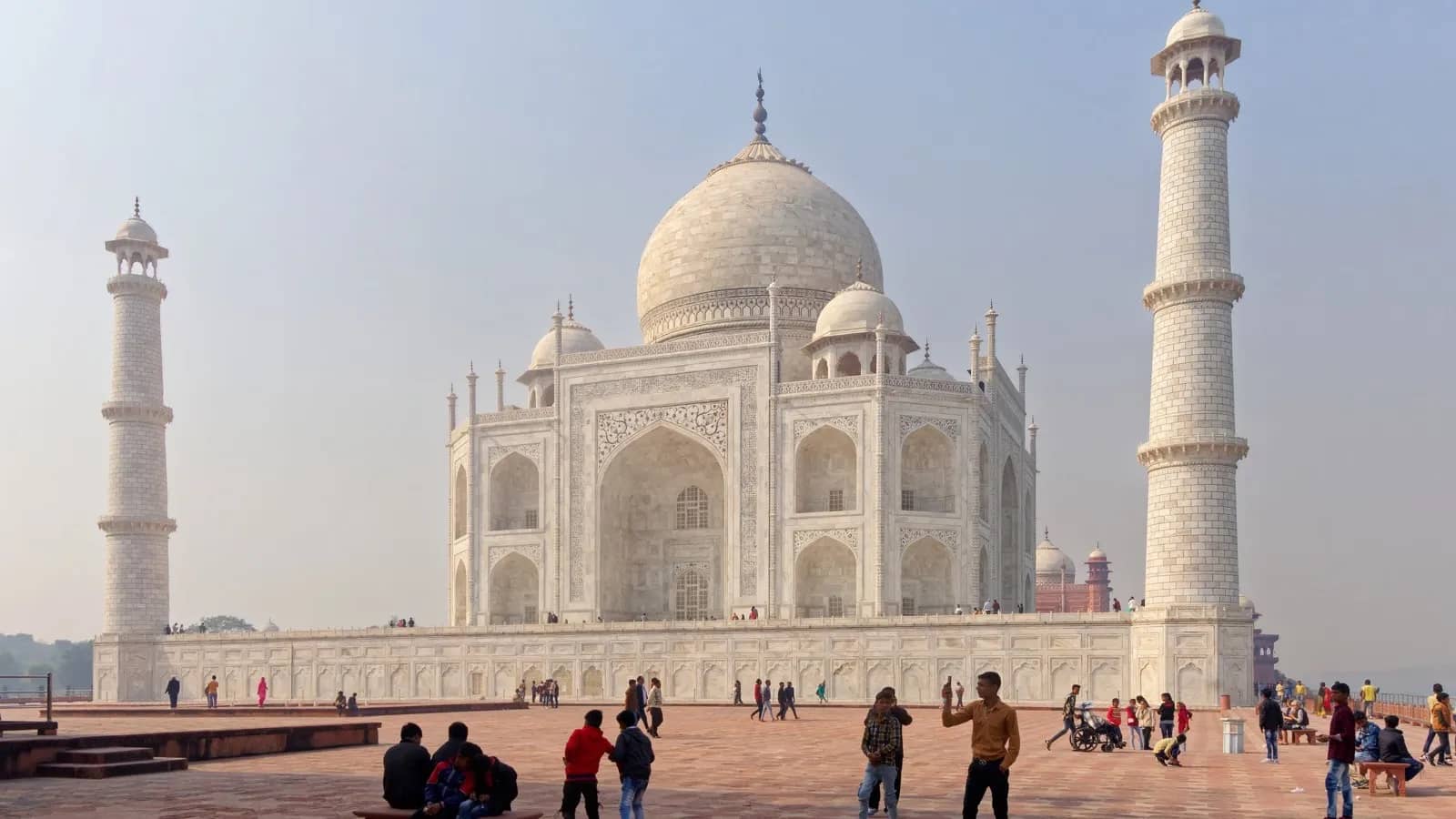
Photo: Aloofmanish via Wikimedia Commons, dedicated to the public domain under CC0 1.0. The photograph was taken in July 2025 and shows the venue, not the 2026 summit or current traffic.
This guide was checked on September 7 against government summit information, Delhi Traffic Police notices, current traveler questions and the public Roaming eSIM catalog. Recheck it when the final traffic order appears.
BRICS Summit Delhi travel at a glance
| Decision | Plan for September 11 to 13 |
|---|---|
| Summit venue | Bharat Mandapam at Pragati Maidan |
| Leaders' Summit dates | September 12 and 13 |
| Wider travel window | September 11 to 13, including business and security arrangements |
| Road expectation | Temporary regulation and diversion around motorcade routes, not proof of a continuous citywide closure |
| Best default transport | Metro where the full journey is practical |
| Airport or train departure | Leave earlier than a normal Delhi estimate and monitor the operator |
| Central Delhi sightseeing | Keep the route compact and avoid crossing several regulated corridors by car |
| September 11 holiday | Confirmed for central government offices in Delhi and New Delhi, not a blanket closure of all schools, colleges or businesses |
| Live source | Delhi Traffic Police, followed by the airline, railway or Metro operator for the trip itself |
The most useful distinction is between a road being named in an advisory and a road being unavailable for the entire day. A motorcade can stop traffic for a short period, clear it, and require another hold later. A taxi app may still offer a route even when police are about to regulate the next junction.
What the rehearsals tell us, and what they do not
Delhi Traffic Police rehearsed motorcade movements on several days before the summit. The September 6 operation ran from 9 a.m. to 10 p.m. and used 22 diversion points across more than 35 roads. Police advised people to plan in advance, allow extra time and prefer the Metro.
The affected network has included these corridors:
- Sardar Patel Marg, Mother Teresa Crescent, Teen Murti Marg and the Chanakyapuri diplomatic area
- Akbar Road, Janpath, Ashoka Road, Barakhamba Road and Tolstoy Marg
- Lodhi Road, Subramania Bharti Marg and Dr Zakir Hussain Marg
- Mathura Road, Bhairon Road and the Ring Road approach near Pragati Maidan
- Dhaula Kuan, Africa Avenue and roads connecting the airport side of the city
This list shows the likely pressure area. It does not establish the summit schedule for each junction. Rehearsal hours have changed from one day to the next, and the live security plan may regulate a route in stages.
Do not build a journey around a news headline saying roads are affected "today." Check the publication date and whether the story describes a rehearsal. The current source is Delhi Traffic Police, not a copied list with no update time.
Is central Delhi closed during the BRICS Summit?
No official notice reviewed on September 7 declared all of central Delhi closed for three days. Movement can still be slow and unpredictable across the New Delhi district, diplomatic area and the roads around Bharat Mandapam.
Use this rule for sightseeing:
| Plan | Better choice |
|---|---|
| One central Delhi attraction | Use the nearest useful Metro station, then walk where permitted |
| Several attractions across central and south Delhi | Reduce the list and keep stops in one area |
| Timed museum ticket | Check the institution directly, then add a large arrival margin |
| India Gate plus Connaught Place | Treat this as two transport decisions, not one quick taxi loop |
| Red Fort or Old Delhi | Approach by Metro and avoid a road transfer through New Delhi district |
| Hotel change on September 11 to 13 | Ask both hotels about luggage timing, then move outside likely motorcade periods if possible |
Bharat Mandapam itself is a summit venue, not a public attraction during the security operation. Do not travel to Pragati Maidan hoping to watch delegations arrive. Barriers, credential checks and traffic controls can extend beyond the convention centre entrance.
If a museum or monument remains open, that does not guarantee its usual vehicle drop-off. Save the pedestrian approach and be prepared to walk the final section. Anyone with limited mobility should call the venue before leaving and ask whether the accessible entrance and drop-off remain usable.
Delhi Airport plan during the summit
Flights may operate normally while roads to the airport are regulated. A traveler can miss an operating flight after reaching the terminal late.
Start with the exact terminal. Delhi Airport uses more than one passenger terminal, and a Metro plan that works for Terminal 3 may not be the right final stop for Terminal 1. Use the Delhi Metro journey planner and Delhi Airport on the day.
From central Delhi
The Airport Express from New Delhi station is the clearest rail-first option for many Terminal 3 journeys. Reach New Delhi Metro station without crossing the city by road where possible. Do not confuse the Metro station, railway station entrances and taxi drop-offs. Follow signs and allow time for the transfer with luggage.
From south Delhi
Check whether a Metro route can keep most of the trip off roads such as Africa Avenue, Sardar Patel Marg, Lodhi Road and Dhaula Kuan approaches. A taxi can still be reasonable, but it needs more time than an ordinary map estimate when a motorcade is moving.
From west, north or east Delhi
Ask the official planner for the exact terminal rather than copying an airport route from central Delhi. A road journey can meet a regulated corridor late in the trip even if the first half is clear.
For every airport trip:
- Check the airline before leaving.
- Confirm the terminal in the booking, not from memory.
- Compare a rail-first route with a road route.
- Leave a larger buffer than the airline's minimum check-in guidance.
- Save the boarding pass, booking reference and terminal map offline.
- If a taxi is necessary, tell the driver the terminal and flight time before pickup.
Do not ask a driver to ignore a police diversion because a navigation app shows a faster road. Police instructions take priority over the route on the screen.
Railway station plan
New Delhi, Old Delhi and Hazrat Nizamuddin stations sit in different parts of the city. A generic instruction to "go to Delhi station" can send a traveler to the wrong place even without summit traffic.
| Rail departure | Planning approach |
|---|---|
| New Delhi Railway Station | Use New Delhi Metro or another rail-first approach when practical; confirm the correct station entrance for the train and coach position |
| Old Delhi Railway Station | Use the official Metro planner for the Old Delhi side and avoid routing through central New Delhi by car unless necessary |
| Hazrat Nizamuddin Railway Station | Check the rail connection serving the Sarai Kale Khan and Nizamuddin area, then confirm the final walk or vehicle approach |
Use NTES for the train's current running information. A delayed train is no reason to leave late. Traffic controls can clear just as the railway recovers, or the reverse.
With children, older relatives or several bags, a pure Metro route may be difficult. A mixed plan often works better: use rail for the long central section, then a short taxi or auto approach outside the regulated area. Check station accessibility for every interchange rather than assuming all lifts and escalators will be available.
Will taxis, autos and app cabs work?
They can operate, but they cannot pass a police hold. Pickup points may move, drivers may cancel after seeing the route, and the fare estimate can change with time and demand.
Do not use an app booking as evidence that the road is open. Confirm the vehicle only after checking the current advisory. For an airport or train, keep a second plan that does not depend on the same road corridor.
Autos are useful for short connections outside controlled roads. They are not a dependable answer for a cross-city trip with luggage during summit movements. A hotel car uses the same streets as other vehicles, so ask what route and margin the hotel is planning rather than accepting "airport transfer available" as a complete answer.
Is September 11 a public holiday across Delhi?
Central government offices in Delhi and New Delhi are due to close on Friday, September 11 because of summit logistics. That order does not prove that every school, college, Delhi government office, private company, shop or attraction will close.
Current Reddit discussions show why this distinction matters. Students are asking whether the government-office order applies to their college. The safe answer is to wait for the institution's own notice. Do not skip an exam, class, hotel check-in or booked visit based on a forwarded message.
The office closure may reduce some commuting, but it does not remove delegate vehicles, security operations or ordinary weekend traffic. Treat it as one part of the plan, not a promise of empty roads.
Metro, bus and walking decisions
Delhi Traffic Police has repeatedly recommended the Metro during rehearsals. Metro trains avoid road holds, but the first and last part of the trip can still be affected.
Before leaving:
- Check the exact station name and interchange count in the DMRC planner.
- Allow for security screening, walking and crowded platforms.
- Keep a payment method that works if the preferred app or card fails.
- Do not depend on a bus connection whose route crosses a regulated road.
- Save a walking map between the station and destination.
Bus diversions can change quickly when police regulate a junction. If a bus is the only accessible option, check the operator and ask the destination about an alternative drop-off. Walking may be the fastest final link for an able traveler, but September heat, humidity and rain can make a long luggage walk a poor plan.
Rain can turn a delay into a missed connection
September is still part of Delhi's monsoon period. A motorcade hold and local waterlogging can affect different roads at the same time. Check the IMD New Delhi warning page rather than relying only on the weather symbol inside a map app.
If heavy rain is forecast, avoid an itinerary that requires several road transfers. Put tickets and travel documents in a waterproof pouch, keep a small power bank charged, and save the hotel and driver contacts offline. A Metro route may still be preferable, but station entrances and the final walk need a rain plan.
Live sources and useful apps
| Tool | Use it for | Limitation |
|---|---|---|
| Delhi Traffic Police | Current road advisories, congestion notices and diversion instructions | A post can change after a motorcade clears |
| Delhi Metro Rail | Station, line and interchange planning | It does not decide road access to the first or last stop |
| Delhi Airport | Terminal and passenger information | It cannot predict a road hold across the city |
| Airline app | Flight status, check-in and gate messages | A live flight does not mean the road journey is clear |
| NTES | Train running information | Station access is a separate decision |
| IMD New Delhi | Rain and weather warnings | Check again close to departure |
| Offline map | Walking fallback and saved places | It does not show every live police control |
Delhi Traffic Police lists traffic helpline 1095, phone 011-25844444 and WhatsApp 8750871493 in its public notices. Use 112 for an emergency, not for routine route planning.
Save the official accounts before the summit. Lookalike screenshots can circulate without a date, and a route from a September 1 rehearsal may be presented as a September 12 instruction.
What to save offline
- Flight or train ticket and booking reference
- Exact airport terminal or railway station name
- Hotel address in English and a local map pin
- Metro route and interchange names
- One road backup and one rail-first backup
- Delhi Traffic Police contact details
- Airline, railway and hotel phone numbers
- A meeting point if the group becomes separated
Screenshots should support the official app, not replace a live check. Read the offline maps guide for a more complete fallback plan.
Mobile data for live Delhi route changes
A static news story can tell you which roads were regulated during a rehearsal. It cannot refresh the route after you leave the hotel. A Roaming eSIM can provide mobile data for the current police notice, DMRC planner, airline messages, NTES and driver contact while the usual SIM remains in the phone. It does not remove traffic controls, guarantee reception or make a full train less crowded.
The public Roaming eSIM catalog returned 16 India plans when checked on September 7. It included fixed and daily data choices, and published coverage fields named Airtel, Idea, Jio, Vi India and Vodafone across returned plans. Speed, hotspot support and top-up status are package specific, so read the selected card rather than assuming every India plan has the same terms.
Use the India Roaming eSIM page for current packages. That product page owns India shopping intent and plan selection. This traffic guide does not claim to compare the "best eSIM for India."
Install before the travel day using the eSIM installation timing guide, but follow the selected package's activation rule. Check the eSIM compatibility guide and estimate navigation, messaging and video use with the travel data calculator.
Ten BRICS Summit Delhi traffic questions
When is the BRICS Summit in New Delhi?
The Leaders' Summit is scheduled for September 12 and 13, 2026 at Bharat Mandapam. Related business and traffic arrangements begin on September 11.
Are more than 35 Delhi roads closed for three days?
No current official notice reviewed for this guide says every named road will remain closed continuously. Rehearsal notices used temporary diversions and regulated movement across more than 35 roads.
Is central Delhi closed during the summit?
No blanket three-day closure was published by September 7. Expect controls around New Delhi district, diplomatic routes and Pragati Maidan, then check each attraction and the live traffic notice.
Should I use Delhi Metro?
Yes, when Metro can handle most of the journey. Delhi Traffic Police recommended it during rehearsals. Plan the first and last section separately.
How early should I leave for Delhi Airport?
There is no single safe number for every origin and terminal. Use a larger margin than normal, compare road and Metro routes, and follow the airline's check-in deadline.
Can I reach New Delhi Railway Station by Metro?
Yes. Confirm the correct New Delhi station and entrance, then leave time for the walk, screening and platform access.
Will Uber, Ola, taxis and autos operate?
Vehicles can operate, but police may divert or hold them. Pickup locations, wait times and routes can change.
Are schools and colleges closed on September 11?
The confirmed closure covers central government offices in Delhi and New Delhi. A school or college should issue its own notice.
Can tourists visit India Gate or Connaught Place?
They may remain accessible, but road approaches and drop-offs can change. Check the attraction, use Metro where practical and keep the day in one area.
Where can I find the final traffic advisory?
Check Delhi Traffic Police directly. Then check the airline, Delhi Airport, DMRC or NTES for the trip affected by that advisory.
Change the trips that carry a deadline
Do not cancel an entire Delhi visit because a rehearsal named 35 roads. Change the parts that carry a deadline. Move airport and railway trips earlier, use Metro for cross-city movement, keep sightseeing in one zone and leave road-heavy plans flexible.
This page will need a same-topic update when Delhi Traffic Police publishes the final summit order. The useful change is to replace uncertainty with confirmed times and routes, not create another BRICS traffic URL.