Balos Beach visitor cap: do you need a reservation?
No official reservation was required for Balos Beach when this guide was checked on September 4, 2026. Kissamos is considering visitor limits and a timed online booking system, but current reporting describes a proposal, not a live permit platform.
That distinction matters. Viral footage of a packed lagoon has revived calls for controls, while several articles now mix future ideas with current access. Do not pay an unofficial website for a supposed Balos entry slot. A boat ticket, excursion booking or parking charge is not proof of a government beach reservation.

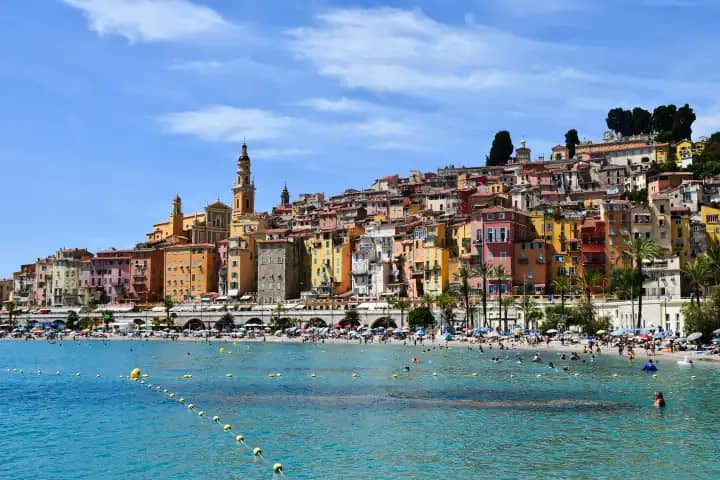
Photo: dronepicr via Wikimedia Commons, licensed under CC BY 2.0. The photograph was taken in July 2020.
The practical answer: choose between a licensed boat excursion and the current land route based on mobility, rental-car terms and tolerance for crowds. Then check the operator and an official local source again before departure. If a reservation system starts, the official booking address, date, price and entry rules should be published by a public authority.
Balos Beach access at a glance
| Question | Current answer |
|---|---|
| Is a Balos Beach reservation required? | No current official booking requirement was confirmed on September 4, 2026 |
| Is a visitor cap planned? | Kissamos is considering limits and an online system; the final rule and start date remain unconfirmed |
| What number has been discussed? | Recent reporting cites a proposed 1,200 visitors per three-hour window; this is not an adopted visitor entitlement |
| Was an earlier limit proposed? | A 2025 environment-agency notice anticipated no more than 2,000 sea arrivals in two or three shifts, subject to a final maximum |
| How can visitors reach Balos? | Official tourism guidance describes a dirt-road approach followed by a walk, or a boat from Kissamos |
| Is there public transport to the lagoon? | The regional tourism listing does not list a bus to Balos |
| Is the beach fully serviced? | Visit Greece says it is not serviced and advises visitors to bring sun protection |
| Is it suitable for limited mobility? | The regional tourism listing marks Balos as not accessible for people with disabilities; verify a specific boat and transfer before booking |
This page was checked at 1:50 a.m. WEST on September 4, 2026. The proposed system could change quickly. The Municipality of Kissamos, Greece's protected-area authority and the visitor's boat or transfer operator take priority over this article.
What is actually being proposed?
Kathimerini reported on August 8 that the Municipality of Kissamos was considering visitor limits and an online reservation platform for Balos, Elafonisi and Falasarna. The report said Balos can receive roughly 4,000 to 5,000 people a day in peak periods. It also said a capacity assessment was still being prepared and that the plan would require cooperation from several authorities.
A separate report attributed a more specific model to the mayor: up to 1,200 visitors in each three-hour window, with boat and land arrivals coordinated digitally. That figure is useful for understanding the proposal. It is not a current promise that four daily windows exist, that every slot admits 1,200 people or that a traveler can book one today.
The plan did not begin with this week's video. In March 2025, Greece's Natural Environment and Climate Change Agency announced agreements for protection work at the three western Crete sites. For Balos, the notice anticipated parking after Kalyviani, small-bus transfers to the trail and a final sea-arrival limit of no more than 2,000 people across two or three shifts.
The 2025 notice described measures to be implemented. The 2026 reports still discuss assessments, cooperation and a future platform. Taken together, they show a serious policy direction, but not a clear launch notice. That is why this guide does not present any cap, parking arrangement or booking page as active unless an official current source says so.
How to recognize a real Balos reservation system
A credible launch should answer all of these points:
- Which public authority operates or endorses the booking website?
- On what date does the requirement begin?
- Does it apply to boats, land arrivals or both?
- Does a boat ticket include the required beach slot?
- Are children counted, and are any visitors exempt?
- What happens when wind cancels a sailing or a road closes?
- Can a booking be changed or refunded?
- How are tour operators and independent visitors allocated?
Do not infer these answers from a tour seller's checkout page. A commercial excursion can require its own reservation even when the beach itself does not. Save the operator confirmation and ask directly whether any public permit is included.
If a website appears after this article is published, inspect the domain and find the same link on the municipality or protected-area authority website. Search advertisements and social posts are not enough. Never send passport details or payment to a page that cannot be traced back to an official notice.
Boat or car and hike: which route makes sense?
There is no universally better route. The practical choice depends on who is traveling and what they value.
| Route | Better fit | Main trade-off | Confirm before paying |
|---|---|---|---|
| Boat from Kissamos | Visitors who want to avoid the unpaved road and descent from the viewpoint | Fixed sailing times, weather exposure and a large shared arrival | Boarding point, cancellation terms, time ashore, accessibility and how passengers reach the beach |
| Car and walk | Visitors who want more control over arrival and departure | Unpaved driving, rental restrictions, parking uncertainty and a steep exposed walk | Rental contract, current road access, parking arrangement and return effort |
| Private transfer | Visitors who do not want to drive but can manage the trail | More expensive and still dependent on land access | Vehicle drop point, waiting time, return pickup and what happens if controls change |
Going by boat from Kissamos
Visit Greece describes boat services from Kissamos. A cruise removes the need to drive the dirt road, but it also places the visit inside a fixed group schedule. Read the exact itinerary rather than assuming every boat makes the same stops or allows the same amount of time at the lagoon.
Ask how passengers leave the vessel at Balos. A traveler with a stroller, limited mobility, a recent injury or a child who cannot wade safely needs an operator-specific answer. Public discussions contain conflicting experiences, which is a reason to ask the boat company, not a basis for one general claim.
Wind can change or cancel a sailing. Keep the return plan flexible and read the refund or rebooking terms before purchase. A sunny forecast in Chania does not guarantee the same sea conditions around Gramvousa.
Driving and walking to Balos
The land approach involves an unpaved road and a walk from the parking area. An ordinary rental agreement may exclude unpaved-road damage or roadside assistance, even if the vehicle can physically make the journey. Read the contract and ask the rental company in writing.
Do not treat an old map pin as confirmation that a car can still reach the same point. The 2025 protection plan specifically contemplated moving parking closer to Kalyviani and using small buses for the remaining road. Check the present arrangement before setting out.
The walk is exposed, and the return climb comes after the beach visit. Carry enough water, wear shoes suitable for loose ground and leave energy for the way back. A flip-flop descent that looked manageable in a short video may feel very different in midday heat.
When is Balos least crowded?
No source can promise an empty Balos in peak season. The most useful strategy is to avoid overlapping with the largest scheduled boat arrivals, but exact timetables and passenger loads change.
Land visitors often aim for early morning or later afternoon. That can reduce overlap, yet it creates other constraints: longer shadows do not remove the difficult road, the hike still needs daylight, and a late visit leaves less room for a vehicle or weather problem. Boat visitors have less control because the operator sets the schedule.
Check three things the day before:
- the current marine and local weather forecast;
- published excursion departure times from Kissamos;
- any municipality, protected-area or operator notice about access.
If the lagoon is central to the trip, give it a separate day rather than squeezing it between distant stops. If the experience you want is quiet swimming rather than the Balos viewpoint, be willing to choose another beach. Elafonisi and Falasarna also face protection and crowd-management discussions, so neither is a guaranteed empty substitute.
Facilities, shade and what to carry
Official tourism guidance describes Balos as unserviced. The regional tourism listing also says there is no natural shade and does not list nearby restaurants, accommodation or a lifeguard. Temporary commercial services can change, so plan as though the beach will not solve a missing-water, food or shade problem.
Pack for the route, not just the photograph:
- drinking water for the beach and return walk;
- sun protection that does not depend on renting an umbrella;
- food that tolerates heat and does not create loose rubbish;
- closed shoes for the trail, plus beach footwear if wanted;
- a charged phone and small power bank;
- required medication and basic first aid;
- a bag for everything brought in.
Do not count on a working toilet at the exact point where it is needed. Ask the boat operator about onboard toilets and the timing of the last facility before disembarkation. Land visitors should identify the last reliable stop before Kalyviani.
Balos sits within a protected Natura 2000 area. Stay on the established route, do not drive beyond current barriers, do not remove sand or shells, and carry waste back out. A visitor cap is only one part of reducing pressure on the site.
Accessibility, children and heat
The regional tourism page marks Balos as not accessible for people with disabilities. That broad label does not tell a wheelchair user whether a particular vessel has a ramp, whether assistance is available at the port or how the final beach transfer works. It does mean nobody should assume a step-free visit from a generic boat advertisement.
Ask the operator for the complete sequence from the Kissamos car park to the chosen place on the beach. Request measurements or photographs when a doorway, gangway or step is decisive. Confirm accessible toilets separately.
For young children, compare the boat-day constraints with the land-route constraints. A boat avoids the rough drive and trail, but brings fixed timing, sun exposure and uncertain boarding details. Driving gives a family control over breaks, but the road and return climb remain. A lightweight stroller does not make the trail stroller-friendly.
Heat is the least negotiable part of either plan. Babies, small children and older travelers may need a shorter visit than the excursion schedule assumes. Bring more water than the beach portion alone appears to require, and abandon the plan if the return journey no longer feels manageable.
What if the rules change after you book?
Keep each purchase separate in your records: accommodation, rental car, transfer, boat and any future public reservation. One confirmation does not automatically protect the others.
Before the cancellation deadline, ask the operator these questions:
- Will the booking remain valid if a public cap begins?
- Is any required slot included in the price?
- Who obtains the slot?
- What refund applies if the operator cannot secure access?
- What happens after a wind cancellation or official closure?
If the answer is only "do not worry," ask for the applicable written term. A screenshot of the booking and conditions is useful if the app or website is unavailable later.
Useful phone preparation for western Crete
Save the information that matters before leaving Chania, Kissamos or the accommodation:
- an offline map covering Kissamos, Kalyviani and the Balos approach;
- the boat or transfer voucher as a file, not only inside an email app;
- the operator's phone number and meeting-point wording;
- the rental company's written answer about the road;
- the weather forecast and a backup day;
- the accommodation address and return route.
Google Maps or Apple Maps can help with the broad route, while Windy or a trusted marine forecast can help explain exposed conditions. A navigation app cannot decide whether a road is permitted by the rental contract, and a weather app does not replace a boat captain's cancellation decision.
Mobile service can weaken on remote roads and become slower when many visitors share local capacity. Downloading the route is still necessary even with an active data plan.
Mobile data for Crete and Greece
The public Roaming eSIM catalog returned 19 Greece plans when checked on September 4. Plan records differ in allowance, validity, network access, activation and top-up eligibility, so check the selected package instead of assuming every card has the same terms.
Roaming eSIM is more useful here than waiting until the Balos road or boat queue to solve connectivity. A traveler with a compatible unlocked phone can install a Greece data plan before the day trip, keep the usual SIM in the phone and review the published package fields first. The 24/7 support route is available if setup needs attention. That preparation does not guarantee reception at the lagoon or extra network capacity in a crowd.
Compare current Greece Roaming eSIM plans. Use the mobile data calculator for the whole trip, check whether the phone supports Roaming eSIM, and read when to install it before travel. A multi-country itinerary can also compare a country plan with a regional plan. Families planning more of the country can use the separate Greece with kids guide.
Ten questions about the Balos Beach visitor cap
1. Do I need to book Balos Beach?
No official beach reservation was confirmed when this page was checked on September 4, 2026. A boat or excursion may still require its own advance booking.
2. When will the Balos reservation system start?
No launch date was confirmed in the reviewed official material. Current reports describe planning, a capacity study and cooperation between authorities.
3. Is the Balos visitor limit 1,200 or 2,000 people?
They describe different proposals. Recent reporting cites 1,200 visitors per three-hour window. A 2025 official notice anticipated no more than 2,000 sea arrivals in two or three shifts, subject to a final maximum. Neither number should be treated as a current personal booking allowance.
4. Does a Balos boat ticket include beach entry?
There is no confirmed public reservation to include at present. If a system begins, ask the operator whether it obtains the required slot and where that promise appears in the booking terms.
5. Is it better to visit Balos by boat or car?
A boat avoids the unpaved road and trail but uses a fixed group schedule. Driving gives more timing control but adds rental-contract, road, parking and hiking concerns.
6. Can I take a rental car to Balos?
Only if current access allows it and the rental agreement permits the unpaved route. Confirm both. A map route does not override the contract or a new barrier.
7. Can I reach Balos by public bus?
The regional tourism listing does not show bus access to the lagoon. Public transport can reach Kissamos, but the final boat or land transfer needs separate planning.
8. Is Balos accessible for a wheelchair user?
The regional tourism listing marks the beach as not accessible for people with disabilities. Ask a specific boat or transfer provider about every step, ramp, toilet and beach-transfer point before booking.
9. Are there toilets, food and shade at Balos?
Plan as though services are limited. Visit Greece describes the beach as unserviced, and the regional listing says there is no natural shade or nearby restaurant. Ask the operator about current onboard and shore facilities.
10. Will mobile data work at Balos?
Coverage and speed can vary along the remote approach and in a large crowd. Keep a data plan for live checks, but download the map, voucher and return details before leaving.
Sources and updates
Environmental and access claims use Greece's protected-area notice, national and regional tourism guidance, and the Natura designation. Current proposals and attributed figures use the linked news reports. Sources were checked on September 4, 2026.
This guide will be updated when an authority publishes a booking platform, start date, final capacity, parking location, shuttle rule or access change.