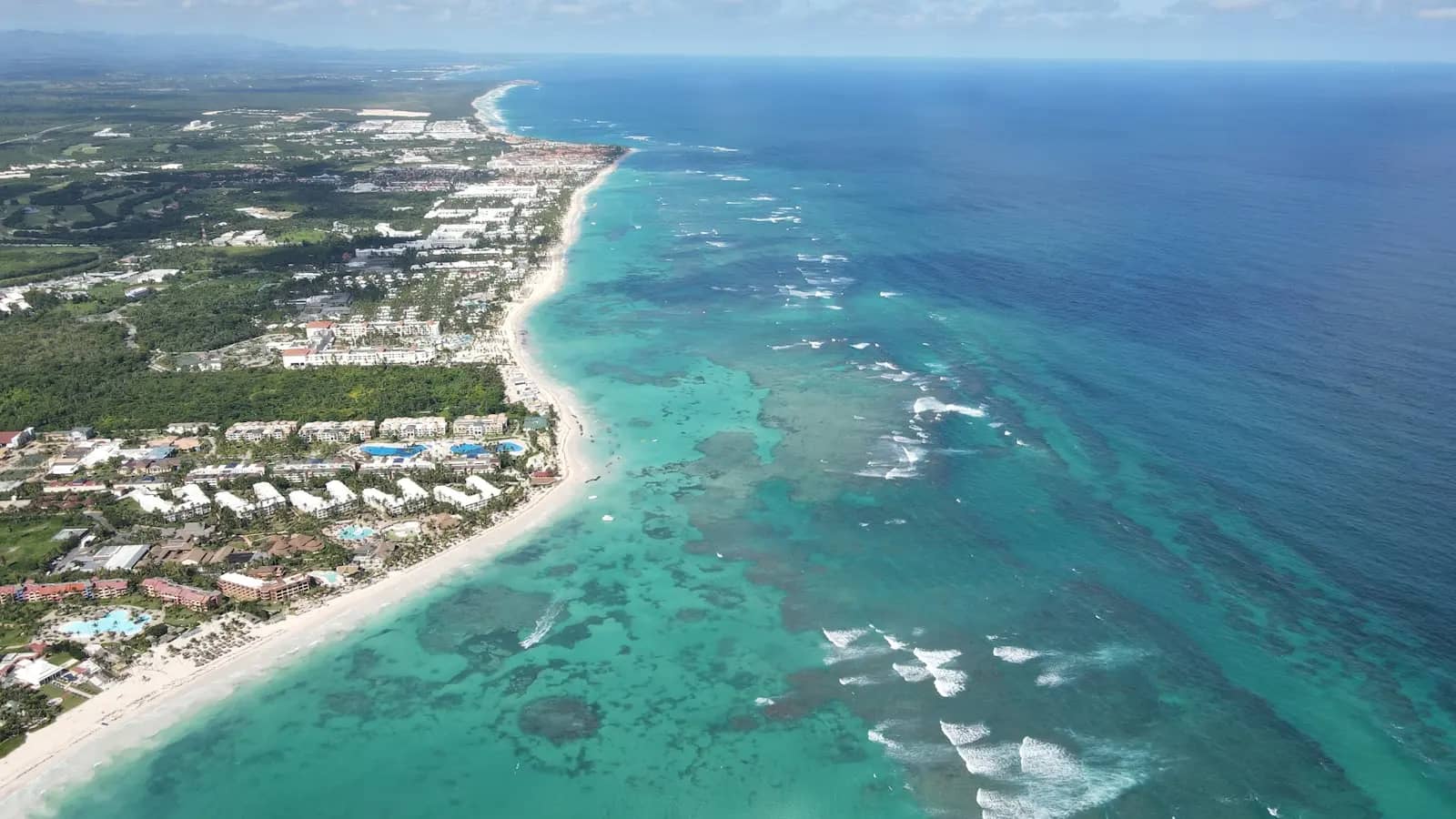
Dominican Republic with kids: attractions, itineraries and family travel tips

The Dominican Republic with kids works best for families who choose one region before choosing attractions. Five to seven days is enough for one base. Ten days can support two bases when the transfer adds a genuinely different experience. The main difficulty is distance: Punta Cana, Santo Domingo, Puerto Plata and Samana are separate trip shapes, not neighbourhoods in one resort zone.
Punta Cana has the easiest resort-led first trip and access to planned southeast outings. Santo Domingo offers the strongest indoor, history and city mix. Puerto Plata combines the north coast with Damajagua for older children. Samana earns a place mainly for nature and regulated whale watching during the season. Children aged about five to fourteen have the broadest choice. A trip with a toddler should use one base, a reserved restraint and shorter days.
This guide does not label any resort, beach, road or excursion automatically safe. Government advice currently flags crime, road conditions, variable adventure standards, hurricane disruption and uneven medical access. Read the dated gate below before booking.
Current Dominican Republic travel, health and weather gate
This section was checked on August 28, 2026 and can change without notice.
- The United States lists the Dominican Republic at Level 2, exercise increased caution due to crime.
- Canada advises a high degree of caution due to crime. It says healthcare is more complete in major cities and tourist areas than elsewhere and that providers may request payment before treatment.
- The United Kingdom warns about road and activity risks, advises against driving at night and recommends authorised airport or hotel taxis or registered providers. It also notes that adventure and water-sport standards may differ from those in the UK.
- The CDC destination page, reviewed August 25, 2026, recommends discussing malaria medicine for some areas, including La Altagracia and Santo Domingo, with a clinician. It also covers mosquito, food and water precautions.
Hurricane season normally runs from June through November. Check the official weather outlook, airline, accommodation and every boat operator before a transfer day. Travel insurance should cover medical care, evacuation, weather delay and activities the family will actually do.
Dominican Republic family trip at a glance
| Decision | Practical answer |
|---|---|
| Best first-trip length | Five to seven days in one region |
| Best ages for the full guide | About 5 to 14; toddlers need one base and fewer long excursions |
| Easiest first base | Punta Cana for a resort-led stay and southeast day trips |
| Best city base | Santo Domingo for museums, history and indoor fallbacks |
| Best north-coast base | Puerto Plata for beaches and Damajagua with older children |
| Rental car needed? | Usually no for a resort stay or Santo Domingo; useful only for a planned road itinerary with confident local driving |
| Emergency contacts | 911 where covered; Tourist Police on +1 809 200 3500 outside Santo Domingo according to current UK guidance |
| Main planning risk | Booking distant attractions as though every region were beside Punta Cana |
| Weather rule | Keep one flexible day in June through November and before any boat outing |
Which base fits your family?
| Base | Strongest fit | Main compromise | Choose it when |
|---|---|---|---|
| Punta Cana and Cap Cana | First visits, pool and beach time, organised transfers, Ojos Indigenas and Scape Park | Resort bubble, long tours to other regions and limited city life | The family wants one easy base with one or two prequalified outings |
| Santo Domingo | Museums, colonial history, gardens and the strongest indoor bench | Traffic, heat, more deliberate street and transport planning | Children can balance museums with one active stop each day |
| La Romana or Bayahibe | Cueva de las Maravillas and a shorter handoff to Saona departures | Fewer indoor family options than the capital | The southeast coast and one carefully screened boat day are priorities |
| Puerto Plata | North-coast base, beach time and Damajagua for older children | Damajagua excludes younger children and wet-weather choices are narrower | Children are strong swimmers and enjoy active nature days |
| Samana | Seasonal whales and a nature-led pace | Longer transfers, boat dependence and motion sickness | Whale season is the reason for the trip, not an extra box to tick |
Do not choose a base because a map shows the country on one screen. Ask how many hours a child will spend in a vehicle, whether the restraint follows them into every transfer and what happens if weather cancels the headline outing.
Ten Dominican Republic attractions compared for families
| Image | Destination or attraction | Best age range | Indoor or outdoor | Recommended visit time | Booking requirement | Best base city |
|---|---|---|---|---|---|---|
 | Ojos Indigenas Ecological Reserve | 5 to 14 | Outdoor trails and springs | 2 to 4 hours | Reserve ahead and confirm entry conditions | Punta Cana |
 | Scape Park | 6 to 15 | Outdoor activity park | Most of a day | Advance ticket and activity rules required | Punta Cana |
 | Cueva de las Maravillas | 5 to 15 | Indoor cave route | 1.5 to 2.5 hours | Check current tour entry | La Romana |
 | Saona Island | 7 to 15 | Outdoor boat and beach day | Most of a day | Licensed operator and child rules required | Bayahibe |
 | Museo Infantil Trampolin | 4 to 12 | Indoor interactive museum | About 2 hours | Confirm tour time before arrival | Santo Domingo |
 | Los Tres Ojos | 6 to 15 | Outdoor cave paths | 1.5 to 2.5 hours | Check current access | Santo Domingo |
 | Jardin Botanico Nacional | 3 to 15 | Outdoor garden | 2 to 4 hours | Check current visitor and tram arrangements | Santo Domingo |
 | Museo de las Casas Reales | 7 to 15 | Indoor museum | 1.5 to 2.5 hours | Check current entry | Santo Domingo |
 | Saltos de Damajagua | 8 to 15 for first seven pools | Outdoor canyon activity | 3 to 5 hours | Certified guide and equipment required | Puerto Plata |
 | Samana whale watching | 6 to 15 | Outdoor boat trip | 3 to 5 hours | Seasonal authorised operator required | Samana |
The age ranges and durations are editorial planning judgments, not admission or safety guarantees. Each family must follow the venue or operator's current minimum age, height, swimming, equipment and medical rules. The first two images show licensed Punta Cana settings rather than the exact venue. Recheck every official page before travel.
Ten Dominican Republic questions parents are solving
Public discussions repeatedly focus on transfers, resorts, toddlers and excursions. They identify planning problems but do not establish law, safety or venue policy.
- Is Punta Cana the right first base? It is the simplest resort-led choice, but not the best base for a city, museum or north-coast trip.
- Can a toddler use the same excursions as an older child? Usually not. Long boat days, natural trails, zip lines and canyon routes have different fatigue and safety demands.
- Will an airport transfer provide a child seat? Never assume it. Reserve the correct restraint in writing or bring one you can install correctly.
- Is Scape Park practical with a stroller? Only parts of a natural activity park may suit wheels. Confirm the exact route and plan for an adult to stay with a younger child during restricted activities.
- Which excursion is genuinely suitable for younger children? Choose by duration, transfer, shade, toilets, food, flotation equipment and exit options, not by the word family in a sales page.
- Should we stay outside an all-inclusive resort? It can work for experienced independent travellers, but requires a stronger transport, food, water, healthcare and neighbourhood plan.
- What should families know about food and water? Use the CDC's current advice, drink reliable treated water and seek medical advice for persistent symptoms or dehydration.
- Can we combine Punta Cana and Santo Domingo? Yes on a longer trip when the capital is a real second base. A rushed return day trip is hard on small children.
- Is Damajagua suitable for every school-age child? No. The official operator recommends age eight for the first seven pools and twelve for the full route, and confidence in moving water still matters.
- Is whale watching worth adding from Punta Cana? Usually only when the seasonal trip is important enough to justify a Samana base or a long transfer. Do not make a child absorb the journey for one uncertain sighting.
Punta Cana and Cap Cana: one easy base, two substantial outings
Ojos Indigenas Ecological Reserve
Children follow forest trails, identify plants and animals, and can swim in the springs currently open for bathing. Ages five to fourteen have the clearest fit. Allow two to four hours so the walk does not become a race between swimming stops.
The route is a natural trail, not a smooth urban promenade. A robust stroller may manage selected sections, but a carrier is more dependable for a toddler. Ask the reserve about current step-free access and which spring entrances require steps before promising a swim to someone with limited mobility.
Carry water, insect repellent and sun protection. Confirm toilets, changing space, seating and food availability for the exact entrance used because the public page does not map every family facility. Wet surfaces and mosquitoes become more important after rain.
Reserve ahead or confirm access through the property's current visitor process. A registered taxi or booked driver is the useful transport handoff from Punta Cana; arrange the child restraint separately. Read the official Ojos Indigenas reserve page. Official details checked August 28, 2026.
Scape Park
Children choose among nature trails, water areas and age-appropriate adventure activities. Ages six to fifteen have the widest choice because the official rules exclude children under six from the zip line. Allow most of a day, but choose two or three priorities instead of trying to complete the park.
Natural paths remain uneven and not every activity accepts a stroller or wheelchair. A stroller can help between selected areas while another adult may need to wait with a younger child. Contact the park for the exact mobility route, transfers and activity restrictions before buying tickets.
Food and drink are available for purchase, and the park tells visitors to bring swimwear, closed shoes, insect repellent and sun protection. Confirm lockers, toilets, changing stations and quiet seating for the day's operating plan. Heat, rain and fatigue should decide when the family stops.
Book the ticket and read each activity rule in advance. Use the park transfer or a registered provider rather than improvising transport at the roadside. Check the official Scape Park preparation page. Official details checked August 28, 2026.
La Romana and Bayahibe: cave morning or a screened boat day
Cueva de las Maravillas
Children walk through a lit cave route, look for rock formations and learn about Taino pictographs. Ages five to fifteen have the strongest fit. Allow one and a half to two and a half hours, including entry, the guided route and a calm transition back outside.
The official tourism page documents ramps, a path and an elevator. That supports access planning but does not prove every arrival surface or transport handoff is barrier-free. Confirm the elevator status and route before travel. A compact stroller may be unnecessary inside a controlled tour.
The cave offers shade from tropical heat, while humidity and damp surfaces remain. Use toilets before the tour and confirm the current cafe, seating and changing facilities on arrival. Food should stay outside the cave route.
Check current entry and tour timing rather than arriving between groups. The practical handoff is a booked driver or car from La Romana, Bayahibe or the Santo Domingo to Punta Cana corridor. Use the official Cueva de las Maravillas page. Official details checked August 28, 2026.
Saona Island
Children travel by boat, spend time on a beach and see part of Cotubanama National Park. Ages seven to fifteen are a more realistic fit than toddlers for a standard group day. Allow most of a day once hotel pickup, port waiting, crossings and the return are included.
Boat boarding, sand and limited shade make a stroller poor equipment. Ask about dock access, flotation-device sizes, swimming supervision and whether a non-swimmer can avoid water transfers. Accessibility depends on the exact boat and landing, not on the island name.
Confirm onboard or island toilets, drinking water, food handling, shade, seating and seasickness options. A loud party boat or several beach stops can be exhausting for children. Sea state, heat or an overtired child are valid reasons to skip the trip.
Book only after the operator supplies its licence or registration, child minimums, life-jacket policy, cancellation terms and precise pickup length. Bayahibe is the most practical departure base. Review the official Saona Island destination page. Official details checked August 28, 2026.
Santo Domingo: the strongest mix of indoor and outdoor choices
Museo Infantil Trampolin
Children move through interactive rooms on society, science, culture and the environment with a guided format. Ages four to twelve have the clearest fit. The official museum directory describes a two-hour tour, so do not attach another long museum immediately afterward.
The visit is indoors, but families should confirm lift access, door widths and stroller storage for the current route. A compact stroller may be less useful during a guided group than a carrier for a sleeping toddler. Ask the museum about sensory or mobility accommodations before reserving.
Confirm toilets, changing facilities, seating, water and snack rules. Plan food before or after the visit because a guided two-hour route offers less freedom than a drop-in gallery. The museum is a useful rain and midday-heat fallback.
Check the tour time and house rules before arrival. It sits in Santo Domingo's Colonial City, where a registered taxi drop-off or a short planned walk is more practical than searching for parking. Use the official Dominican museums directory. Official details checked August 28, 2026.
Los Tres Ojos
Children descend into limestone caves, compare three lagoons and can take the small wooden boat toward the fourth view when it is operating. Ages six to fifteen have the clearest fit. Allow one and a half to two and a half hours without rushing the stairs.
Stairs and cave paths are the defining access constraint. A stroller is not useful on the full route, and a carrier requires secure footing and comfort in humidity. The small boat also needs a separate mobility judgment. Families requiring step-free access should choose another attraction unless current staff confirm a suitable route.
Use toilets before descending, carry water and do not rely on food or changing facilities inside the cave area. Cave shade reduces sun exposure but not heat, damp surfaces or crowds on narrow steps. Shoes with grip matter after rain.
Check current access before leaving. A registered taxi or booked driver is the simplest handoff from central Santo Domingo; the nearest road drop-off is more useful than a distant transit stop with a stroller. Read the official Los Tres Ojos page. Official details checked August 28, 2026.
Jardin Botanico Nacional
Children look for palms, birds and changing plant environments, with the Japanese garden providing a clear destination inside a very large site. Ages three to fifteen can use the visit differently. Allow two to four hours and choose one section rather than treating the garden as a race.
Major garden paths can support wheels, but recent public works and the scale of the grounds mean a current route check is essential. Ask about the tram, step-free paths, accessible toilets and closures. A stroller helps with distance and naps where paths permit.
Carry water, insect repellent and sun protection. Confirm current toilets, food, shade, seating and changing facilities at the entrance. Morning is preferable to the strongest heat, while rain can alter paths and tram operations.
Check visitor arrangements before travel. A registered taxi to the main entrance is the cleanest family handoff; do not ask a child to walk from an uncertain roadside stop in midday heat. See the official National Botanical Garden site. Official details checked August 28, 2026.
Museo de las Casas Reales
Children explore objects and rooms connected to the colonial history of Hispaniola. Ages seven to fifteen have the strongest fit when adults frame the visit around power, Indigenous communities and enslavement rather than simply admiring the building. Allow one and a half to two and a half hours.
The historic structure may include thresholds, stairs and uneven surfaces. Confirm lift or step-free access, stroller storage and the open route before arrival. A compact stroller is useful on surrounding streets only when pavements and crowds allow.
Ask about current toilets, seating and changing facilities. Plan a meal outside the museum and carry water, but follow gallery rules on food and drink. Indoor rooms provide a heat or rain break, while the Colonial City approach can still be hot and busy.
Check current entry and exhibitions. Combine the museum with only one nearby stop, using a registered taxi drop-off or a short daylight walk. The official family activity page includes the museum in its Santo Domingo options. Official details checked August 28, 2026.
North coast and Samana: age and season decide the trip
Saltos de Damajagua
Children hike, enter moving water and descend a guided canyon route using slides or jumps selected by the guide. The official FAQ recommends age eight for the first seven pools and age twelve for the full route. Allow three to five hours including equipment, briefing, hiking and changing.
This is not stroller-accessible and is unsuitable for anyone who cannot manage the hike, water, rock surfaces and guide instructions. The certified guide, helmet and life jacket are mandatory protections, not proof that the activity suits a particular child. Ask about medical exclusions before booking.
Confirm toilets, changing rooms, food, lockers, dry seating and drinking water at the visitor area. Rain and water flow can change the available route. Closed shoes with grip and secure swimwear are more practical than beach sandals.
Book a certified guide and accept the guide's route decision on the day. A registered transfer from Puerto Plata is the useful handoff; do not add a long drive from Punta Cana. Read the official Damajagua FAQ. Official details checked August 28, 2026.
Samana whale watching
Children watch for humpback whales from an authorised vessel and learn why Samana Bay is protected during the seasonal visit. Ages six to fifteen are the strongest fit because waiting, spray, noise and boat motion can be difficult for younger children. Allow three to five hours around the operator's actual departure.
Strollers generally stay ashore. Ask about boarding steps, covered seating, rail height, accessible toilets and whether the vessel can accommodate a passenger with limited mobility. A life jacket must fit the child rather than merely exist onboard.
Confirm shade, toilets, water, seating, seasickness guidance and cancellation rules. A whale sighting is never guaranteed. Rough water, illness or a distressed child should end the plan without pressure to recover the ticket's value.
The Environment Ministry authorised a regulated 2026 season with 46 operating authorisations. Future dates and operators require a new check. Stay in Samana or build the trip around the peninsula rather than treating it as a casual Punta Cana add-on. Read the Environment Ministry's 2026 season notice. Official details checked August 28, 2026.
Realistic family itineraries
Five days: one Punta Cana base
- Day 1: arrive, eat, sleep and learn the resort layout.
- Day 2: unstructured pool or beach morning, then a quiet afternoon.
- Day 3: Ojos Indigenas with a prearranged return ride.
- Day 4: full recovery day or Scape Park for children who meet the chosen activity rules.
- Day 5: one short swim, pack and leave margin for the airport.
Do not put Saona, Santo Domingo and Samana into this five-day cut. A child should not spend the holiday collecting vehicle hours.
Seven days: deepen one region
Use the five-day Punta Cana shape, add one completely unstructured day and choose either Scape Park, Cueva de las Maravillas or a screened Saona operator. Do not choose all three.
An alternative city-led week uses Santo Domingo for Trampolin, the Botanical Garden, Casas Reales and Los Tres Ojos, then moves once to La Romana or Bayahibe for the cave or a boat day. Keep the transfer day light.
Ten days: pair two Dominican regions with a purpose
Choose one pairing with a reason:
- Punta Cana plus Santo Domingo for resort ease followed by museums and city history.
- Santo Domingo plus Bayahibe for culture, the cave and one weather-dependent island day.
- Puerto Plata plus Samana during the regulated whale season for older children who enjoy active nature.
Keep days 4 and 8 deliberately light. Meals, laundry, illness, weather and slow mornings are part of the itinerary, not failures in it.
Dominican Republic transport with children
Airports and approximate journey logic
Punta Cana International Airport is the natural arrival point for Punta Cana and Cap Cana. Las Americas International Airport serves Santo Domingo, while Gregorio Luperon International Airport serves Puerto Plata. El Catey is the nearest international airport for parts of Samana when the family's flight schedule supports it.
Road times vary sharply with traffic, weather and the exact hotel. As planning estimates, allow roughly 20 to 45 minutes for many Punta Cana airport transfers, about 30 to 60 minutes from Las Americas to central Santo Domingo, and 30 to 45 minutes from Puerto Plata airport to many Puerto Plata-area stays. Punta Cana to Santo Domingo is a multi-hour transfer, not a local taxi ride. Confirm the route with the provider before paying.
Child restraints
Article 69 of Law 63-17 says children up to age twelve travel in the rear. Children up to age six use a child seat. Children over six through twelve use a booster that permits safe use of the rear seat belt. Read the law through the Dominican public defender's official legal index.
The law is the minimum, not a promise that a taxi has the correct seat. Send the child's age, height and weight to the transfer company, request the restraint type in writing and inspect it before departure. Bringing a familiar seat only helps when it is approved for the journey and can be installed correctly in the vehicle.
Public transport, taxis, luggage and strollers
The official tourism transport guide lists registered taxis, intercity coaches and the Santo Domingo Metro. It currently documents Uber in Santo Domingo, Santiago and Puerto Plata. That is not evidence for nationwide service, so check the app and local rules at the time of travel.
Intercity coaches can work for adults with older children, but confirm luggage, stroller and restraint arrangements with the operator. The Santo Domingo Metro can bypass road traffic on a route it actually serves, though steps, crowding and the final walk may still make a taxi easier with a sleeping child. Do not place a stroller, suitcase or child loose in a vehicle because a short ride feels informal.
A rental car is not necessary for a resort-and-excursion trip. Independent driving adds night-driving, motorcycle, road-surface, navigation and parking risks. If renting, confirm insurance, restraint and roadside support, avoid night driving and plan only a route the adult can manage calmly.
Dominican family logistics that change the route
- Best seasons: December through April generally avoids the core hurricane period but brings stronger winter demand. June through November requires a weather-flexible plan. Whale watching is seasonal and separately regulated.
- School holidays: Christmas, Easter and common North American and European breaks increase flight and resort demand. Ask attractions about local holiday operations.
- Meals: Resort schedules differ from independent restaurants. Carry a familiar snack and plan one meal before a long transfer. Do not assume every excursion can manage allergies without written confirmation.
- Water and food: Follow current CDC advice. Use reliable treated water and careful food hygiene. Oral rehydration supplies are sensible for children, but persistent vomiting, fever, bloody diarrhoea or dehydration needs medical assessment.
- Healthcare: Major cities and tourist zones have stronger facilities than rural areas, and payment may be requested upfront. Save the insurer's assistance number and the nearest suitable clinic before arrival.
- Emergency help: Call 911 where covered. The UK currently lists Tourist Police on +1 809 200 3500 outside Santo Domingo, while warning that 911 coverage is not nationwide.
- Sun and insects: Use shade, suitable repellent, protective clothing and frequent water breaks. Ask a clinician about itinerary-specific malaria prevention before travel.
- Accessibility: Resort accessibility does not establish boat, cave, trail or transfer accessibility. Obtain answers for every handoff, including the actual room, vehicle, dock, toilet and evacuation route.
Apps and offline tools for a Dominican Republic trip
- AlertaCOE: current UK guidance recommends the Dominican emergency alert app for weather warnings. Install it before a storm threatens connectivity.
- Airline and accommodation apps: keep schedule changes, transfer instructions and booking references available offline.
- Google Maps: download the base region, pin the hotel, clinic, pharmacy and meeting point, and never treat an estimated road time as guaranteed.
- Google Translate: download Spanish before travel and save allergy, medication and restraint terms.
- Registered transport app or provider: use only where current official coverage and local rules support it. The tourism authority presently lists Uber in Santo Domingo, Santiago and Puerto Plata, not every resort area.
- Family messaging: agree who stays with each child during split activities, and share the driver's name, vehicle and live location when a connection is available.
Connectivity for transfers, alerts and family messages
Families use data for transfer messages, offline-map updates, weather alerts, digital tickets and finding a clinic. Download the essentials before leaving Wi-Fi, then keep one adult's phone available for logistics rather than draining every battery on video.
The free AILA arrival eSIM offer can help an eligible traveller landing at Las Americas: the current offer provides 1 GB of high-speed data across 24 hours, followed by 1 Mbps for the remainder of that window. It is an arrival bridge, not a full-trip comparison.
Roaming eSIM has the planning edge when a family wants to choose coverage before travel, land at another airport, match the allowance to the whole stay, manage an eligible top-up online and reach support beyond the airport offer. The live Dominican Republic catalog showed 13 plans when checked, with 12 supporting top-up and one not supporting it. Fixed-data and daily plans were available, while operator, hotspot, speed and reduced-speed terms varied by package. That is why the product card, not this guide, owns the current package facts.
For travellers comparing the best eSIM for Dominican Republic or best eSIM for Punta Cana, use the Dominican Republic Roaming eSIM page. A trip that continues to another supported Caribbean destination can compare the Caribbean 20+ areas plan. Check the selected package card before paying rather than assuming every plan is unlimited, reloadable or tied to the same network.
Before purchase, estimate usage with the travel data calculator, check whether the phone supports eSIM, decide when to install before travel and compare country and regional eSIM plans. The Mexico with kids guide, Costa Rica with kids guide and Bahamas with kids guide cover different family trips and do not replace this country plan.
Product options for this route
The cards below are limited to the exact country plan and the one current catalog-listed regional option that includes the Dominican Republic. Package availability and terms can change.
Dominican Republic guide research method
Recheck this guide before every major travel season and whenever government advice, Law 63-17, hurricane guidance, transport coverage, attraction access or product availability changes.