French Guiana with kids: attractions, itineraries and family travel tips

French Guiana with kids works best for families interested in wildlife, rockets and living cultures, with children who can tolerate heat and road time. Seven days covers Cayenne, Kourou and one wetland outing without rushing. Ten days gives weather room. The main difficulty is logistics: attractions sit far apart, tropical conditions change quickly, and health preparation begins before the flight.
Details were checked on September 7, 2026. Reconfirm health requirements, launch-site access, boat departures, trail conditions and opening details before travel.
French Guiana family choices at a glance
| Decision | Practical starting point |
|---|---|
| Best first base | Cayenne or Rémire-Montjoly for food, pharmacies and short first-day outings |
| Second base | Kourou for the space centre and Îles du Salut boats |
| Book first | Space-centre access, then fixed-date boat or Kaw excursions |
| Rental car | Useful for most families; arrange the correct child restraint in advance |
| Best ages | 6+ for the fullest mix of boats, museums, wildlife and road trips |
| Indoor fallback | Musée des Cultures Guyanaises; verify same-day opening |
| Stroller rule | Compact stroller in town, carrier on forest paths and boats |
| Emergency | Call 112; use 15 for urgent medical help |
Compare eight French Guiana stops
| Image | Place | Best ages | Setting | Allow | Book? | Best base |
|---|---|---|---|---|---|---|
 | Fort Cépérou | 6+ | Hill and ruins | 45 to 75 minutes | No | Cayenne |
 | Cultures museum | 8+ | Indoor | 1 to 1.5 hours | Check calendar | Cayenne |
 | Zoo de Guyane | 4+ | Forest park | 2 to 3 hours | Useful | Cayenne |
 | Space centre | 8+ | Guided site | Half day | Required | Kourou |
 | Îles du Salut | 7+ | Boat and island paths | Full day | Required | Kourou |
 | Marais de Kaw | 6+ | Boat and wetland | Half or full day | Required | Roura |
 | Cacao village | 5+ | Village and market | Half day | Market-day planning | Cayenne |
 | Rorota trail | 7+ | Forest path | 1.5 to 2.5 hours | No | Rémire-Montjoly |
Official French Guiana attraction pages
Checked September 7, 2026: use French Guiana tourism for destination notices, the Guiana Space Centre for visit conditions, Zoo de Guyane for its current visitor information and the territorial museum service for museum calendars.
Ten questions families ask before French Guiana
- Does every traveler need a yellow fever certificate for this itinerary?
- Can we manage without a rental car between Cayenne and Kourou?
- How early must we reserve a space-centre visit?
- Is the Îles du Salut crossing sensible for a child prone to seasickness?
- Which outings still work during a heavy-rain morning?
- Is a stroller useful, or should we bring a child carrier?
- Can the car company confirm our child-seat category in writing?
- How much mosquito protection should we pack for wetland and forest stops?
- Are restaurants and groceries available after a late arrival?
- Which maps, tickets and medical details should be saved offline?
Cayenne and Rémire-Montjoly: start gently
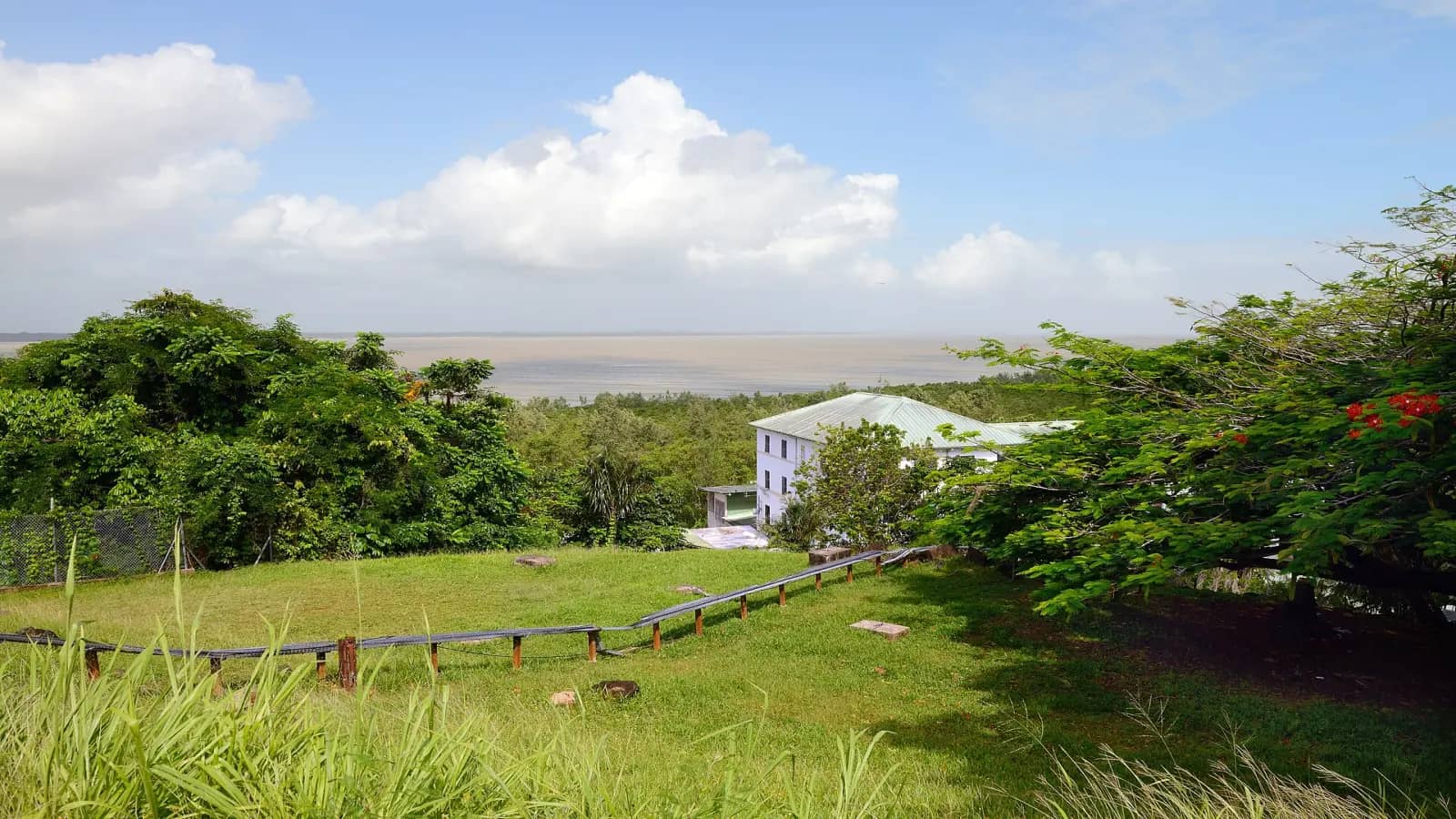
At Fort Cépérou, children get a short climb, fragments of Cayenne's history and a clear view over the city. The exposed slope is a poor choice at midday. Use a carrier for a small child, keep hands free on uneven surfaces and combine the stop with the city rather than treating it as a long attraction. Toilets and food are easier to find below the hill.
The Musée des Cultures Guyanaises introduces the territory through objects, craft and everyday life. Older primary-school children can focus on a few rooms instead of trying to absorb every label. It is a useful heat or rain break, but calendars and accessible routes can change between museum sites. Confirm the entrance, toilets and step-free route before setting out.
The Rorota trail is close to the urban coast but remains a humid forest walk. Children watch for birds, monkeys and sloths rather than expecting guaranteed sightings. Roots, mud and inclines rule out a normal stroller. Start early, turn around before fatigue, and carry water plus mosquito protection. Use current local advice after intense rain.
Macouria and Kourou: animals and rockets
Zoo de Guyane gives younger children a structured way to see regional animals in forest surroundings. The route can be hot and wet, so use closed shoes and allow breaks. Ask the zoo about stroller access, feeding schedules, toilets and food on your date. A two-hour visit is enough for many preschoolers; do not add a long evening drive afterward.
At the Centre Spatial Guyanais, children see launch infrastructure and learn why the near-equatorial site matters. Visits are controlled and identification, minimum-age or clothing rules may apply. Reserve through the official site, bring the requested documents and never assume a launch-day itinerary will operate like a normal tour. This is better for children ready to listen through a guided half day.
The Îles du Salut add a boat crossing, historic remains and shaded island paths. Surfaces can be uneven and the history of imprisonment needs age-appropriate explanation. Toilets and food options depend on the operator and island facilities, so confirm both. Bring drinking water, sun protection and a carrier, and leave a generous return buffer for sea conditions.
Roura: choose one interior day
A Marais de Kaw excursion puts families on the water among birds, vegetation and, on some tours, nocturnal wildlife. Choose an operator that states life-jacket sizes, toilet arrangements, meal provision and the realistic duration for children. A full night excursion is not automatically better. Families with younger children may get more from a shorter daylight trip.
Cacao village is most useful when the market and small local exhibits are operating. Children can try fruit, see produce and understand Hmong culture without a long formal visit. The road and market timing make it a planned half day, not an add-on after Kaw. Carry cash backup, confirm Sunday arrangements and avoid presenting residents as an attraction.
Build the Cayenne and Kourou route in five, seven or ten days
For five days, stay around Cayenne. Use day one for Rémire-Montjoly, day two for the museum and Fort Cépérou, day three for the zoo, day four for Cacao or a short Rorota walk, and day five as a rain buffer. Skip Kourou rather than compressing boats and rockets into one day.
With seven days, spend four nights near Cayenne and three near Kourou. Give the space centre and Îles du Salut separate days. Put a low-key morning between them, especially after a rough crossing or late return.
With ten days, add one well-chosen Kaw excursion and two unassigned half days. Families who dislike repeated hotel moves can keep one base, but should treat the Cayenne to Kourou drive as part of the day's workload. Do not schedule a fixed boat trip immediately before the flight home.
Driving, child restraints and arrival planning
Most international arrivals use Cayenne Félix Eboué Airport. Taxis and prearranged transfers cover the first journey, but a car makes the dispersed itinerary much easier. Public transport does not connect every wildlife, forest and boat departure at family-friendly times. Fuel up before longer outings and do not calculate a day only from map distance.
French child-restraint rules apply. Children under ten generally travel in an approved restraint suited to their size and weight, normally in the rear. Check the current French public-service guidance and ask the rental company for the seat category in writing. A familiar seat may be worth bringing if the airline and vehicle rules allow it.
Yellow fever preparation, tropical weather, food and water
Yellow fever requirements and mosquito-borne disease advice can change. Consult a travel-health professional early, carry the required documents and review the current official travel-health section. Heat, humidity and intense rain make shorter outdoor sessions more realistic than all-day sightseeing.
Tap-water conditions and local notices should guide the family, particularly after infrastructure problems. Cayenne and Kourou have supermarkets, pharmacies and familiar French staples, while remote outings need food and water planning. Carry medicines in original packaging, insurance details and a French translation of important allergies.
Save space-centre, boat and weather details offline
Save Météo-France, offline maps, the airline, each boat operator and the space-centre booking. Translation tools help with signs, but medical or allergy conversations deserve a human confirmation. Keep passports, yellow fever records, tickets and accommodation details accessible without a signal.
The public catalog lists a French Guiana Roaming eSIM and a Caribbean option that includes GF. The country plan fits a French Guiana-only trip; the regional plan may fit a supported multi-island route. Verify the selected package's network, validity, hotspot support and reloadability before purchase.
Roaming eSIM gives the family one place to select a plan and reach product support, while a general connectivity news article cannot confirm which current package fits the itinerary. Commercial searches such as best eSIM for French Guiana belong to the French Guiana product page, not this family guide. Estimate usage with the travel data calculator, check phone compatibility, read when to install a Roaming eSIM, and save the family setup guide. For a nearby mainland comparison, see Suriname with kids.