Ghana with kids: attractions, itineraries and family travel tips

Ghana with kids is strongest for families who want living history, museums, rainforest and a carefully chosen wildlife or waterfall branch. Five days is enough for Accra and Cape Coast. Seven days can add either Aburi or Kumasi without turning every morning into a transfer. Ten days can include Mole or Wli, but not both comfortably. The main difficulty is distance: traffic, uneven roads and daylight-only driving make pins that look close on a map take most of a day.
School-age children and teens get the most from the route, especially at Cape Coast Castle and the museums. A toddler trip can work when it stays around Accra and the central coast, but families need to bring or reserve the right restraint, plan mosquito protection with a clinician and accept that strollers will not suit every path.
Operational details were checked against Ghanaian heritage, tourism, forestry, road-law, airport, emergency and weather sources, plus current health and travel advice, on August 29, 2026. Suggested ages and visit lengths are editorial planning estimates unless a provider states a rule. Confirm openings, tickets, restraints, accessibility, toilets, food, shade and weather directly before paying.
Ghana family decisions at a glance
| Decision | Practical starting point |
|---|---|
| Best first base | Accra for arrival, museums and shorter first days |
| Best history base | Cape Coast for the castle and an early Kakum start |
| Best easy outdoor add-on | Legon Botanical Gardens in Accra, with the exact activity checked first |
| Best culture branch | Two nights in Kumasi rather than a same-day return from Accra |
| Best nature branch | Wli for a forest walk or Mole for wildlife; each needs its own travel time |
| Useful first trip | Seven nights split between Accra and Cape Coast, with one optional branch |
| Rental car needed? | Usually no; a pre-booked driver with an agreed child restraint is simpler |
| Child restraints | Ghana's 2025 amended law requires under-18s to use a belt and defines proper rear-seat restraint using suitable child safety equipment |
| Beach decision | Do not build the trip around swimming; current advice warns of rip tides and undertows along the southern coast |
| Emergency number | Call 112 or 999; NADMO also lists 112 as the free national emergency line |
Which Ghana stops fit your children?
| Image | Destination or attraction | Best ages | Indoor or outdoor | Allow | Book ahead? | Best base |
|---|---|---|---|---|---|---|
 | National Museum of Ghana | 6 and older | Indoor museum and outdoor garden | 1.5 to 2 hours | Confirm group tours | Accra |
 | Legon Botanical Gardens | 4 and older | Outdoor garden and activities | 2 to 4 hours | Yes for specific activities | Accra |
 | Kwame Nkrumah Memorial Park | 7 and older | Museum, monument and gardens | 1.5 to 2.5 hours | Confirm guided tour | Accra |
 | Aburi Botanical Gardens | 4 and older | Outdoor garden | 2 to 3 hours | Confirm guide or group visit | Aburi or Accra |
 | Cape Coast Castle | 10 and older | Museum, courtyards and historic rooms | 2 to 3 hours | Confirm tour time | Cape Coast |
 | Kakum National Park | 7 and older | Rainforest trail and canopy walkway | 2.5 to 4 hours | Confirm entry and walkway | Cape Coast |
 | Manhyia Palace Museum | 8 and older | Indoor museum and grounds | 1.5 to 2 hours | Walk-ins accepted; groups should confirm | Kumasi |
 | Wli Agumatsa Waterfalls | 7 and older | Forest trail and waterfall | 3 to 4 hours | Book or confirm a guide | Hohoe or Wli |
 | Mole National Park | 8 and older | Savannah wildlife outing | Two nights minimum | Essential | Mole |
The table is a route filter, not a promise of step-free access, a particular animal sighting or an available child seat. Families with mobility, sensory or medical needs should ask the site to describe the exact route they will use.
Ten questions families ask before booking Ghana
Public family discussions repeatedly ask about slow routes, small children, malaria, food, strollers, car seats and mobile data. These questions reflect those discussions; the answers use official or first-party evidence where a factual claim is involved.
- What age is Ghana best for? Ages seven and older handle the history, heat and road time most easily. With younger children, keep the route to Accra and Cape Coast and schedule one anchor activity a day.
- Can we use a stroller? A compact stroller can help at airports, malls and some paved museum areas. Carrying it over Kakum, Wli and uneven street surfaces will often be harder than using a suitable carrier.
- Should we bring a car seat? Bring a familiar seat or get the exact model confirmed in writing. Ghana's amended law requires child safety equipment, but an app ride or hired vehicle does not guarantee the right restraint is present.
- What malaria preparation do children need? CDC recommends prescription malaria medicine for travelers to Ghana. A clinician should choose the drug and dose for each child before travel.
- Can we drink tap water? Do not make a countrywide assumption. Use commercially sealed, treated or otherwise verified safe water, and follow your clinician's food-and-water advice.
- Is Cape Coast a day trip from Accra? It is possible, but traffic can turn it into a very long day. One or two nights in Cape Coast makes the castle and Kakum far easier with children.
- Can seven days include Accra, Cape Coast, Kumasi and Mole? No useful family version can. Choose Accra plus Cape Coast and one nearer branch; save Mole for ten days or longer.
- Is Mole worth the detour? Yes for families who value wildlife enough to spend two nights and arrange the Tamale-to-Mole leg. Check current Savannah Region advice immediately before committing.
- Are beaches suitable for swimming? Current official advice warns that rip tides and undertows cause deaths, including of children. Use only a locally supervised swimming decision and never treat a quiet-looking sea as evidence of safety.
- How do we keep maps, tickets and family messages working? Activate data before it is needed, but save the next address, medical information, tickets and maps offline because no mobile plan guarantees uninterrupted coverage.
Accra: use museums and one outdoor day to settle in
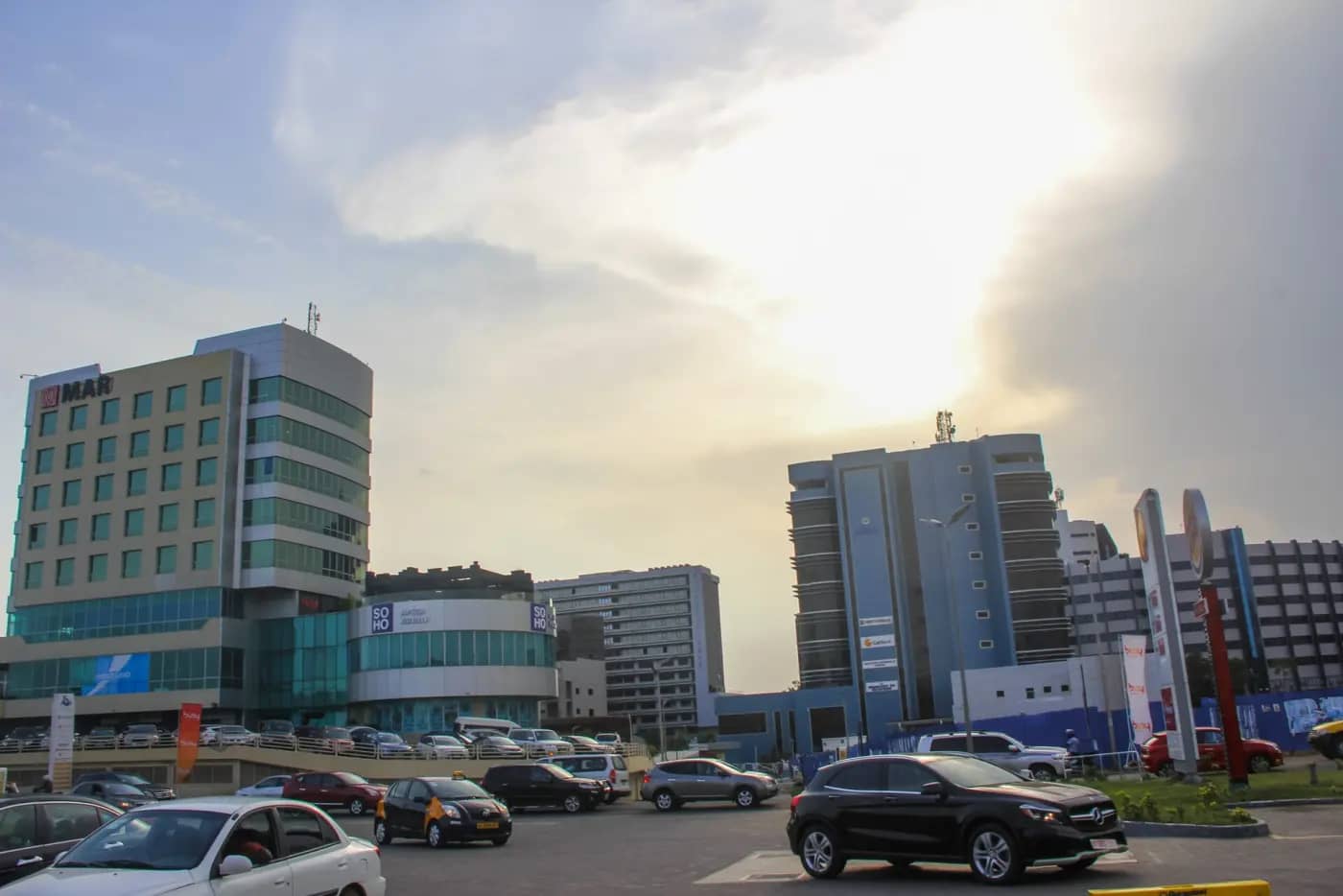
Accra works better as two short days than one ambitious checklist. Traffic can disrupt naps and meal timing, so combine only places that share a part of the city. Keep luggage locked away, verify the pickup vehicle and use daylight for unfamiliar routes.
National Museum of Ghana
Children can examine textiles, instruments, pottery, gold weights and exhibits that introduce Ghana's history before visiting Cape Coast or Kumasi. GMMB describes three galleries covering the past, traditions and arts, plus a sculpture garden. It suits ages six and older. Allow 90 minutes to two hours.
The museum is a reasonable wet-weather choice, but the official page does not publish a complete step-free route. Ask about entrance access, lift or ramp needs, gallery seating, toilets and changing facilities. There is a gift shop; do not assume a full meal is available, so time lunch around the visit.
The museum publishes daily opening hours, but confirm them before departure and ask whether a guide is available. Rain can make the sculpture garden less useful, while a school group can change the pace indoors. Keep the visit short enough that children still have attention for the objects they chose.
The museum is at 2 Barnes Road in central Accra. Use a known driver or app pickup and agree on the exact gate rather than relying on an unverified bus connection. The GMMB National Museum page lists the galleries, sculpture garden, gift shop and contact details. Official details checked August 29, 2026.
Legon Botanical Gardens
Children can use the playground, junior ropes and garden paths; older children may be interested in the canopy walk or high ropes. The Ghana Tourism Authority page also describes canoeing on selected days. This guide starts at age four for the playground, while every ropes or water activity needs its own height, clothing and supervision check. Allow two to four hours.
Garden paths may be easier than a forest trail, but activity areas are not equivalent to a fully step-free site. Ask which route a stroller can use and where toilets, changing space, shade, seats and food are available. The operator requires closed shoes and suitable clothing for high ropes.
Book or call for the exact activity you want. The official listing says some facilities are not in use during quiet days and canoeing follows a limited weekly schedule, so garden entry does not mean every activity is operating. Avoid the hottest hours and stop ropes or canopy activity if rain or wind changes conditions.
The gardens are off Atomic Haatso Main Road at Agbogba Junction, near the University of Ghana. Use the named gate as the ride pickup point. The Ghana Tourism Authority listing supplies the activity, clothing, location and contact details. Official details checked August 29, 2026.
Kwame Nkrumah Memorial Park
Children follow Ghana's independence story through the museum, historical documents, monument, mausoleum and gardens. The official park describes guided tours, a library and a heritage shop. It works best from age seven, when children can connect the displays with the person and period. Allow 90 minutes to two and a half hours.
The park combines indoor and outdoor areas, so ask about the route between them if steps or heat are a concern. Confirm toilets, changing facilities, seating and whether food is available beyond light retail. The gardens provide a slower reset after the museum, but do not count on continuous shade.
Confirm current admission and tour timing on the official site. A morning or late-afternoon visit limits sun exposure; a heavy downpour makes the outdoor section less practical. Large ceremonies or cultural programs may change normal visitor circulation.
The park is on Professor Atta Mills High Street. Its visitor information also lists AMA, Bishop School, Makola Market and Tema Station as nearby public-transport drop points, followed by a short walk. The official Kwame Nkrumah Memorial Park site provides contact and program information. Official details checked August 29, 2026.
Aburi: a separate garden day, not an Accra filler
Aburi Botanical Gardens
Children walk under mature trees, look at plant forms and use open space for a calmer day between city and coast. Ghana's National Commission on Culture names Aburi among the country's family-oriented public gardens. It suits ages four and older. Allow two to three hours, with a simple picnic-style plan rather than a long attraction circuit.
The site is outdoors and surfaces can change after rain. Ask whether the route you want is stroller-friendly and where toilets, changing space, shade, seats and drinking water are available. Bring your own water and snacks unless the site confirms food service for the day.
Contact the garden before a special trip, especially for a guide or group visit. Heat and rain are the main variables. The useful family version is a slow loop with pauses, not trying to inspect every labelled plant.
Aburi is in the Eastern Region and should be treated as a road outing from Accra, with traffic time added in both directions. A driver is more practical than building the day around an unverified public connection. The Aburi Botanical Gardens visitor site provides current contact information. First-party details checked August 29, 2026.
Cape Coast: pair one difficult history visit with one nature morning
Do not schedule both Cape Coast and Elmina castles merely to increase the attraction count. One careful, age-appropriate tour is enough for many children. Staying locally also makes an early Kakum visit possible without leaving Accra before dawn.
Cape Coast Castle
Children learn how the castle became part of the transatlantic slave trade and examine the museum, courtyards and surviving spaces. This is serious material, not a generic castle adventure. It is best from age ten, after a parent has explained what the tour will cover. Allow two to three hours and leave the rest of the day emotionally light.
GMMB lists a car park, courtyard, library, art and craft studio, bookshop, gift shop and curio shops. Historic floors, thresholds and confined rooms can limit stroller and mobility access, so ask for the exact tour route, exits, toilets, seating and a quieter waiting place. Do not promise that every child will be comfortable entering the dungeons.
Confirm the current tour time and language before arrival. Heat, crowds and the emotional weight of the content can shorten a visit. Let a child wait with another adult when a room is not appropriate, and follow all photography instructions given on site.
The castle is in central Cape Coast; use the main visitor entrance as the driver pickup point. It combines poorly with an Accra return after a full Kakum morning. The GMMB Cape Coast Castle page lists facilities, while UNESCO's forts and castles record explains the wider World Heritage context. Official details checked August 29, 2026.
Kakum National Park
Children walk a rainforest trail and, if they are comfortable with height and current staff allow it, cross the suspended canopy walkway. The Forestry Commission describes guided forest trails and a walkway among tall trees. This guide starts at age seven. Allow two and a half to four hours without guaranteeing wildlife sightings.
The uphill approach, roots and suspended bridges make a stroller unsuitable for the canopy route. Ask the visitor centre about an easier forest alternative, toilets, drinking water, food, shade and seating. A child must be able to follow staff directions and cross without being carried in a way the operator has not approved.
Confirm current entry, guide and walkway access before leaving Cape Coast. Go early for cooler conditions and smaller queues. Rain, wind or a child's fear of height are valid reasons to use a ground trail or end the visit; the park is not a test of bravery.
Kakum is near Abrafo, roughly 30 kilometres north of Cape Coast. Arrange a return driver rather than assuming a vehicle will be waiting at the park. The Forestry Commission's Kakum profile supplies the conservation, trail, walkway and visitor-centre context. Official details checked August 29, 2026.
Kumasi: choose it for Asante history, not because the loop looks neat
Manhyia Palace Museum
Children join a guided explanation of Asante royal history and see collections inside the historic museum building. The museum welcomes families and schoolchildren, and its grounds include gardens, a fish pond and birdlife. It is strongest from age eight. Allow 90 minutes to two hours.
Ask about access between floors and galleries before bringing a stroller or planning for limited mobility. The official FAQ confirms parking, a gift shop and places to relax in the grounds, but does not fully document toilets or changing facilities. Plan food before or after the visit.
The museum says visitors do not need an appointment, though a family group should still confirm current tour arrangements. Photography is restricted inside galleries and handled differently in designated areas, so explain that to children before entry. Outdoor waiting becomes hot or wet depending on the weather.
The museum is within Manhyia Palace in Kumasi. Use its entrance as the driver or app pickup point and keep the return in daylight. The official Manhyia Palace Museum site and visitor FAQ provide access, opening, parking and photography guidance. Official details checked August 29, 2026.
Volta Region: Wli needs its own overnight rhythm
Wli Agumatsa Waterfalls
Children walk through forest and cross footbridges to reach the lower falls. The site describes the lower route as about 40 to 45 minutes each way; this guide starts at age seven for children who can manage heat and slippery ground. Allow three to four hours including stops, not the four-hour upper-falls hike.
The lower trail is described as mostly flat, but repeated bridge crossings and wet surfaces make a stroller unreliable. Ask the information centre about toilets, changing space, food, drinking water, shade, seats and the day's path. CDC advises avoiding freshwater swimming in Ghana because schistosomiasis is present, so this guide does not recommend entering the pool even if local material promotes bathing.
Book or confirm a guide and the lower route. Wear closed shoes with grip and turn around for thunder, flooding or a tired child. The site's upper route is a different commitment and should not be added casually to a family day.
Wli is near Hohoe, about 280 kilometres from Accra according to the attraction site, making a same-day return poor family planning. Stay locally and arrange the road transfer in daylight. The Wli Agumatsa visitor site describes the lower trail, bridges, guide service and information centre. First-party details checked August 29, 2026.
Northern branch: Mole is a two-night decision
Mole National Park
Children observe savannah habitat with park staff and may see elephants, antelope, primates and birds. The Forestry Commission describes animal observation and birdwatching, but sightings remain unpredictable. This guide starts at age eight and recommends at least two nights so the family is not driving immediately after an outing.
A stroller will not suit wildlife routes. Ask the park or lodge which vehicle is used, whether every passenger has an appropriate seat and restraint, how close toilets and food are, and what shade or indoor waiting exists. Never approach or feed wildlife, and do not treat a walking safari as child-suitable unless the park explicitly approves the child's age and behavior.
Reserve accommodation, park activity and Tamale transfer as one connected plan. The Forestry Commission notes that rain is concentrated from April to October and that March and April can approach 40 degrees Celsius. Current UK advice also flags conflict in western parts of Savannah Region, so recheck the exact route and local advice immediately before travel.
The practical family route is a domestic flight to Tamale followed by a pre-booked road transfer to Mole, not a long drive from Accra. The Forestry Commission's Mole profile provides climate, wildlife, activity and facility context; current regional advice supplies the changing safety caveat. Official details checked August 29, 2026.
Realistic Ghana itineraries with children
These plans deliberately leave room for meals, naps, rain, traffic and a slow first morning. Add no new region unless the transfer earns at least two useful nights.
Five days: Accra and Cape Coast
- Day 1: Arrive in Accra, verify the child restraint and do no scheduled sightseeing.
- Day 2: National Museum in the morning, long lunch and rest.
- Day 3: Legon Botanical Gardens or Kwame Nkrumah Memorial Park, not both if children are tired.
- Day 4: Daylight transfer to Cape Coast, then a light local afternoon.
- Day 5: Cape Coast Castle for older children, or a quieter coast day before departure.
Seven days: add Kakum and one buffer day
- Follow the five-day outline but stay two or three nights in Cape Coast.
- Visit Kakum early on a separate morning from the castle.
- Use the seventh day as a rest, weather buffer or Aburi outing after returning to Accra.
- Do not add Kumasi merely because there is an open day; the road transfer consumes the flexibility the children need.
Ten days: choose Kumasi, Wli or Mole
- Days 1 to 3: Accra with one museum day, one outdoor day and an easy evening.
- Days 4 to 6: Cape Coast, with the castle and Kakum on separate days.
- Days 7 to 9: Choose two nights in Kumasi, two nights near Wli, or a flight-and-transfer branch to Mole. Do not combine all three.
- Day 10: Return to Accra with a buffer before the international flight. For Mole, schedule the return flight earlier than the final international connection.
Getting around Ghana with children
Airport to Accra
Ghana Airports Company lists metered airport taxis, public pool taxis and hire-car booths at Accra's airport. Bolt also lists Kotoka International Airport, and Uber lists Accra among its Ghana cities. Pre-booking through accommodation is useful when you need a named driver and a particular restraint. Confirm the identity and vehicle before entering.
Driver, rental car or public transport?
For a first family trip, a known driver is usually more useful than self-driving. Current advice notes poor rural road conditions, weak lighting and variable taxi standards, and recommends reputable pre-booked vehicles outside major towns. Tro-tros can be useful local transport, but they are a poor fit for luggage, a guaranteed restraint and predictable stops.
| Route | Planning range | Family decision |
|---|---|---|
| Accra airport to central Accra | Often 20 to 60 minutes | Traffic changes the answer; keep the first night flexible |
| Accra to Aburi | Roughly 1 to 2 hours each way | Make it one garden day, not a stop before Cape Coast |
| Accra to Cape Coast | Roughly 3 to 5 hours | Stay overnight rather than promising a short day trip |
| Cape Coast to Kakum | Roughly 45 to 75 minutes | Pre-arrange the return vehicle |
| Accra to Kumasi | Roughly 5 to 7 hours by road | Consider a domestic flight or a daylight transfer day |
| Accra to Hohoe or Wli | Most of a road day | Use at least two local nights |
| Tamale airport to Mole | Roughly 2.5 to 4 hours | Book driver, activity and lodging together |
These are planning ranges, not timetable promises. Road works, rain, flooding, city traffic and stops can extend them. Never schedule an international flight around the optimistic end of a range.
Ghana restraint law and baggage
Ghana's Road Traffic (Amendment) Act 2025 says a child under 18 must wear a seat belt and describes a child in the rear as properly restrained when suitable child safety equipment is used. Ghana Police also says babies are protected with child restraints. Ask for the exact seat, child weight range and installation method before booking; bringing a familiar seat is often the only way to remove uncertainty.
Domestic airlines and bus operators set their own baggage rules. Confirm stroller, car-seat and checked-bag allowances with the carrier on the booked fare. A folded stroller can be useful in the airport, but a carrier is more practical at the forest stops.
Planning Ghana's health, weather and access
- Seasons: Southern Ghana has different rain patterns from the north. Current advice says flooding can disrupt Accra and other regions, while Mole's official profile places most rain between April and October. Check the Ghana Meteorological Agency alerts before each road day.
- School holidays and December: Major events and holiday travel can increase demand and traffic. Reserve essential transfers and family rooms, but keep each day light.
- Meals: Jollof rice, plain rice, grilled chicken, plantain and mild stews can work for children, but heat levels and preparation vary. Ask before ordering, carry a familiar snack and do not delay meals to finish an attraction list.
- Water: Use commercially sealed, treated or otherwise verified safe water. CDC also advises avoiding untreated freshwater because schistosomiasis occurs in Ghana.
- Mosquitoes: CDC recommends prescription malaria prevention for Ghana and bite avoidance. Speak to a pediatric travel clinician early enough to choose and test an age-appropriate plan.
- Yellow fever: Ghana requires proof of yellow fever vaccination for entry, with age-specific medical rules. Check the child's eligibility with a qualified clinic and the authority for the passport used.
- Healthcare: Current UK advice says medical facilities are poor outside towns and serious treatment may require evacuation. Insurance, accessible funds, prescribed medicines and a medical plan are route requirements.
- Emergency help: Call 112 or 999 for an ambulance. NADMO also lists 191 police, 192 fire and 193 ambulance numbers.
- Sun and rain: Carry hats, breathable layers, water and a light rain layer. Stop outdoor activity for thunder, flooding, unusual heat or a child who is no longer coping.
- Accessibility: Do not infer step-free access from a paved entrance. Historic buildings, forest paths, bridges and vehicle boarding all need a site-specific check.
Useful apps and pages for a Ghana family trip
- Bolt: its current city list includes Accra, Cape Coast, Ho, Koforidua, Kumasi, Sunyani, Takoradi and Tamale. Availability still depends on the exact pickup area and time.
- Uber: its Ghana page currently lists Accra, Kumasi, Tamale, Sunyani and Sekondi-Takoradi. It does not guarantee a child seat.
- GhanaPost GPS: save a destination's digital address alongside its written name and phone number.
- Google Maps or an offline map: download Accra, Cape Coast and the chosen branch before leaving Wi-Fi; compare the pin with the attraction's official directions.
- GMet alerts: the Ghana Meteorological Agency publishes current weather warnings and an alert feed.
- Airline app or mobile site: use the carrier named on the actual domestic booking; save the itinerary offline.
- Translation: English is Ghana's official language, but a translation app can help with a home language and offline phrases. It does not replace a guide for cultural or historical interpretation.
- Roaming eSIM app and support: install before travel, save the installation details and keep a second adult able to access the booking.
Staying connected without turning the trip into a data test
Mobile data is useful for matching a driver plate, opening a digital address, checking GMet alerts, retrieving a domestic boarding pass and messaging when the family splits between a museum and a rest stop. Save the next destination, hotel number, insurer, emergency contacts and tickets offline anyway.
The public catalog returned 11 Ghana Roaming eSIM plans when checked on August 29, 2026. It showed daily and fixed-data choices, a 3G/4G public speed label, AirtelTigo as the operator, 3G as the operator network type, and 10 of 11 plans as top-up eligible. Those are catalog facts, not a promise of speed or signal at Kakum, Wli or Mole; hotspot, calls, SMS, local-number and APN behavior can vary by package.
This is where Roaming eSIM has an edge over a generic travel-data news story: the family can compare live plan fields for the exact trip, install before the transfer day and use support if setup needs attention. That is more actionable than a broad recommendation, but it does not prove Roaming eSIM is always cheaper or faster. Roaming eSIM is operated by a European company and publishes a support route; the value here is simpler trip preparation and accountable help, not an invented network guarantee.
Use the Ghana Roaming eSIM page for the country plan. The page also shows up to three verified broader options: Africa, Global 120 areas and Global 139. Four product cards are the maximum. Estimate use with the travel data calculator, check phone compatibility, read when to install a Roaming eSIM, and save the family setup guide.
Travel data is not the same as a local Ghanaian number. The separate Ghana SIM registration guide owns that decision, and the Ghana, Liberia and Sierra Leone roaming update explains a different regional policy topic. For another West African family route, compare the Gambia with kids guide without assuming the logistics are interchangeable.
Before booking: the short family checklist
- Choose Accra plus Cape Coast before adding a third region.
- Ask a clinician about yellow fever, malaria medicine and the child's health needs.
- Confirm the exact child restraint and bring one when the supplier cannot identify it.
- Keep road transfers in daylight and add a buffer before flights.
- Check the current regional advisory before Mole and the GMet alert before every outdoor day.
- Ask each attraction about toilets, shade, food, changing space and the exact accessible route.
- Save tickets, addresses, medical notes, contacts and maps offline.
- Treat beaches and freshwater as separate safety decisions, not automatic swimming stops.