Guinea with kids: attractions, itineraries and family travel tips

Guinea with kids is an expedition-style trip for families with older children who can handle slow roads, changing plans, limited medical care and simple facilities. Five days should stay around Conakry and one carefully arranged island day. Seven days can add Kindia. Ten days allows a guided Fouta Djallon section only after current road and security checks.
The main difficulty is distance. A waterfall that looks close on a map may require hours on rough roads followed by a slippery footpath. This guide separates the coast, Kindia and the highlands so parents can stop after any section. It does not send families toward remote border areas or assume a hiking route is open.
Details were checked against Guinea's tourism agencies, WHO, CDC and current travel advice on September 2, 2026. Ages and durations are editorial estimates. Confirm security, road, guide, boat, trail, water level and medical arrangements close to departure.
Guinea family decisions at a glance
| Decision | Practical starting point |
|---|---|
| First trip | Conakry plus one Iles de Los day |
| Better age fit | Children 10+ who can manage boats and rough roads |
| Seven-day addition | Kindia, not a rushed highland loop |
| Rental car | Use a vetted driver; self-driving adds avoidable recovery risk |
| Child restraint | WHO records a law with a 1.5 year threshold but no named standard; use a suitable seat beyond that minimum |
| Waterfall rule | A viewpoint is the default; swimming needs a same-day local safety decision |
| Stroller | Limited use in Conakry; a carrier and sturdy footwear matter more |
| Emergency numbers | Police 117 and fire 18; verify locally and save insurer contacts |
| Main planning mistake | Treating Conakry, Kindia and Fouta Djallon as one easy week |
Eight stops from Conakry to Fouta Djallon
| Image | Destination or attraction | Best ages | Setting | Allow | Booking need | Best base |
|---|---|---|---|---|---|---|
 | Grand Mosque of Conakry | 8+ | Active religious site | 45 to 90 minutes | Local permission or guide | Conakry |
 | Kassa Island | 6+ | Boat and beach | Half day | Yes | Conakry |
 | Iles de Los boat day | 8+ | Open boat and islands | Full day | Yes | Conakry |
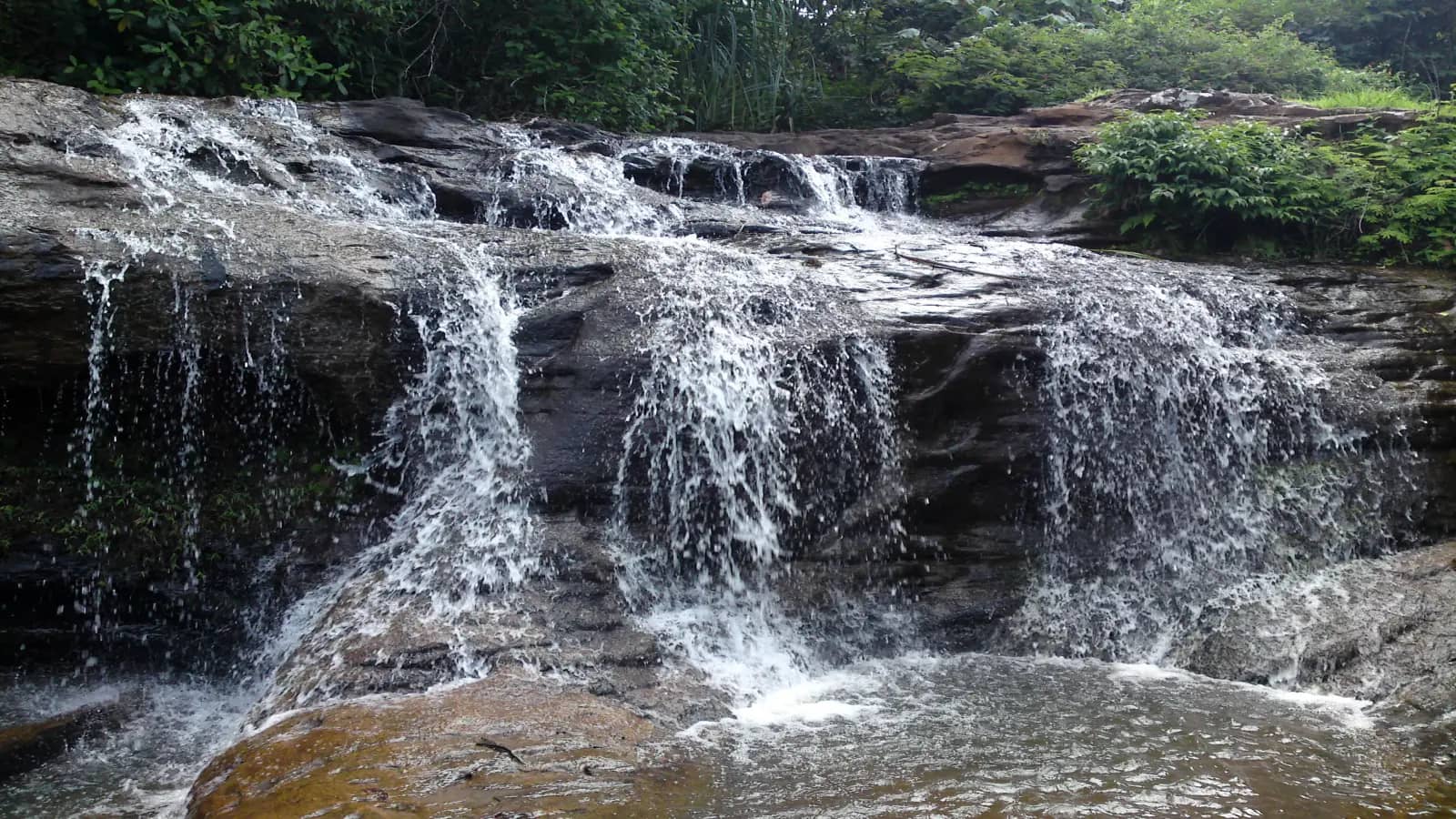
 | Kilissi Falls | 8+ | Forest and waterfall | 2 to 3 hours | Guide useful | Kindia |
 | Voile de la Mariee waterfall | 8+ | Waterfall viewpoint | 1 to 2 hours | Confirm access | Kindia |
 | Dalaba | 8+ | Highland town | Half day | Driver and local guide | Dalaba |
 | Ditinn Falls | 12+ | Long approach and waterfall | Full day | Yes | Dalaba |
 | Kambadaga Falls | 12+ | Rough-road waterfall trip | Full day | Yes | Pita or Dalaba |
Ten questions families ask before Guinea
- Is Guinea suitable for a first West Africa trip with children? Usually not. Families need comfort with limited infrastructure, French-language logistics and plans that may change after an advisory or road check.
- Can a toddler manage Guinea? A short Conakry stay is possible, but boats, traffic, malaria precautions and limited child-focused facilities make older children a better fit.
- Are the Iles de Los boats safe for children? Safety depends on the actual vessel, operator, load, forecast and correctly fitted life jacket. Inspect all five before boarding.
- Can children swim at the waterfalls? Do not promise it. Water depth, flow, submerged rock, access and rescue options change by season.
- How long does Conakry to Fouta Djallon take? Longer than a map estimate suggests. Road condition and traffic can turn the move into most of a day.
- Will a driver provide a car seat? Do not assume. Confirm the seat, belt and installation in writing or bring a suitable restraint.
- Is a seven-day highland loop realistic? Not with family recovery time. Seven days is better split between Conakry and Kindia.
- What health preparation matters most? Seek personal yellow-fever, malaria and routine-vaccine advice, and buy cover that includes medical evacuation.
- Will children find familiar food? Plain rice, eggs, fruit and grilled items may be available, but carry safe snacks for long transfers and confirm allergens.
- Can we rely on phone signal in the highlands? No. Store maps, contacts, accommodation details and route notes offline before leaving town.
Conakry and the Iles de Los
Grand Mosque of Conakry
The Grand Mosque is an active place of worship, not a guaranteed sightseeing venue. Older children can study its scale and learn how visitor behaviour changes around prayer, provided a local host confirms that entry is appropriate that day.
Allow 45 to 90 minutes. Dress modestly, remove shoes when directed, keep voices low and do not photograph worshippers without permission. Confirm toilets, separate areas, step-free access and prayer timing. The nearest useful access is a driver drop-off agreed with the host, away from peak congregation traffic. Guinea's official tourism guide was checked September 2, 2026.
Kassa Island
Kassa is the simplest way to test whether an island day suits the family. Children can watch port activity, look for shoreline life and spend a short period on sand without committing to a multi-island circuit.
Allow half a day. Confirm the departure port, passenger list, forecast, return time, shade and child-size life jackets. Ask where toilets and safe drinking water are available. Swimming needs a same-day current and supervision check. The nearest useful access is the operator's named Conakry landing. The Guinea investment and tourism agency was checked September 2, 2026.
Iles de Los boat day
A longer Iles de Los outing can add a second island, fishing community or historical stop. It suits older children who remain settled on an open boat and can follow instructions at an unfamiliar landing.
Allow a full day but keep a firm turnaround time. Book a known operator and check vessel, load, fuel, weather, communications, shade, drinking water, food and life jackets. Do not add snorkelling without direct local guidance and competent adult supervision. The nearest useful access is the operator's confirmed Conakry port. The official tourism overview was checked September 2, 2026.
Kindia: a separate waterfall base
Kilissi Falls
Kilissi gives children a forest walk and moving-water lesson close enough to Kindia for a controlled half-day. The family goal should be reaching an agreed viewpoint, not copying people who climb wet rock or enter the pool.
Allow two to three hours plus road time. Use closed shoes and a local guide. Confirm trail condition, water level, toilets, food, shade, insects and the point where a tired child can turn back. The nearest useful access is a driver drop-off at the current local entrance. Guinea's official tourism agency was checked September 2, 2026.
Voile de la Mariee waterfall
Voile de la Mariee is a shorter Kindia-region waterfall stop when road and water conditions suit. Children can compare flow after rain with the dry-season appearance, but the spray zone and rock remain slip hazards.
Allow one to two hours. Confirm the current access road, guide, railings, path edges, toilets and whether the viewpoint is open. Keep children out of fast water and away from unprotected drops. The nearest useful access is by private driver from Kindia. The official Guinea tourism overview was checked September 2, 2026.
Fouta Djallon: only after a fresh route check
Dalaba
Dalaba is a highland base where a family can slow down before attempting a waterfall day. Children can walk a short market route, notice the cooler climate and talk with a guide about the region's rivers and pastoral life.
Allow half a day after arrival. Confirm accommodation water, power, medical contacts and driver availability before committing to remote outings. Pavements and step-free access are inconsistent. The nearest useful transport point is the family's accommodation or named driver meeting place in Dalaba. The official Guinea tourism guide was checked September 2, 2026.
Ditinn Falls
Ditinn is a full expedition day, not a quick roadside swim. Older children get the most from the walk, landscape and water system when a local guide chooses the current approach and sets a turnaround point.
Allow a full day. Confirm road, trail, river crossings, rain, footwear, food, drinking water, toilets, communications and evacuation plan. Stay at a viewpoint unless the guide confirms a safer activity. The nearest useful access is a guide-arranged vehicle approach from Dalaba, followed by walking. The official tourism guide was checked September 2, 2026.
Kambadaga Falls
Kambadaga rewards a family that treats the journey as the day's main task. Older children can observe the multi-stage falls and surrounding plateau, but exposed edges, wet rock and remote access leave little margin for a rushed visit.
Allow a full day from Pita or a carefully planned route from Dalaba. Confirm vehicle clearance, guide, weather, trail, viewing point, food, water, toilets and the return before dark. The nearest useful access is the guide's current roadhead, not a fixed public-transport stop. The government tourism guide was checked September 2, 2026.
Five, seven and ten days with recovery time
Five days: Conakry and one island
Use day one for the airport transfer and rest. Visit the Grand Mosque only after permission and timing checks. Give Kassa or another single-island outing one full weather-dependent day, not both island options. Keep another day open for a delayed boat, rain or family recovery.
Seven days: add Kindia
Spend three nights around Conakry and three around Kindia, with the final night near the departure airport. Choose one Kindia waterfall per day. Do not add Fouta Djallon simply because two unused days appear on a spreadsheet.
Ten days: a careful Fouta Djallon option
Use two or three Conakry nights, two Kindia nights and four highland nights. Make Dalaba the first highland goal. Choose Ditinn or Kambadaga after the guide's road and weather assessment, not both by default. Return to Conakry with a full buffer before the international flight.
Airport, roads, boats and child restraints
Conakry's international airport is the main gateway. Arrange the airport transfer before arrival and exchange the driver's name, number and vehicle details. Keep the first evening clear because traffic and formalities can run long.
Public transport does not give a family dependable control over belts, luggage or departure time. A vetted private driver is more practical, but parents must still inspect tyres, rear belts and the intended child-seat installation. Avoid night travel and keep daily distances conservative.
The WHO 2023 Guinea profile records a national child-restraint law, an age threshold of 1.5 years and no restraint standard. It records a seat-belt law that does not cover every occupant. These legal fields are not a complete safety plan. Use an age-and-size-appropriate restraint for every child and confirm the exact vehicle can install it.
For island travel, ask to see each life jacket before payment. A phone photograph or promise is not a fit check. The operator should be able to explain forecast limits, communications, loading and the return plan.
Malaria, water, rain and family care
- Malaria: Risk exists throughout Guinea. Seek individual advice, use repellent and nets, and cover skin around dusk.
- Yellow fever: Check current entry and health guidance early enough to complete any required vaccination.
- Rain: Heavy rain changes roads, waterfalls, river crossings and flight timing. Treat a cancelled outing as a successful safety decision.
- Water: Use sealed or reliably treated water when uncertain, including for infant feeds and brushing teeth.
- Food: Plain rice, grilled fish, eggs, fruit peeled by the family and sauce on the side may simplify meals. Carry safe transfer snacks.
- Healthcare: Facilities are limited, especially outside Conakry. Insurance should cover evacuation and the family should know how to contact it.
- Political events: Avoid demonstrations and monitor current official advice. A route can become unsuitable after the article's verification date.
- Accessibility: Boats, damaged pavements, mud, steps and remote trails create substantial barriers. Ask about the full route and toilet access.
Guinea phone tools for road and island days
- Download offline maps for Conakry, Kindia, Dalaba and the agreed road corridor.
- Save the driver, boat operator, guide, accommodation, insurer and medical contacts.
- Use a French translation tool and store essential safety phrases offline.
- Keep passport, visa, vaccination, insurance and ticket copies available without data.
- Follow official weather and travel-advice sources before boat and waterfall days.
- Save a written route and return time with someone who is not joining the excursion.
Connectivity before rough-road days
Mobile data helps a driver receive a pin, a guide report a washed approach or a family move a boat day. It cannot guarantee signal in Fouta Djallon or on the islands, and it cannot replace a local safety decision.
The live public catalog checked September 2 returned one exact Guinea Roaming eSIM. The regional results did not explicitly contain country code GN. One Africa record contained Guinea-Bissau code GW, which is a different country, so this guide does not show that card. Roaming eSIM can be installed before travel on a compatible phone while the usual SIM remains in place. Package allowance, hotspot support, speed and reloadability still vary, and eligible plans can be topped up online.
Commercial searches such as best eSIM for Guinea belong to the Guinea product page. Estimate usage with the travel data calculator, then check phone compatibility and read when to install a Roaming eSIM. Families comparing another West African route can read Senegal with kids without merging the countries' primary intent.
The photographs illustrate the named region or place and do not prove current trail, water or access conditions.
This guide is reviewed before the main dry-season travel period and sooner after a security, political, health, road, storm, boat or trail change. Last verified September 2, 2026.