Honduras with kids: attractions, itineraries and family travel tips

Honduras with kids can work for families who are prepared to arrange transport carefully and cut the country into sensible pieces. Five days is best spent on Roatan. Seven days can combine Copan Ruinas and Roatan if the connection is protected by a buffer. Ten days can add Lake Yojoa. The main difficulty is not finding things to do. It is managing current security advice, long road transfers, limited medical care on the Bay Islands and weather that can disrupt boats and flights.
This is not the easiest first international trip with a toddler. On August 25, 2026, the US State Department placed Honduras at Level 3, Reconsider Travel, due to crime and terrorism, with a Do Not Travel warning for Gracias a Dios department. UK advice also describes high crime, warns against public buses and night driving, and says medical facilities on the Bay Islands are extremely limited. Read the advice for your nationality, check insurance exclusions and decide whether the remaining risk fits your family before paying.
For families who proceed, preschoolers usually do best with a Roatan base, a pool fallback and one planned outing a day. School-age children can add the Copan ruins, sculpture museum and short Lake Yojoa stops. Teenagers may enjoy longer forest walks or a guided reef outing, but swimming skill, weather, equipment and operator age rules matter more than a broad age label.
Operational details were checked against Honduran institutions, attraction operators, transport providers and current health and travel advice on August 30, 2026. Suggested ages and visit lengths are editorial planning estimates unless a provider states a rule. Confirm tickets, transport, child restraints, accessibility, toilets, food, shade, life jackets and weather directly before paying.
Honduras family decisions at a glance
| Decision | Practical starting point |
|---|---|
| Lowest-complexity first trip | One Roatan base for five nights, with weather space and no mainland transfer |
| Best history base | Copan Ruinas for the archaeological park, sculpture museum and Macaw Mountain |
| Best mixed nature base | Lake Yojoa for Los Naranjos, a short boat outing and one forest or waterfall day |
| Best toddler pace | One major outing a day, a pool or shaded rest, and a private transfer with a confirmed restraint |
| Best first country route | Ten days across Copan Ruinas, Lake Yojoa and Roatan, provided the family accepts the advisory and transfer load |
| Rental car needed? | No; a reputable prearranged driver is the simpler default for a first mainland visit |
| Public buses | Current UK advice says to avoid public and repainted school buses |
| Child passengers | Under-fives must be protected in the rear seat, and under-twelves cannot use the front-right seat under the cited law |
| Tap water | Current UK advice says it is generally unsafe to drink |
| Emergency help | Call 911 and keep insurer, embassy and local medical contacts saved offline |
Which Honduras stops fit your children?
| Image | Destination or attraction | Best ages | Indoor or outdoor | Allow | Booking requirement | Best base |
|---|---|---|---|---|---|---|
 | Copan Archaeological Park | 6 and older | Outdoor archaeology | 2.5 to 4 hours | Confirm entry and current guide options | Copan Ruinas |
 | Copan Sculpture Museum | 6 and older | Indoor museum | 1 to 2 hours | Check current admission arrangements | Copan Ruinas |
 | Macaw Mountain | 4 and older | Outdoor bird park and gardens | 2 to 3 hours | Advance contact is useful | Copan Ruinas |
 | Los Naranjos Eco-Archaeological Park | 5 and older | Museum, trail and archaeological landscape | 2 to 3 hours | Confirm trail and bridge conditions | Lake Yojoa |
 | Lake Yojoa boat and birding outing | 5 and older | Outdoor lake | 1.5 to 3 hours | Yes, with a reputable operator | Lake Yojoa |
 | Pulhapanzak Waterfall | 5 and older for the grounds | Outdoor waterfall | 2 to 4 hours | Book any adventure activity separately | Lake Yojoa |
 | Cerro Azul Meambar National Park | 7 and older | Outdoor forest trail | 3 to 5 hours | Arrange the suitable trail and guide | Lake Yojoa |
 | West Bay Beach | All ages with direct supervision | Outdoor beach | Half or full day | Reserve shade or equipment if needed | West Bay, Roatan |
 | Gumbalimba Park | 4 and older | Outdoor park, gardens and beach | 3 to 5 hours | Yes during busy cruise days | West Bay or West End |
 | Roatan Marine Park family snorkel | 7 and older, strong swimmer dependent | Outdoor marine activity | 2 to 4 hours | Yes, with a suitable guide | West Bay or West End |
These age ranges help families shortlist, not certify an activity. Ask the operator to describe the exact route, supervision, current, life jacket, vehicle restraint and facilities your family will actually use.
Ten questions families ask before booking Honduras
Recent public discussions focus on mixed-age Roatan trips, mainland transfers, car seats, rainy-season timing, non-swimmers and whether families are trying to fit too much into one week. The questions below use official or first-party evidence where the answer depends on a fact.
- Is Honduras appropriate with a four-year-old? It is possible, but a single Roatan base is more realistic than a country circuit. Parents must be comfortable with the current advisory and limited island medical facilities.
- House or all-inclusive stay on Roatan? Choose based on supervision and daily rhythm, not a universal winner. A house gives space and a kitchen, while a staffed property may simplify meals, transport and backup plans. Check pool barriers, stairs, generator arrangements and transfer support directly.
- Is Roatan worth visiting if children do not snorkel? Yes, if the family wants beach time, gardens, wildlife observation and a slower day. Do not pay for a reef-centered itinerary when half the group would rather stay on shore.
- Which Roatan base fits mixed ages? West Bay is the convenient beach choice. West End has more compact access to food and operators but less of a broad resort-beach feel. Check the exact road, stairs and shoreline rather than relying on the neighborhood name.
- Can Copan and Roatan fit in seven days? Just, with three nights in each and a protected transfer day. It is not a relaxed seven-day plan when flights or roads require extra connections.
- Should families rent a car? Not for a first visit by default. Current advice warns about poor road conditions, roadblocks, crime and night driving. A reputable driver with the correct child restraints reduces navigation and parking work.
- Can we rely on app rides? No. Uber's official Honduras city list names Tegucigalpa, which is outside this route. Prearrange airport, ferry and mainland transfers.
- What does Honduran law say about child passengers? The cited traffic law requires protection for children under five in the rear seat and bars children under twelve from the front-right seat. It does not give enough detail to choose a device, so arrange a suitable restraint for each child's age and size.
- Is September or October a sensible time? It falls within the Atlantic hurricane season, normally June through November. Build weather space into an island trip and monitor official COPECO information plus airline and ferry notices.
- Which animal activity should we choose? Prefer an operator that explains animal welfare, contact rules and group size. Children do not need to touch wildlife for a worthwhile visit. A reef outing also requires swimming and safety questions, not just an attractive photograph.
Copan Ruinas: keep history and wildlife in one base
Copan Ruinas is the most coherent mainland base for families. The archaeological park, museum and Macaw Mountain can fill two unhurried days without packing each morning. Roads and arrival times still matter, so do not schedule the ruins after a long same-day transfer.
Copan Archaeological Park
Children walk through plazas, see carved stelae and examine how rulers used sculpture and architecture to tell stories. It works best for school-age children who can manage heat, uneven ground and a few focused explanations. Allow 2.5 to 4 hours, then stop before attention runs out.
This is an outdoor archaeological site, not a smooth city museum. Bring water, hats and shoes with grip. A compact stroller may struggle on rough ground. Ask IHAH about current step-free routes, toilets, seating, food rules, guide availability and any closed areas. Keep children off monuments and follow site barriers.
Book or confirm the current entry arrangement with the Honduran Institute of Anthropology and History. Copan Ruinas is the useful base; arrange the short transfer rather than relying on a street pickup. The official park information was last verified on August 30, 2026.
Copan Sculpture Museum
The museum gives children a closer view of carved pieces and the full-scale Rosalila temple reconstruction. It is the right follow-up when a child enjoyed the symbols outside, and it also gives the family time away from direct sun. Allow 1 to 2 hours rather than treating it as another half-day site.
The indoor setting does not prove that every route is step-free or climate controlled. Confirm ramps, lifts, toilets, seating and whether a stroller can stay with the family. Pack a quiet observation game for younger children: find a bird, a face and a repeated shape.
The museum sits within the Copan archaeological visit. Confirm whether its entry is separate and whether temporary maintenance affects access. The IHAH park and museum information was last verified on August 30, 2026.
Macaw Mountain
Children follow garden paths, observe rescued birds and learn why scarlet macaws matter to the Copan landscape. The official visit page says the park is about ten minutes by car from Copan's central square and describes parking, wheelchair access, Spanish and English staff and Wi-Fi. Ages four and older are the most likely to enjoy a two to three-hour visit.
Wheelchair access on an official summary is useful but does not answer every family question. Ask about gradients, wet paths, stroller use, toilets, food, seating and the closest drop-off. Do not promise a child direct animal contact. Follow staff rules, keep fingers away from beaks and let observation be enough.
Contact the park before arrival, especially in a busy period or when the family needs accessibility support. Macaw Mountain's official planning information was last verified on August 30, 2026.
Lake Yojoa: choose two stops, not all four
Lake Yojoa breaks the mainland journey and gives families archaeology, birds, forest and a waterfall within one region. It can also become an exhausting checklist. Choose Los Naranjos plus one of the lake, waterfall or forest outings. Keep a weather fallback and arrange transport from the accommodation.
Los Naranjos Eco-Archaeological Park
Children move between a museum, archaeological landscape, woodland paths and a raised bridge. This mix suits ages five and older who need more movement than a conventional museum allows. Allow 2 to 3 hours and keep the route short after rain.
Paths, roots, mud and bridge surfaces can limit strollers and mobility aids. Confirm the open trail, bridge condition, toilets, seating, food and shade with IHAH. Long trousers, repellent and closed shoes are practical. Do not add an unsupported promise about step-free access.
The park is in the Lake Yojoa area and works as a morning stop before lunch and rest. Confirm opening and admission directly. The official IHAH page was last verified on August 30, 2026.
Lake Yojoa boat and birding outing
Children scan the shore for birds and experience the lake at a pace that can be adjusted to attention span. This is better as a short private or small-group outing than an open-ended boat day. Ages five and older are a practical starting point, provided the operator has a correctly sized life jacket.
Ask to see life jackets before departure and confirm a covered or shaded area, toilet plan, boarding steps, maximum group size and the rule for lightning, wind or heavy rain. CDC recommends safe boating practices and suitable life jackets. Families with a toddler can bird from shore instead.
Book through a reputable operator recommended by a reviewed accommodation or tourism provider. Do not board an improvised boat without safety equipment. Honduras tourism and CDC guidance were last verified on August 30, 2026.
Pulhapanzak Waterfall
The useful family version is the waterfall view, grounds and a slow meal break. Older children may be interested in adventure activities, but the route behind or near powerful water is not an automatic family recommendation. Treat each activity as a separate decision with its own age, height, footwear and water-level rule.
Surfaces may be wet and slippery, while spray can soak a carrier or phone. Ask about barriers, steps, toilets, changing space, food, shaded seating and the closest vehicle access. Keep young children within arm's reach near edges and moving water.
Confirm current conditions and activity rules directly before travelling. Heavy rain can change the sensible route even when the site remains open. The Honduras tourism listing was last verified on August 30, 2026.
Cerro Azul Meambar National Park
Cerro Azul Meambar, often shortened to PANACAM, is the forest choice for families who want a guided walk rather than another vehicle day. Children listen for birds, notice plants and follow a route selected for their stamina. It is strongest for ages seven and older, with 3 to 5 hours including pauses.
Do not assume the longest trail is the best trail. Ask for current distance, elevation, mud, stream crossings, toilets, food, seating and turnaround points. A carrier is more realistic than a stroller. Heat, rain and insects can change a comfortable walk into a poor decision.
Arrange a suitable trail and guide through the park or a reputable provider. Families can skip PANACAM and keep a lake rest day without missing an essential sight. Honduras tourism information was last verified on August 30, 2026.
Roatan: build the day around water and cruise traffic
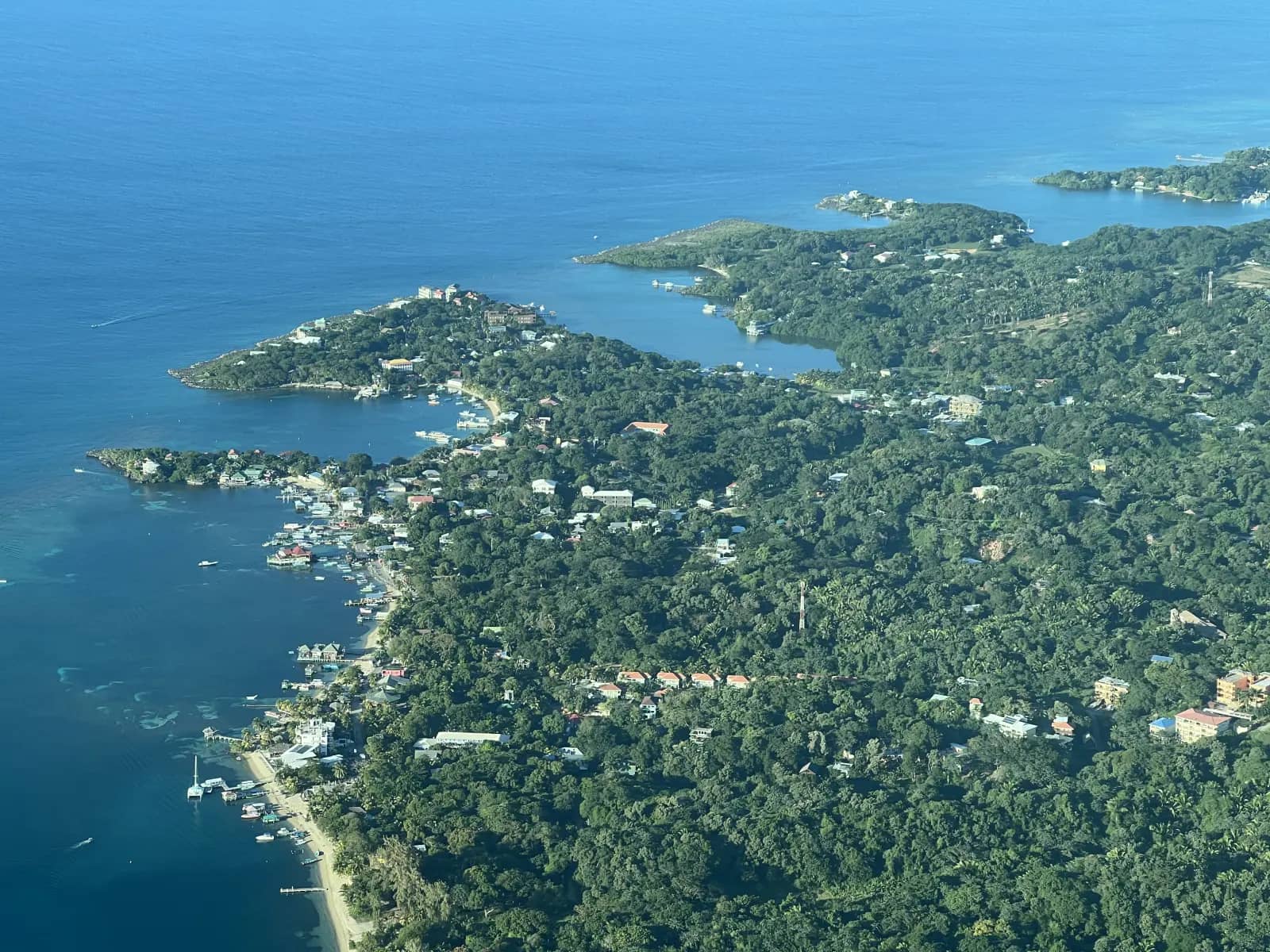
Roatan is easier when the family chooses a beach base, checks cruise-ship days and leaves space for weather changes. It is still not frictionless. UK advice says attacks against visitors can occur even on the Bay Islands and that island medical facilities are extremely limited. Use reputable transport, avoid isolated roads after dark and keep insurance and evacuation details accessible.
West Bay Beach
Children paddle, build sand structures and take breaks under shade. Confident swimmers may snorkel from shore only when local conditions, supervision and equipment make that sensible. The beach works for all ages as a beach day, not as a promise of safe water.
Ask the property or day provider about toilet access, changing space, food, shade, loungers and a quiet place away from boat traffic. Currents, sun and crowd levels change. Use a properly fitted flotation aid where appropriate, but do not treat it as a substitute for close adult supervision.
Reserve any day access, shade or equipment directly. Roatan Marine Park visitor resources and current regional travel advice were last verified on August 30, 2026.
Gumbalimba Park
Children walk through gardens, cross a suspension bridge, see wildlife areas and explore the park's pirate-themed cave or museum space. The park also describes beach and pool areas. Ages four and older can enjoy 3 to 5 hours if the family avoids forcing every activity into one visit.
Confirm rules around wildlife interaction and choose observation when contact does not suit the child. Ask about bridge bypasses, steps, stroller storage, toilets, changing areas, food, shade, seating and pool supervision. Wet weather affects paths and bridge comfort.
Book ahead when cruise demand is high and arrange a trusted return transfer. The park's official visitor information was last verified on August 30, 2026.
Roatan Marine Park family snorkel
The best family reef outing is matched to the least confident swimmer, not the strongest adult. Children learn how a protected reef works, practice floating without touching coral and look for fish with a guide. Ages seven and older are a planning estimate, not an operator rule.
Ask about the entry method, current, guide-to-guest ratio, child life jackets, flotation aids, prescription masks, boat shade, seasickness plan and cancellation policy. Roatan Marine Park says snorkeling is allowed in the protected area and publishes rules and marine markers. Follow the rule against anchoring in protected areas and never stand on coral.
Book a reputable provider that can explain the exact site and weather cutoff. Non-swimmers can choose a glass-bottom or shore-based alternative only after verifying its current operation and safety arrangements. Marine park resources were last verified on August 30, 2026.
Realistic Honduras family itineraries
These routes deliberately leave meals, naps, rain and slower starts unfilled. Transfer times depend on roads, weather and the chosen airport. Confirm the complete route with a reputable operator before booking non-refundable parts.
Five days: Roatan without a mainland transfer
- Day 1: Arrive, use the prearranged transfer, buy water and have an early night.
- Day 2: West Bay beach morning, long lunch and pool or room rest.
- Day 3: Gumbalimba Park, then no second ticketed attraction.
- Day 4: Guided family snorkel for suitable swimmers, with a shore day for anyone opting out. Keep this day movable for weather.
- Day 5: Slow breakfast and departure buffer.
This is the strongest option for preschoolers and families unwilling to add long road journeys. If weather cancels the water day, keep the spare time instead of filling it with a distant excursion.
Seven days: Copan Ruinas and Roatan
- Day 1: Arrive in the mainland gateway chosen for the confirmed route and transfer in daylight to Copan Ruinas. If a daylight arrival is impossible, sleep near the airport and travel next morning.
- Day 2: Copan Archaeological Park and Sculpture Museum, with a long lunch and rest.
- Day 3: Macaw Mountain, pool or town downtime and packing.
- Day 4: Protected transfer to Roatan. Treat this as a travel day and avoid a fixed evening activity.
- Day 5: West Bay beach and rest.
- Day 6: Gumbalimba Park or a family snorkel, not both.
- Day 7: Departure with weather and traffic buffer.
If the mainland-to-island connection becomes complicated, use all seven days on Roatan or add nights. A family trip does not improve because it crosses more regions.
Ten days: Copan Ruinas, Lake Yojoa and Roatan
- Day 1: Arrive and travel only in daylight, or sleep near the arrival airport.
- Day 2: Copan Archaeological Park and Sculpture Museum.
- Day 3: Macaw Mountain and an unstructured afternoon.
- Day 4: Private transfer to Lake Yojoa with meal and child-rest stops.
- Day 5: Los Naranjos in the morning, then a lake viewpoint or short operator-vetted boat outing.
- Day 6: Choose Pulhapanzak grounds or a suitable PANACAM trail. Keep the other out.
- Day 7: Transfer to the island connection with a conservative buffer. Sleep near the departure point if required by the confirmed schedule.
- Day 8: West Bay beach.
- Day 9: Gumbalimba Park or a guided snorkel, selected for the children and weather.
- Day 10: Departure.
Do not add Tegucigalpa, another island or a Guatemala border crossing just because the map makes it look possible. Every extra base increases luggage, transport and recovery work.
Getting between Copan, Lake Yojoa and Roatan
Should your family drive the mainland route?
A rental car is not necessary for this route. Current UK advice cites dangerous driving, poor road conditions, landslides, roadblocks, protests and crime risks, and recommends avoiding night driving. A reputable prearranged driver is the better first-trip default because the family can agree on daylight travel, stops, luggage and restraints in advance.
If renting, confirm insurance, roadside support, parking and the precise road with the provider. Do not follow an app onto an unreviewed shortcut. Keep doors locked, valuables out of sight and fuel above half a tank on transfer days.
Child restraints
Honduras Traffic Law Article 99 item 22 requires seat belts and protection of children under five, obligatorily in the rear seat. Item 27 bars children under twelve from the front-right seat. The cited passage does not define the exact restraint device, so it is not enough to say “the driver has a seat.” Ask for the restraint type, fit and installation, or bring a suitable approved device for the child's age and size. Confirm compatibility with every transfer vehicle.
Public transport, taxis and app rides
Current UK advice says to avoid public buses and repainted school buses. It recommends hotel or radio-dispatched taxis for short journeys and a reputable operator for longer trips. Uber's official Honduras list names Tegucigalpa only, so it does not solve this itinerary. Save the driver's name, vehicle and meeting point before landing.
Airports and the Roatan ferry
Roatan has an airport, while ferry services connect the island with La Ceiba. The right choice depends on the complete route, not the cheapest single ticket. Flights and ferries can be disrupted by weather, so avoid a tight same-day international connection.
At verification, Galaxy Wave published two daily departures in each direction. Its terms called for check-in one hour before departure and allowed two bags per passenger up to 50 pounds within stated size limits. Schedules, baggage rules and sea conditions can change. Check them again directly and ask how strollers, car seats and oversized bags are handled.
Planning details that can overturn the itinerary
Seasons, heat and storms
Hurricane season normally runs from June through November. Rain can affect ferries, flights, roads, forest trails and waterfall conditions even without a named storm. Use COPECO for official weather and alerts, and keep the reef day movable. Sun protection, breathable clothing, refillable bottles using safe water and dry bags help in every season.
Food and water
Baleadas, rice, beans, tortillas, eggs, fruit and plainly grilled foods give many families manageable choices. Ask for spice and sauces separately when needed. Carry a familiar snack on transfer days because road stops are not predictable.
Current UK advice says tap water is generally unsafe to drink. Use sealed or properly treated water for drinking and, for young children, discuss tooth brushing and formula preparation with a health professional. Check seals and avoid ice when its water source is uncertain.
Healthcare, mosquitoes and insurance
Call 911 in an emergency. Current advice says state hospitals are underfunded, private clinics are concentrated in major towns and Bay Islands medical facilities are extremely limited. Insurance should cover the planned activities and medical evacuation. Save the insurer's assistance line offline and identify the realistic clinic before choosing a remote stay.
CDC and UK guidance identify mosquito-borne risks in Honduras. Seek destination-specific medical advice before travel, use an appropriate repellent, cover skin when practical and keep screens or air conditioning in mind when booking. This article cannot determine vaccines or medicines for an individual child.
Where stroller wheels stop being useful
Do not treat Honduras as uniformly accessible. Archaeological ground, forest trails, wet steps, docks, sand and informal boarding points create different barriers. A compact stroller helps in airports and smoother areas; a carrier may work better on trails, but heat changes how long it is comfortable. Ask each venue for the route from vehicle drop-off to toilet, not only whether it is “accessible.”
Digital tools worth preparing before arrival
- COPECO website: check official weather and emergency information. Save the page rather than depending on a social repost.
- Airline and Galaxy Wave channels: use the provider's own booking and service notices for changes.
- Offline maps: download Copan Ruinas, Lake Yojoa, La Ceiba and the relevant part of Roatan before transfer days.
- Translation: download Spanish offline and save restraint, allergy and medical phrases.
- Messaging: create one family chat with driver details, accommodation addresses and daily meeting points.
- Cloud document access: keep insurance and ticket copies available offline as well as online.
No single app makes every Honduras journey safe or available. Transport coverage is local, and a data connection does not extend an operator's service area.
Staying connected without making the trip about the eSIM
Connectivity is useful when a driver changes the pickup point, a ferry or flight updates, COPECO posts an alert, or family members split between a reef outing and the beach. Download maps and tickets first because mobile coverage can still vary by place, terrain, congestion and package network.
Roaming eSIM provides a direct Honduras plan page plus broader plans whose public coverage records include Honduras. That is a clearer starting point than an unverified “best eSIM for Honduras” roundup because the traveler can inspect the currently offered package before purchase and use the installation and support paths tied to the actual product. It does not promise signal everywhere, replace emergency planning or make a transport service operate outside its listed area.
Choose the exact Honduras option for a country-only trip. Compare a global option only when the itinerary genuinely continues beyond Honduras. Package network, allowance, validity, hotspot, top-up and activation details can vary, so read the selected card rather than transferring a claim from one package to another.
Before buying, check phone compatibility, estimate the trip with the data calculator, and save the Roaming eSIM installation guide. Families continuing through Central America can also use the El Salvador with kids guide to plan a separate, properly paced country trip.
A final booking checklist
- Read current government advice for every traveller's nationality and check insurance exclusions.
- Decide whether the trip is Roatan-only or a mainland circuit before buying flights.
- Arrange daylight transfers and the correct restraint for every child.
- Keep one movable weather day around island transport or reef activity.
- Confirm attraction routes, toilets, food, shade, seating and accessibility.
- Verify life jackets and operator rules before any boat outing.
- Use safe drinking water and obtain personal pre-travel health advice.
- Save 911, insurer, embassy, accommodation and driver contacts offline.
- Download maps, tickets and Spanish phrases before leaving reliable Wi-Fi.
- Recheck official opening, road, ferry, flight and weather information shortly before travel.
The shortlist was built around decisions families can make: one island base, one history base and one optional nature stopover. Famous places were excluded when they would add a difficult transfer without a distinct child-focused benefit. Ages and visit times are editorial estimates and are labelled as such. Every operational fact should be checked again before payment, and the article should be reviewed after a material advisory, law, transport, health, weather or attraction change.