Iceland with kids: attractions, itineraries and family travel tips

Iceland works best for families who enjoy short walks, pools, waterfalls and road-trip days where the landscape is the main attraction. Five days is enough for Reykjavik, the Golden Circle and the western South Coast. Seven days lets you sleep outside the capital and drive less each morning. Ten days reaches Jokulsarlon at a sensible pace, but it is still too short for a relaxed family circuit of the entire Ring Road.
The main difficulty is weather combined with driving. A route that looks easy in clear summer conditions can become slow in wind, rain, snow or poor visibility. Children also need more stops than an adult itinerary usually allows. Plan one main area each day, check official road and weather information before departure, and keep a pool or museum as the fallback rather than forcing the next viewpoint.
This guide was checked against official attraction, transport, health and government sources on July 29, 2026. Suggested ages, visit lengths and drive times are editorial planning ranges, not venue rules or guarantees. Conditions and opening arrangements can change quickly in Iceland, so check the linked official page on the day you travel.
Iceland family trip at a glance
| Trip decision | Practical starting point |
|---|---|
| Best first trip | 7 days split between Reykjavik and the South Coast |
| Best for toddlers | Reykjavik pools, Family Park and Zoo, Perlan and short waterfall stops |
| Best for ages 5 to 11 | Perlan, Strokkur, waterfalls, the zoo and Jokulsarlon |
| Best for teens | South Coast walks, geothermal areas, lagoons and longer scenic drives |
| Car needed | Not for Reykjavik; useful for the Golden Circle and South Coast |
| Main stroller issue | Gravel, mud, ice, steep steps and wind outside the city |
| Emergency number | 112 for police, fire, ambulance and search and rescue |
| Sensible daily pace | One driving region, two main stops and a flexible break |
Which Iceland attractions fit your family?
| Image | Attraction | Best ages | Setting | Allow | Book ahead? | Best base |
|---|---|---|---|---|---|---|
 | Perlan | 4 to 14 | Indoor with outdoor deck | 2.5 to 4 hours | Recommended | Reykjavik |
 | Reykjavik Family Park and Zoo | 2 to 10 | Mostly outdoor | 2 to 3 hours | Usually not essential | Reykjavik |
 | Laugardalslaug | 1 to 14 | Outdoor and indoor pools | 1.5 to 2.5 hours | No for ordinary swimming | Reykjavik |
 | Thingvellir National Park | 5 to 14 | Outdoor paths | 2 to 3 hours | No for a self-guided visit | Reykjavik or Golden Circle |
 | Geysir geothermal area | 4 to 14 | Outdoor geothermal paths | 1 to 1.5 hours | No | Golden Circle |
 | Gullfoss | 4 to 14 | Outdoor viewpoints | 1 to 1.5 hours | No | Golden Circle |
 | Seljalandsfoss | 5 to 14 | Outdoor wet path | 1 to 1.5 hours | No | Hella or Hvolsvollur |
 | Skogafoss | 3 to 14 | Outdoor viewpoint and steps | 1 to 1.5 hours | No | Skogar or Vik |
 | Reynisfjara | 6 to 14 | Exposed beach | 30 to 45 minutes | No | Vik |
 | Jokulsarlon glacier lagoon | 5 to 14 | Outdoor lagoon shore | 1.5 to 3 hours | Only for a tour | Jokulsarlon or Hofn area |
 | Blue Lagoon | 2 to 14 | Geothermal spa | 2 to 3 hours | Yes | Reykjavik or Keflavik |
The age ranges describe when the stop is likely to hold attention. They are not admission limits. Natural sites have no fixed accessibility level because rain, ice, wind and path maintenance can change the surface from one day to the next.
Reykjavik: start indoors, then add a pool
Reykjavik is the easiest place to recover from the flight, buy food and learn how everyone handles the weather. Perlan, the Family Park and Zoo, and Laugardalslaug sit close enough to combine without crossing the city repeatedly. Most families should still choose two, not all three, on the first full day.
Perlan
Children can walk through an indoor ice cave, use interactive exhibits about glaciers and volcanoes, and watch the planetarium show. The observation deck adds a city view when conditions are comfortable. Ages four and up get the clearest value from the science and storytelling, though younger children may enjoy the ice cave. Allow three hours, with more time for food or a slow exhibit pace.
Lifts connect the exhibition floors, and the building has toilets, seating, food and indoor shelter. The ice cave is cold and has a textured floor, so bring a warm layer and ask the venue about current mobility arrangements if anyone uses a wheelchair or cannot manage uneven surfaces. Bus routes 13 and 18 serve the area. Check the official Perlan visitor information for current exhibitions, access and ticket slots. Official details checked July 29, 2026.
Reykjavik Family Park and Zoo
This small city attraction focuses on Icelandic farm animals and native species rather than a full-day international zoo. Children can see seals, reindeer, farm animals and seasonal play areas. It works best for ages two to ten and pairs naturally with Laugardalslaug or the nearby botanic garden. Allow two to three hours.
The visit is mostly outdoors, so wind and rain matter more than the distance. Main routes can suit a stroller, but surfaces and seasonal play equipment vary. Toilets and food are available in the park area; verify current services and ride operation before promising a particular activity. Use the official Family Park and Zoo page for access and seasonal notices. The useful bus stops are in the Laugardalur area. Official details checked July 29, 2026.
Laugardalslaug
Local swimming pools are often easier with children than a long commercial spa visit. Laugardalslaug has pools, hot tubs and child-focused water areas, so families can warm up and move around without committing another day to sightseeing. Ninety minutes is usually enough for toddlers; older children may stay longer.
Icelandic pool rules require everyone to wash thoroughly without swimwear before entering the water. Private changing cubicles are available at Reykjavik pools, and phones are not allowed in changing rooms or pool areas. Children under ten must be accompanied by a swimmer aged at least 15, with parents allowed to supervise their own children. Read the official pool rules, accessibility information and Laugardalslaug page before visiting. Official details checked July 29, 2026.
Golden Circle: three stops are enough
Thingvellir, Geysir and Gullfoss form a logical day from Reykjavik or a base around Selfoss. Driving the loop takes several hours before stops, food and toilet breaks. Leave early, keep lunch simple, and remove the last stop if the weather or children are done.
Thingvellir National Park
Thingvellir gives school-age children a physical way to understand the rift between tectonic plates and the site of Iceland's historic parliament. A useful family visit follows the main paths between the visitor area, viewpoints and Almannagja rather than attempting a long hike. Allow two to three hours.
Some main paths are broad, but gravel, slopes, snow and ice can make a stroller or wheelchair route difficult. Toilets and visitor services are concentrated at official service points rather than beside every path. Do not assume the nearest parking area has everything you need. Check the Thingvellir service page and current park notices before leaving Reykjavik. Official details checked July 29, 2026.
Geysir geothermal area
Strokkur gives children a clear event to wait for: water rises, erupts, and the countdown starts again. Keep everyone on marked paths because the water and ground can cause serious burns. Ages four and up usually understand the boundary better than toddlers, but a toddler can visit under close control. Allow about an hour.
The main viewing route is relatively short, but it is exposed and can be slippery. Strollers manage firm sections better than muddy or icy ones. Toilets and food are available around the visitor services across the road; opening arrangements can change. The official regional Golden Circle route information is the planning reference. Official details checked July 29, 2026.
Gullfoss
Gullfoss is a short, high-impact waterfall stop. The upper viewpoint is the practical choice with a stroller or tired child, while lower paths and steps require more care. Spray, wind and ice can change the visit quickly. Allow an hour, plus a warm-up and toilet break.
Keep children beside you at viewpoints and obey closed-path signs. Food, toilets and seating are available in the visitor area, but not along every viewpoint path. Geysir and Gullfoss are close enough to combine without another long drive. Check the official South Iceland route information and SafeTravel before setting out. Official details checked July 29, 2026.
South Coast: move the hotel instead of repeating the drive
Seljalandsfoss is roughly two hours from central Reykjavik in good conditions. Vik is farther. Families who want to reach Jokulsarlon should sleep along the route rather than make several out-and-back days from the capital. Hella or Hvolsvollur works for the western South Coast; Vik works for Reynisfjara and the route east.
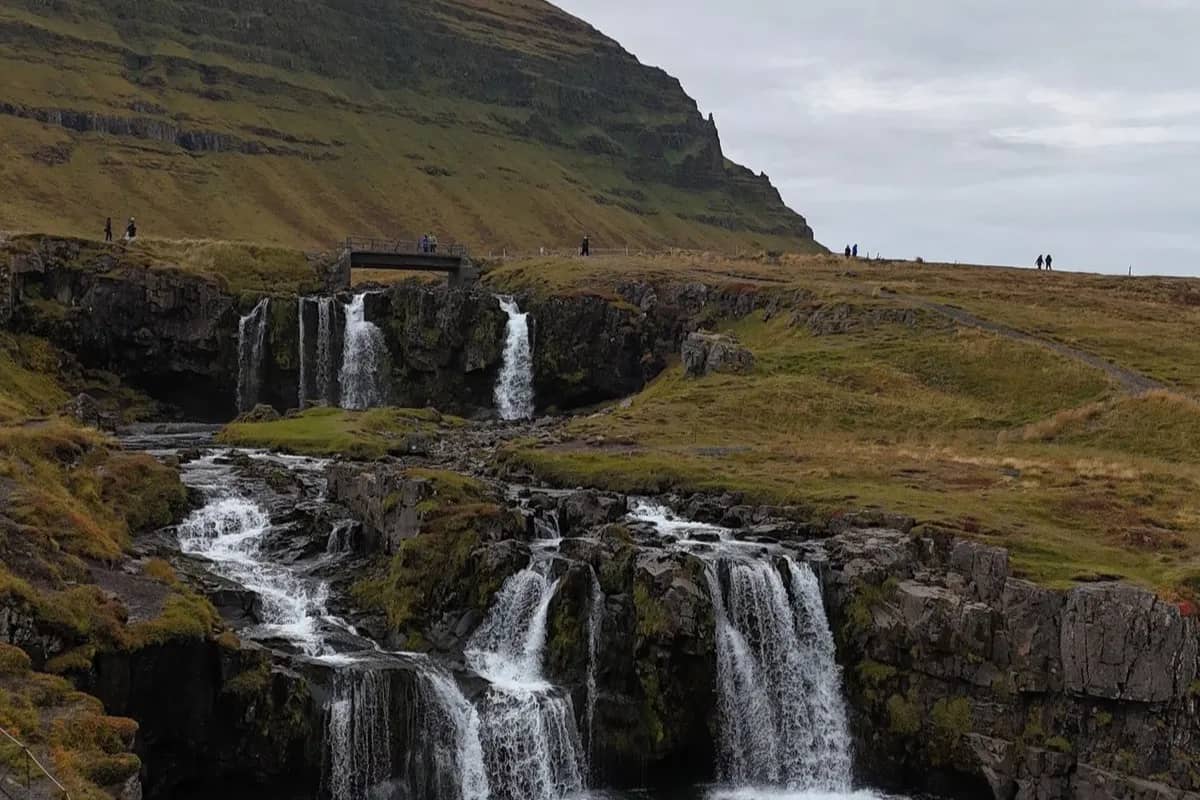
Seljalandsfoss
Children see the waterfall from the front, while older children may enjoy the path behind it when the route is open. That path is wet, uneven and slippery. It does not suit a stroller, and a carrier still requires secure footing. The front viewing area is the reasonable stopping point for toddlers and anyone who needs a flatter route.
Bring waterproof outerwear and expect spray. Toilets and seasonal food service are near the parking area, but check current arrangements before depending on them. Do not continue behind the waterfall when the path is closed or icy. Read the official South Iceland listing before travel. Official details checked July 29, 2026.
Skogafoss
Skogafoss can be seen from a broad area near the base, so younger children get a clear waterfall view without climbing. Older children can use the long staircase to the upper viewpoint if conditions and energy are good. Keep the lower view as the whole visit when steps are wet, icy or crowded.
Spray reaches the foreground, and wind can make it cold even on a mild day. Toilets and food are available in the Skogar area, but facilities are not directly beside every path. A stroller works around parts of the lower approach and should stay below the staircase. Use the official Skogafoss listing for current local information. Official details checked July 29, 2026.
Reynisfjara
Reynisfjara is not a play beach. Children can see black sand, basalt columns and sea stacks from the backshore, but the visit requires continuous adult attention. Sneaker waves can travel much farther up the beach than the preceding waves. There are no lifeguards, and the eastern cliff area also has rockfall risk.
Read the warning sign and obey the current coloured zone. Stay well back from the water, never turn away from the sea, do not enter a closed zone, and do not let children run toward the shoreline. A stroller is awkward on the sand and should not encourage anyone to move nearer the water. Toilets and food are near the parking area. Read the official Reynisfjara safety guide before deciding whether the stop suits your group that day. Official details checked July 29, 2026.
Jokulsarlon glacier lagoon
Jokulsarlon gives children a close view of floating ice and, sometimes, seals without a glacier hike. The lagoon is beside Route 1, but it is a long way from Reykjavik and about two and a half hours from Vik in good conditions. Treat it as a southeast overnight stop, not an extra item on a Golden Circle day.
The main visitor area has flush toilets and food services, with some businesses operating seasonally. Surfaces around the shore can be uneven, wet or icy. Keep children away from unstable ice and the water's edge. Boat trips have their own minimum ages, clothing rules and weather cancellations, so book only after checking the operator's current terms. The official Vatnajokull National Park page covers access and services. Official details checked July 29, 2026.
Reykjanes: choose the lagoon around the flight
The Reykjanes Peninsula sits between Reykjavik and Keflavik airport. Roads, geothermal sites and commercial attractions can be affected by volcanic activity, so check official alerts even when a booking remains open.
Blue Lagoon
Blue Lagoon accepts children from age two; children under two cannot enter the water. Children under eight must use the provided flotation aids, and the venue limits how many children one adult can supervise. This makes the lagoon a considered choice for a family with school-age children, not an automatic airport stop for every toddler.
Advance booking is required. Allow two to three hours plus changing time, and confirm the latest access route before leaving because local volcanic conditions can affect roads or operations. The venue publishes accessible changing information and safety rules. Check the official minimum-age policy and safety standards. Official details checked July 29, 2026.
Five-day Iceland itinerary with kids
This route works for a first trip when the family is comfortable changing hotel once. It leaves Jokulsarlon for a longer visit.
| Day | Plan | Where to sleep |
|---|---|---|
| 1 | Arrive, eat, walk only if everyone has energy | Reykjavik |
| 2 | Perlan in the morning, then Laugardalslaug or Family Park and Zoo | Reykjavik |
| 3 | Thingvellir, Geysir and Gullfoss with an early finish if needed | Reykjavik |
| 4 | Seljalandsfoss and Skogafoss, then continue to Vik or return from Skogar | Vik or Hella |
| 5 | Short Vik-area stop, airport transfer, or Blue Lagoon for children aged two and over | Departure day |
Do not put Reynisfjara between a late hotel checkout and a fixed flight. The beach needs attention, and winter road conditions can consume the buffer.
Seven-day Iceland family itinerary
Seven days gives the South Coast room to breathe and reduces repeated driving.
| Day | Plan | Where to sleep |
|---|---|---|
| 1 | Arrival and a quiet Reykjavik evening | Reykjavik |
| 2 | Perlan plus one Laugardalur activity | Reykjavik |
| 3 | Golden Circle, stopping overnight near Selfoss or Hella | Selfoss or Hella |
| 4 | Seljalandsfoss, Skogafoss and a weather fallback such as Lava Centre | Hella or Vik |
| 5 | Vik area and Reynisfjara only when the warning zone and weather allow | Vik |
| 6 | Slow return toward Reykjavik with a pool or indoor stop | Reykjavik |
| 7 | Reykjanes or Blue Lagoon, then the airport with a wide buffer | Departure day |
A day trip from Vik to Jokulsarlon and back is possible, but it creates about five hours of driving before stops. Add it only if the children already handle long road days well. Otherwise use the ten-day route.
Ten-day Iceland itinerary with kids
Ten days is enough for Reykjavik, the Golden Circle and Jokulsarlon with two weather buffers. It is not a relaxed full Ring Road itinerary. Visit Iceland recommends at least 10 to 12 days for the Ring Road in general; families who want frequent breaks should allow longer.
| Day | Plan | Where to sleep |
|---|---|---|
| 1 | Arrival and rest | Reykjavik |
| 2 | Perlan and a city pool | Reykjavik |
| 3 | Family Park and Zoo or a flexible city day | Reykjavik |
| 4 | Thingvellir, Geysir and Gullfoss | Selfoss or Hella |
| 5 | Seljalandsfoss and Skogafoss | Vik |
| 6 | Vik area, with Reynisfjara only if conditions suit | Vik |
| 7 | Drive east with food and playground breaks | Jokulsarlon area |
| 8 | Jokulsarlon, then begin the return west | Kirkjubaejarklaustur or Vik |
| 9 | Weather buffer and return to Reykjavik | Reykjavik |
| 10 | Reykjanes or Blue Lagoon, then airport | Departure day |
This plan leaves out the north and east fjords on purpose. Completing Route 1 is not a useful family achievement if most of the trip is spent fastening children back into the car.
Driving, car seats and airport transfers
Do you need a rental car?
You do not need a car in central Reykjavik. Public buses cover the city, and tours can reach the Golden Circle and South Coast. A rental car becomes useful when you want nap timing, food stops and weather decisions under your control. It also creates responsibility for road checks, wind, fuel, parking and the correct child restraint.
Avoid gravel highland roads and any road marked with an F unless the vehicle, season and driver are suitable. Check road conditions at umferdin.is, weather warnings from the Icelandic Met Office and SafeTravel alerts before every driving day. A map app's estimated arrival time is not a road-safety report.
Iceland child car-seat rules
Iceland requires children under 135 cm to use a suitable child restraint. A child under 150 cm must not sit in front of an active airbag. The government recommends rear-facing travel until at least age three. Read the full official children-in-cars guidance before reserving a seat.
Ask the rental company for the seat standard, child size range and installation instructions in writing. A seat being listed as available does not prove it fits your child or vehicle. Families who bring their own seat must also check airline carriage rules and whether that seat is approved for use in Iceland.
Keflavik airport to Reykjavik
Keflavik International Airport is about 50 km from Reykjavik. The trip commonly takes around 40 to 50 minutes in normal road conditions, but winter weather or traffic can add time. Options include rental car, airport coach, taxi and public bus route 55. The airport transport page lists current choices, while Straeto route 55 covers the public bus.
Check whether a coach drops at the central terminal or continues to your hotel, and ask how it handles folded strollers and large luggage. A taxi or transfer carrying a child still needs the correct restraint. Do not assume an airport vehicle is exempt.
Strollers, carriers and luggage
A compact stroller is useful in Reykjavik, Perlan and the flatter parts of major visitor sites. It is not a substitute for a carrier on waterfall paths, beaches or rough trails. Wind can also make a light stroller difficult to control. Bring a rain cover that allows ventilation, but do not cover a child so tightly that you cannot monitor temperature.
Keep one waterproof layer, gloves and snacks accessible instead of burying them under suitcases. Each airline, coach and tour operator sets its own stroller and luggage rules. Confirm them before booking, especially for small buses and boat trips.
Family logistics that matter in Iceland
Seasons and school-holiday crowds
June through August gives long daylight and the broadest road access, but popular parking areas and family rooms book early. Winter offers snow and a chance of northern lights, along with short daylight, ice and frequent plan changes. Spring and autumn sit between those extremes and can deliver several seasons in one driving day.
Build the trip around available daylight, not the number of pins on a map. For winter travel, schedule the exposed attraction in the middle of the day and keep an indoor option for the morning or late afternoon. Never chase a forecast at the expense of road warnings.
Food and meal timing
Children usually find plain fish, soup, bread, pasta, hot dogs, skyr and bakery food without needing a separate family restaurant list. Kitchens can stop serving earlier outside Reykjavik, and the next open option may be far away. Buy breakfast and car snacks before leaving a larger town. Check allergy ingredients directly with the business rather than relying on a translated menu alone.
Toilets, changing and pool etiquette
Use toilets when you see them on a road day. Natural viewpoints do not all have facilities, and some services are seasonal. A portable changing mat and spare dry clothes are more useful than assuming every stop has a family room. At public pools, follow the shower rule and ask staff for a private changing cubicle when needed.
Health, pharmacies and emergencies
Call 112 for an emergency. For non-emergency health advice, Iceland's official healthcare guidance lists 1700 from an Icelandic phone or +354 513 1700 from a foreign number. The Heilsuvera healthcare map helps locate services, but travel insurance and treatment eligibility remain separate questions.
Pharmacies are easiest to find in larger towns. Carry regular medicines and prescriptions in hand luggage, with enough supply for weather delays. Do not use an attraction article as medical guidance for cold exposure, allergies or a child's existing condition.
Tap water, wind and clothing
Cold tap water is safe to drink in Reykjavik and should be taken from the cold tap. Hot water can smell of sulphur because of its geothermal source. Veitur explains the capital area's drinking-water protection and testing.
Pack waterproof outer layers, warm mid-layers, hats and gloves even in summer. Wind is often the deciding factor. Leave a viewpoint when a child cannot stand comfortably, doors are difficult to control or loose items start moving. A paid booking is not a reason to ignore an official warning.
Useful Iceland apps and websites for families
| Tool | Use it for | Family planning note |
|---|---|---|
| SafeTravel | Alerts, travel plans and location sharing with 112 | Check before every rural driving day |
| umferdin.is | Road condition map and road-status terms | Use the live map, not yesterday's screenshot |
| Icelandic Met Office | Weather forecasts and warnings | Check wind as well as rain or snow |
| Klappid | Reykjavik bus planning and tickets | Set it up before boarding with children |
| Google Maps or Apple Maps | Saved places and offline maps | Download the route before leaving Wi-Fi |
| 112 Iceland | Emergency contact and location support | Keep location permission available for emergencies |
| Airline and attraction apps | Boarding passes, updates and tickets | Save a screenshot or wallet copy as a backup |
The Klappid app handles capital-area bus planning and fares. SafeTravel, umferdin.is and the Icelandic Met Office are the important sources once the route leaves the city. Save accommodation addresses, car-rental assistance and travel-insurance contacts offline.
Mobile data without turning the trip into a phone project
Mobile data helps with road alerts, bus tickets, weather changes, digital attraction tickets and family messages. It does not replace downloaded maps or official safety signs, and coverage can weaken in remote areas. Before departure, download the day-one route, save booking codes, and make sure every adult knows the next meeting point if phones do not connect.
For one-country travel, compare an Iceland Roaming eSIM. A Europe Roaming eSIM may fit a trip that also includes another European stop. Estimate your allowance with the travel data calculator, then read when to install a Roaming eSIM and check whether your phone supports Roaming eSIM before buying.
Families travelling for the August 12 event should use the separate 2026 Iceland solar eclipse guide for current road, crowd and offline-preparation details. The Europe travel checklist covers documents and broader packing decisions without repeating this itinerary.