Malawi with kids: attractions, itineraries and family travel tips

Malawi with kids works best for families who want a lake stay with one wildlife or highland stop, not a rapid national circuit. Five days is enough for Lilongwe and the southern lakeshore. Seven days can add Liwonde. Ten days can pair the lake with Liwonde and either Zomba or Majete. Nyika belongs in a longer northern trip.
The difficult part is not finding activities. It is judging lake-water health, malaria protection, road time and medical access together. A place that looks close on a map can still require a slow transfer. Public transport rarely solves that problem for a family carrying luggage and a child restraint.
Operational details were checked against current travel advice, WHO, CDC, Malawi Tourism, UNESCO and attraction sources on September 1, 2026. Age ranges and visit lengths are editorial planning estimates unless the cited source publishes a rule. Confirm water activities, roads, park conditions, facilities and child policies before paying.
Malawi family decisions at a glance
| Decision | Practical starting point |
|---|---|
| Lowest complexity trip | Lilongwe plus one established Lake Malawi base |
| Strongest seven day route | Two arrival nights, three lake nights and two Liwonde nights |
| Best for toddlers | Lilongwe Wildlife Centre, a lodge based lake stay and short Zomba outings |
| Best for school age children | Lake snorkeling with a vetted operator, Liwonde and Chongoni |
| Best for teenagers | Majete, longer Mulanje walks or a separately planned Nyika trip |
| Rental car needed? | A reputable driver is usually easier than self driving or minibuses |
| Main planning risk | Adding Nyika or the far north to a short southern itinerary |
| Child restraints | WHO records no national child restraint use law; arrange the correct seat anyway |
| Emergency numbers | Police 997 or 990, ambulance 998 and fire 999 |
| Health planning | Clinical malaria advice, safe drinking water and a lake-exposure plan are essential |
Which Malawi stops fit your children?
| Image | Destination or attraction | Best ages | Indoor or outdoor | Allow | Booking requirement | Best base |
|---|---|---|---|---|---|---|
 | Lilongwe Wildlife Centre | 3 and older | Outdoor sanctuary | 2 to 3 hours | Check current tour times | Lilongwe |
 | Chongoni Rock-Art Area | 7 and older | Outdoor heritage | Half day | Local guide and road check | Dedza |
 | Mua Mission and Kungoni Centre | 6 and older | Indoor and outdoor culture | 2 to 4 hours | Confirm museum opening | Dedza District |
 | Lake Malawi National Park | 5 and older for snorkeling | Outdoor lake and islands | 2 to 4 days | Boat and equipment checks | Cape Maclear |
 | Liwonde National Park | 5 and older | Outdoor safari | 2 nights | Lodge or operator first | Liwonde |
 | Majete Wildlife Reserve | 6 and older | Outdoor safari | 2 nights | Lodge or operator first | Blantyre |
 | Zomba Plateau | 5 and older | Outdoor highland | Half day to 2 days | Guide for longer walks | Zomba |
 | Mount Mulanje | 8 and older for short guided walks | Outdoor mountain | Half day to several days | Guide and route required | Mulanje |
 | Nyika National Park | 8 and older | Outdoor plateau | 3 to 4 nights including access | Vehicle and lodge required | Chelinda |
These ages help with planning. They are not safety or accessibility ratings. Swimming ability, heat, road tolerance, trail conditions and the operator's own limits take priority.
Ten questions families ask before booking Malawi
- Is Malawi practical with a toddler? Yes with one or two comfortable bases, a confirmed child seat and a clinical malaria plan. A long self drive is a different trip.
- Can children swim in Lake Malawi? Freshwater exposure can carry schistosomiasis risk. Ask a travel clinician and the operator about the exact site rather than assuming any beach is clear.
- How many stops fit in ten days? The lake, Liwonde and one southern highland or reserve stop are enough.
- Should we hire a driver? Usually. It avoids crowded minibuses and lets both adults focus on children on slow roads.
- Will a rental company supply a suitable car seat? Do not assume it. Confirm the exact model for the child's height and weight or bring an approved travel seat.
- Is malaria seasonal? Risk exists in Malawi. Get route specific advice from a qualified travel clinician and follow the prescribed prevention plan.
- Are boat safaris suitable for young children? Only when the operator confirms a correctly sized life jacket, seating, weather limits and a shorter return option.
- Do we need a four wheel drive? Not for every main road, but park approaches, rain and remote northern routes can change the vehicle requirement.
- Is Nyika a simple add on? No. Access time and limited services make it a separate northern commitment.
- Will mobile coverage work in parks? Do not depend on it. Save lodge contacts, pickup points, maps and medical details offline.
Publicly indexed family pages and Reddit search results informed these questions. Community posts did not establish law, health or operating facts.
Lilongwe and the central route
Lilongwe Wildlife Centre
The wildlife centre is a useful first stop after a flight. Children can learn why rescued animals are rehabilitated and why a sanctuary is different from a petting zoo. Keep the visit short and follow staff rules around distance and noise.
Allow two to three hours. Paths are outdoors and may be uneven. Ask about current tour times, toilets, food, shade, seating, stroller access and changing space. It works best as an arrival day activity, not a reason to cross the capital twice.
The Lilongwe Wildlife Trust website was last checked on September 1, 2026.
Chongoni Rock-Art Area
Chongoni suits children who can walk carefully and understand that rock paintings must not be touched. A local guide can explain the Chewa farming tradition and the older hunter gatherer images without turning the visit into a long archaeology lecture.
Allow half a day from Dedza. Access varies among the 127 recorded sites, so choose one route and confirm the road, trail length, guide, toilets, shade and food before leaving. A stroller is not useful at a rock shelter.
UNESCO describes Chongoni as the densest concentration of rock art in Central Africa. The Chongoni record was last checked on September 1, 2026.
Mua Mission and Kungoni Centre
Mua gives families an indoor and outdoor cultural stop between central Malawi and the lake. Children can look closely at masks, carvings and displays, while adults can put regional ceremonies and belief systems in context.
Allow two to four hours. Confirm the museum's current opening, guide availability, photography rules, toilets, food, seating and step access. Treat objects and ceremonies as living culture, not costume entertainment.
The Kungoni Centre website was last checked on September 1, 2026.
Lake Malawi without vague swimming advice
Lake Malawi National Park
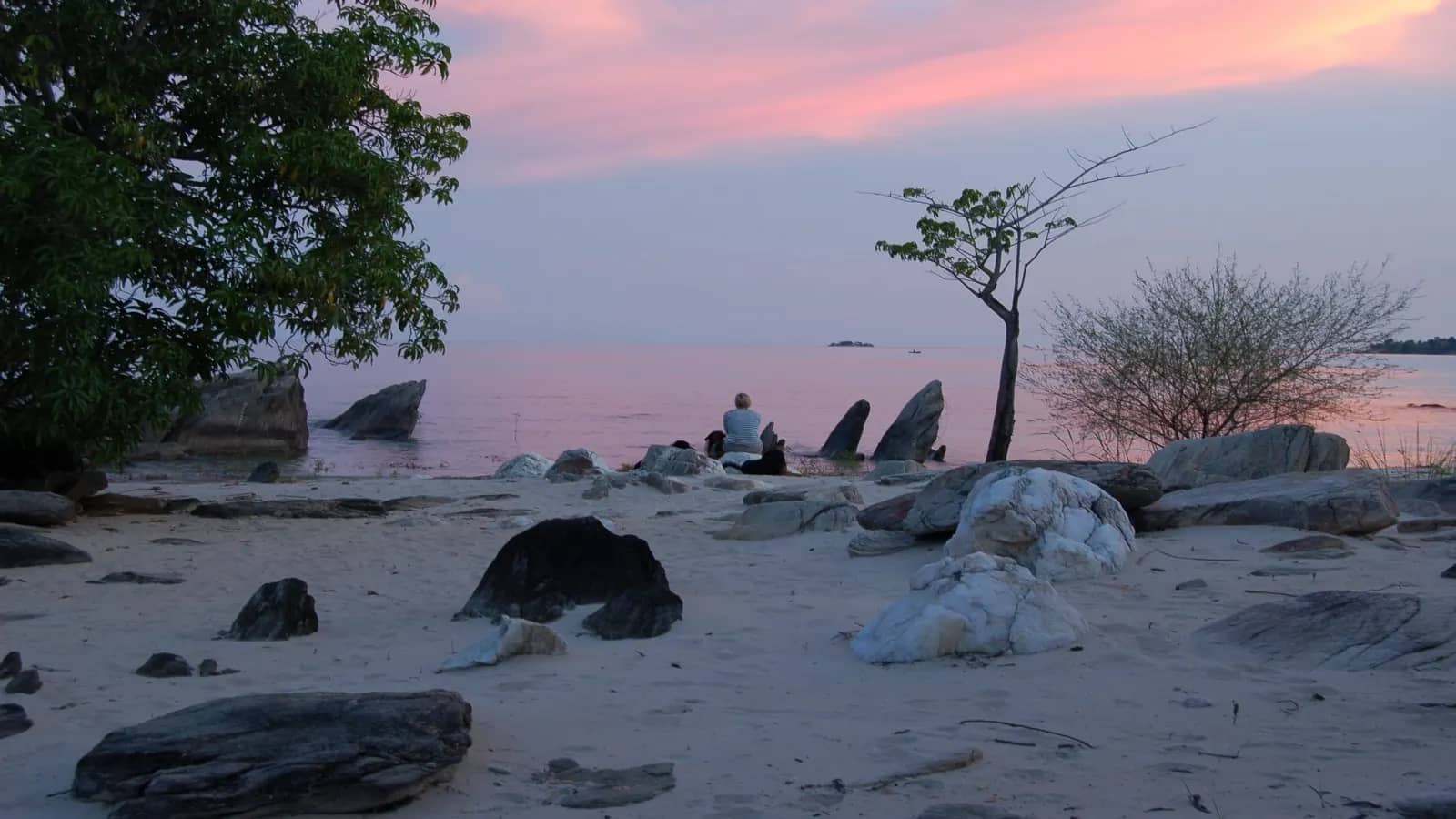
At Cape Maclear, children can see colorful cichlid fish on a guided boat or snorkeling trip. The family needs to choose the exact water activity first, then confirm the operator, weather and health advice. "Lake Malawi" is too broad to be a safety assessment.
Stay two to four nights. Ask for child size life jackets, snorkeling gear, boat capacity, shade, toilets, food, drinking water and a weather cancellation rule. Non swimmers need direct adult supervision near the shore. A stroller may work around an established lodge but not on boats or island paths.
UNESCO lists the park for its freshwater fish diversity. The Lake Malawi National Park record was last checked on September 1, 2026.
The practical southern wildlife circuit
Liwonde National Park
Liwonde can deliver a shorter wildlife day than a road based safari loop. Children watch the Shire River from a boat or vehicle and learn to scan slowly rather than expecting an animal at every turn.
Stay two nights. Confirm the operator's minimum age, life jackets, vehicle belts, toilet stops, food, heat plan and whether the activity can end early. Park wildlife and open water require continuous adult supervision. Combine Liwonde with the southern lakeshore instead of adding another distant reserve.
The African Parks Liwonde page was last checked on September 1, 2026.
Majete Wildlife Reserve
Majete works when the trip starts or ends in Blantyre. A guide can turn tracks, vegetation and animal behavior into the activity, so the outing does not depend on a long sighting list.
Stay two nights and keep the first drive short. Confirm child age rules, vehicle restraints, toilets, food, pool fencing, camp boundaries and medical response. Do not let children move around a safari vehicle unless the guide says it is safe and the vehicle is stopped in an appropriate place.
The African Parks Majete page was last checked on September 1, 2026.
Zomba Plateau
Zomba is a useful cool weather reset between road and lake days. Families can choose a short viewpoint and forest walk instead of a full plateau circuit.
Allow half a day or stay two nights. Mist and rain change visibility and road conditions. Confirm the guide, route, vehicle access, toilets, food, seating and turnaround point. Keep children away from unguarded edges and do not follow an app onto an unverified trail.
The Malawi Tourism Zomba Plateau page was last checked on September 1, 2026.
Mount Mulanje
Mulanje should be scaled to the child, not to the mountain's reputation. School age children can manage a short guided foothill walk and stream stop. Multi day hut routes require separate fitness, weather, equipment and evacuation decisions.
Start with half a day. Confirm the named trail, guide, elevation, river conditions, toilets, food, footwear and turnaround time. A carrier may work on a gentle route, but a stroller will not. Do not begin a long walk from a generic map pin.
The Mulanje Mountain Conservation Trust was last checked on September 1, 2026.
Nyika is a separate northern trip
Nyika National Park
Nyika gives older children open plateau wildlife, birding and wide landscapes, but reaching Chelinda consumes real travel time. It should replace part of the southern circuit rather than sit on top of it.
Allow three or four nights including access. Confirm the vehicle, fuel, road, weather, accommodation, food, heating, medical plan and current activities. Nights can be cold, and remote road estimates need lodge confirmation.
The Malawi Tourism Nyika page was last checked on September 1, 2026.
Realistic Malawi itineraries with children
Five days: Lilongwe and one lake base
Recover in Lilongwe on day one and use the wildlife centre only if the children have energy. Travel to one southern or central lakeshore base on day two. Keep days three and four for one boat or snorkeling session, one rest block and weather flexibility. Return with a flight buffer on day five.
Do not add Liwonde, Majete, Mulanje or Nyika.
Seven days: lake plus Liwonde
Use two arrival and transfer nights, three lake nights and two Liwonde nights. A boat safari and one short game drive are enough for the park stay. Put Mua or Chongoni on the route only when the driver confirms it does not create an overlong day.
Ten days: choose one southern extension
Use three or four lake nights, two Liwonde nights and two nights at either Zomba, Mulanje foothills or Majete. Keep the remaining nights for arrival, road and flight protection. Families starting in Blantyre can reverse the order.
Nyika and the far north need a different itinerary with more time. Trying to add them creates the exact road heavy trip this guide is designed to avoid.
Getting around Malawi with children
Driver, rental car and road time
A reputable driver is the simplest default. Confirm the vehicle, working seatbelts, child restraint, air conditioning, luggage space, spare tire, fuel plan and daylight arrival. Current travel advice warns about poor road conditions, vehicles without lights and increased accident risk after dark.
Self drive can work for experienced travelers, but park and northern access must be checked with the accommodation. Avoid overcrowded minibuses with children and luggage. Approximate drive times from apps are planning clues, not proof of current road conditions.
Airports and boats
Lilongwe and Blantyre are the useful international arrival points for the central and southern circuits. Ask the transfer company to state the airport meeting point and restraint in writing. For every lake or river boat, confirm weather, operator, capacity and a life jacket in each child's size.
Child restraints
WHO's Malawi profile records a national seatbelt law that does not apply to every front and rear occupant and no national child restraint use law. That gap is not a reason to travel unrestrained. Bring a suitable seat or secure written confirmation of the correct restraint before paying for the vehicle.
Malawi health, water and daily logistics
Malaria, lake exposure and medical care
Malaria is a current risk. Speak to a qualified travel clinician several weeks before departure about prevention, medicine and a fever response for each child. Use intact bed nets, appropriate repellent and covering clothes as advised.
Schistosomiasis can be acquired through freshwater contact. A lodge's popularity is not a medical clearance. Discuss the exact lake activity and post travel testing advice with a clinician. Medical facilities outside Lilongwe and Blantyre are limited, and a serious case may require evacuation.
Water, food and pharmacies
Malawi Tourism recommends bottled water instead of tap water. Use safe water for drinking, formula, medicine and brushing teeth. Carry oral rehydration supplies, familiar snacks and enough prescription medicine for remote stays. Confirm allergy handling directly with each lodge.
Seasons, meals and accessibility
The drier period from roughly May to October is usually easier for roads and wildlife viewing, while the rainy season changes tracks and mosquito exposure. July and August can fill family rooms, so book the few route defining stays first.
Meals at lodges may run to a fixed schedule. Request earlier child meals before arrival. Toilets, changing space, paved paths and step free access vary sharply. Ask for current photographs and measurements rather than relying on an accessibility label.
Useful apps and files for Malawi
Save offline maps, lodge coordinates, park contacts, insurance and the nearest planned clinic on both adults' phones. Download a Chichewa language pack and the day's driver contact. Use an official weather source and current government travel advice for alerts.
Map apps help with orientation, but they cannot confirm a washed road, park track or safe night journey. Ask the accommodation before each remote transfer.
Connectivity for lake, park and road days
Mobile data is useful for driver messages, maps, translation and booking changes in towns. Coverage may weaken at parks and remote lakeshore properties, so agree on pickup points and save tickets before leaving Wi Fi.
A Malawi Roaming eSIM can be installed before departure on a compatible phone, which removes the need to find a physical SIM after arrival. The public catalog confirms the Malawi country plan plus Africa, Global 120 and Global 139 plans containing MW. Choose the country plan for Malawi only. Compare broader coverage when the itinerary genuinely includes other countries. Package features, hotspot support, activation timing and reloadability vary by plan.
That preparation is the useful Roaming eSIM edge for this trip: install on reliable Wi Fi, keep the usual SIM in the phone and reach support if setup needs attention before a remote transfer. No connectivity product can create coverage where a local network has none.
Before buying, use the travel data calculator, check phone compatibility and save the installation timing guide. Families comparing nearby wildlife routes can also read Zambia with kids and Tanzania with kids.
The content gap was consistent: many pages recommend lake swimming and wildlife loops without making families choose a route or verify the exact water site, child restraint and medical plan. This guide makes those decisions visible and keeps Nyika outside a short southern itinerary.