Tunisia with kids: attractions, itineraries and family travel tips

Tunisia with kids works best for families who want a mix of Roman sites, short medina walks and coast time, and who are willing to plan transport before arrival. Five days is enough for Tunis, Carthage, Sidi Bou Said and a slower Hammamet day. Seven days can add Sousse, Monastir and El Jem. Ten days allows a Djerba finish, but not a relaxed Djerba and Sahara circuit together.
The difficult part is not finding places to visit. It is refusing an itinerary that turns every second day into a long transfer. Families with toddlers should favor Tunis plus one coast base. School-age children can manage El Jem or Dougga with shade and breaks. A southern desert route needs its own weather, vehicle, activity-age and medical plan.
Operational facts were checked against Tunisian heritage, tourism, rail and weather services, UNESCO, WHO and current travel advice on September 1, 2026. Age ranges, visit lengths and journey windows are editorial planning estimates unless an official source states otherwise. Confirm opening, tickets, road conditions, toilets, food, changing space and step-free routes before paying.
Tunisia family decisions at a glance
| Decision | Practical starting point |
|---|---|
| Lowest-complexity trip | Tunis and Carthage with Hammamet as the second base |
| Strongest seven-day route | Three nights Tunis, three nights Sousse or Hammamet, then an airport buffer |
| Best for toddlers | Bardo Museum, short medina walks, Sidi Bou Said and a coast day |
| Best for school-age children | Carthage, El Jem, the Sousse Ribat and Djerba Explore |
| Best for teenagers | Dougga, El Jem, Tozeur and a separately planned desert extension |
| Rental car needed? | No for Tunis and the main rail corridor; useful for Dougga and a multi-stop southern route |
| Main planning risk | Treating the Sahara, Djerba and northern sites as one easy seven-day loop |
| Passenger restraints | WHO's latest country profile lists a national seatbelt law for front and rear seats but no national child-restraint use law; arrange an appropriate seat anyway |
| Emergency numbers | 190 ambulance, 197 police and 198 fire or civil protection |
| Current regional caution | Check the live travel-advice map because warnings apply to parts of the western and southern border regions |
Which Tunisia stops fit your children?
| Image | Destination or attraction | Best ages | Indoor or outdoor | Allow | Booking requirement | Best base |
|---|---|---|---|---|---|---|
 | National Bardo Museum | 6 and older | Indoor museum | 90 minutes to 3 hours | Check current opening | Tunis |
 | Medina of Tunis | 4 and older | Outdoor and indoor lanes | 90 minutes to half day | Guide optional | Tunis |
 | Antonine Baths and Carthage sites | 6 and older | Outdoor archaeology | 2 to 4 hours | Grouped ticket; check included sites | Carthage |
 | Sidi Bou Said | 3 and older | Outdoor village | 90 minutes to 3 hours | No for the village | Tunis |
 | Dougga | 9 and older | Outdoor archaeology | 3 to 5 hours | Driver or tour first | Tunis or Testour |
 | Amphitheatre of El Jem | 7 and older | Indoor and outdoor ruins | 90 minutes to 3 hours | Check event access | Sousse or Monastir |
 | Ribat of Sousse | 7 and older | Indoor and outdoor fort | 60 to 90 minutes | Check current access | Sousse |
 | Ribat of Monastir | 7 and older | Indoor and outdoor fort | 60 to 90 minutes | Check current access | Monastir or Sousse |
 | Djerba Explore Park | 3 and older | Indoor and outdoor park | 2 to 4 hours | Check show schedule | Midoun |
 | Tozeur old town | 7 and older | Outdoor lanes | 90 minutes to half day | Guide optional | Tozeur |
These ages are planning suggestions, not safety or accessibility ratings. Heat, stairs, uneven surfaces, crowd tolerance and the selected route matter more than age alone.
Ten questions families ask before booking Tunisia
- Is Tunisia manageable with a toddler? Yes around Tunis, Carthage and one coast base. A fast desert loop is a different trip with longer roads and fewer reliable stops.
- Should we choose Hammamet or Djerba? Hammamet is easier for a short trip from Tunis. Djerba makes more sense when the island is a main base rather than a rushed add-on.
- Can seven days include Tunis, the Sahara and Djerba? It can fit on paper, but not at a useful family pace. Choose the northern coast or one southern region.
- Will a taxi or rental company provide a child seat? Do not assume it. Request the exact seat, send the child's measurements and obtain written confirmation before arrival.
- Can we travel by train instead of renting a car? Rail connects Tunis with Sousse, Monastir, El Jem and Tozeur, but schedules and delays need checking. Dougga and many rural stops still need road transport.
- Will a stroller work in the medinas? It helps on smoother city streets. Narrow lanes, thresholds, steps and crowds make a carrier more dependable inside old towns and forts.
- Is July or August too hot for children? Extreme heat can disrupt sightseeing, power, air conditioning and payments. Use early outdoor blocks, long midday breaks and the official weather warning service.
- Are camel rides and four-wheel-drive desert trips suitable for every age? No. Operators set their own limits, and the reviewed public sources do not establish one national family standard. Ask about restraints, helmets, duration, emergency response and the exact route.
- Can children drink tap water? The reviewed official sources do not give travelers a simple nationwide guarantee. Use sealed water for formula and remote road days, and seek current local health advice.
- How much should we rely on mobile apps? Use them for live trains, weather, tickets and family messaging, but save confirmations and maps offline before a rural or desert transfer.
Tunis and the northern coast
The National Bardo Museum
The Bardo is the strongest indoor history stop in Tunisia. Give each child a mission such as finding a sea creature, a Roman game or a figure from mythology in the mosaics. The official museum page describes collections spanning prehistory to modern Tunisia, with mosaics across several levels.
Allow 90 minutes with younger children or up to three hours with an interested teenager. The official listing names sanitary facilities, a shop and a cafeteria. It also describes tactile laser reproductions for blind and visually impaired visitors, but it does not certify every gallery route as step-free. Confirm lifts, stroller policy, seating and changing space directly.
The museum is in Bardo, west of central Tunis. Do not pair it with a full Carthage circuit. The official Bardo Museum page was last verified on September 1, 2026.
Medina of Tunis
Children can follow one short theme through the medina: doors, spice stalls, rooflines or craft workshops. A focused loop is more useful than trying to cover every souk. UNESCO identifies the medina as one of the first Arabo-Muslim towns of the Maghreb and records more than 80 listed monuments.
Allow 90 minutes to half a day with a fixed meal and toilet stop. A compact stroller may work on some approaches, but narrow lanes, thresholds and crowds favor a carrier. Public toilets, changing facilities, seating and step-free routes are not consistent across the district, so choose a named cafe or museum stop before entering.
Use Place de la Kasbah or Bab Bhar as a clear pickup point rather than asking a driver to find the family inside the lanes. UNESCO's Medina of Tunis record was last verified on September 1, 2026.
Antonine Baths and Carthage sites
Carthage works when children investigate two or three locations, not when adults chase every point on a grouped ticket. At the Antonine Baths, ask children to identify the sea, foundations, service spaces and the scale of the missing upper rooms. Add one other site only if attention and heat allow.
Allow two to four hours. The heritage agency lists toilets at the Roman Villas park and sanitary facilities, a shop and cafeteria at the Carthage amphitheatre, but those services are spread across separate sites. Confirm which entrance and facilities will be open. Ruins, gravel and level changes mean a stroller is not a site-wide accessibility plan.
Carthage is easier with a booked driver or a carefully checked TGM plan. Pair it with Sidi Bou Said, not Bardo and the medina. The official Carthage heritage overview was last verified on September 1, 2026.
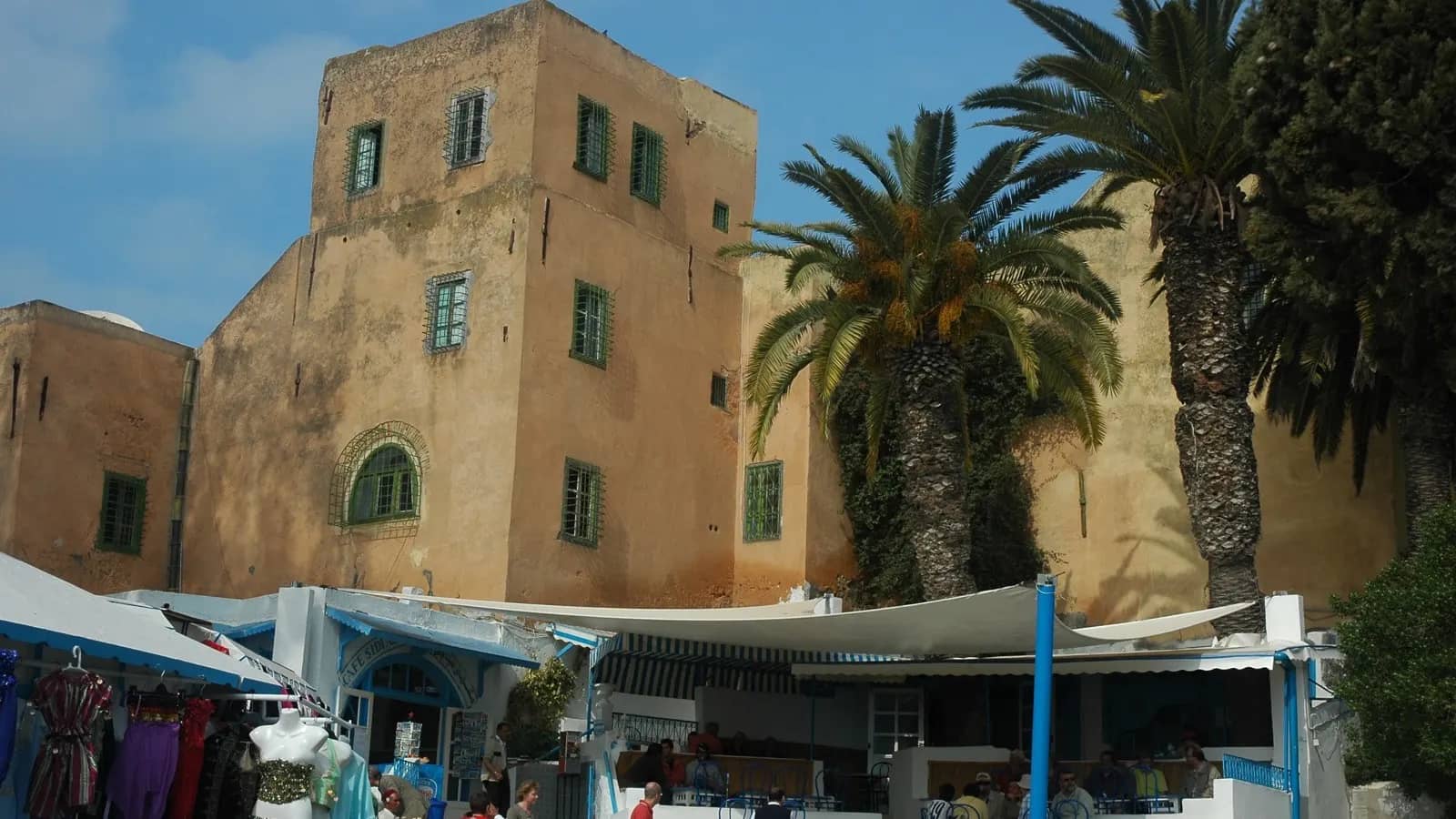
Sidi Bou Said
Sidi Bou Said is the reset after Carthage. Children can look for blue doors, tiled panels and the steep change from station level to the upper village. Keep the visit to one uphill route, a drink and a viewpoint rather than turning it into another long monument circuit.
Allow 90 minutes to three hours. The slope, cobbles and steps are the main stroller problem. Toilets, changing space, shade and seating belong to individual venues, not the village as a whole, so choose a confirmed stop. Crowds and midday sun make morning or late afternoon more comfortable.
The village became a UNESCO World Heritage property in 2026. Its UNESCO record was last verified on September 1, 2026.
Dougga
Dougga is for families who want one serious archaeology day. Children can stand in the theatre, trace the street slope and compare the Capitol with houses and baths across a 70-hectare site. It is not a quick roadside ruin.
Allow three to five hours on site plus the road journey. The official heritage page lists sanitary facilities, a shop and cafeteria. It does not promise step-free circulation across the hilly remains. Bring a carrier rather than a stroller, sun protection and water, and ask the driver where the family can stop on both legs.
Dougga is a separate day from Tunis. Do not put it before an international flight or after a full medina morning. The official Dougga page was last verified on September 1, 2026.
Sousse, El Jem and Monastir
Amphitheatre of El Jem
At El Jem, children can move from the arena to the underground galleries and work out how people, animals and equipment reached the performance space. The surviving structure gives a clearer sense of scale than scattered foundations, which is why it often works better than a second large ruin field.
Allow 90 minutes to three hours. The official listing names sanitary facilities, a shop and cafeteria. Stairs, stone passages, exposed seating and underground spaces require close supervision and do not establish a step-free route. Confirm closures when a cultural event is using the amphitheatre.
SNCFT lists El Jem on the main line south from Tunis through Sousse. Check the live train and return before relying on rail for a day trip. The official El Jem page was last verified on September 1, 2026.
Ribat of Sousse
The Sousse Ribat gives school-age children a compact fort plan to decode: one entrance, a central courtyard, narrow rooms, upper passages and a watchtower. It combines naturally with a short medina walk without requiring another transfer.
Allow 60 to 90 minutes. Stairs, low edges and narrow upper routes make a carrier more useful than a stroller. The reviewed official page does not list toilets, food, changing facilities, seating or step-free circulation, so confirm those points before entry and use the surrounding city for a planned break.
The ribat is inside the UNESCO-listed Sousse medina. The official Ribat of Sousse page was last verified on September 1, 2026.
Ribat of Monastir
Monastir's larger ribat lets children compare several phases of a building rather than seeing one fixed medieval plan. Use a short route through the courtyard and selected towers, then stop before stair fatigue turns the visit into a climb.
Allow 60 to 90 minutes. The official page describes extensive additions and a 4,200-square-metre complex but does not list family facilities. Confirm toilets, shade, seating, food, changing space and accessible entry. Upper sections require stairs and close supervision.
SNCFT's coast line connects Sousse and Monastir, but families should verify the current service and station access. The official Ribat of Monastir page was last verified on September 1, 2026.
Djerba and the south
Djerba Explore Park
Djerba Explore combines three paid visitor areas: the Lalla Hadria Museum, a heritage section and the crocodile farm. Children can divide the visit between objects, reconstructed spaces and animal observation instead of spending the whole afternoon in one format.
Allow two to four hours. The park's official page lists cafes and restaurants and publishes current feeding and show times. It does not provide a complete accessibility, toilet or changing-facility statement on the reviewed page, so ask before travel. Keep children behind barriers and follow staff directions around reptiles.
The park says it is in the Midoun tourist area, roughly 20 kilometres from Djerba-Zarzis airport. The official Djerba Explore information page was last verified on September 1, 2026.
Tozeur old town
Tozeur is a better southern base than a rushed desert photo stop. Children can inspect the geometric brickwork, compare shaded lanes with the open desert climate and use the old town as a short activity between longer excursions.
Allow 90 minutes to half a day. The lanes are not a guaranteed step-free route, and public information does not establish dependable toilets, changing space, food or seating along one visitor circuit. Plan named stops and avoid the hottest hours.
Tozeur belongs in an alternative ten-day route, not as a day trip from a northern resort. SNCFT lists it on the main line, but current live tracking shows why a family needs a backup when trains are delayed or cancelled. The official tourism overview for Tozeur was last verified on September 1, 2026.
Realistic Tunisia itineraries with children
Five days: Tunis, Carthage and Hammamet
- Day 1: Arrive, eat and stay near the accommodation.
- Day 2: A short Medina of Tunis route, lunch with seating, then a free afternoon.
- Day 3: Carthage and Sidi Bou Said with a booked return.
- Day 4: Bardo Museum, then transfer to Hammamet or keep Tunis as the base.
- Day 5: Coast morning and a departure buffer.
Seven days: add Sousse, Monastir and El Jem
Spend three nights around Tunis and three around Sousse or Hammamet. Use one day for El Jem, one for the Sousse Ribat and coast time, and make Monastir optional rather than compulsory. Keep the final night close to the departure airport if the flight is early. Do not add Djerba or Tozeur to this route.
Ten days: finish on Djerba
Use three nights around Tunis, three nights around Sousse for El Jem and Monastir, then fly or make a carefully planned transfer to Djerba for three nights. Keep one final travel buffer. Families who care more about desert landscapes than beaches can replace Djerba with Tozeur, but should not attempt both. A camel trek, mountain-oasis circuit or remote desert camp needs separate age, heat, vehicle, insurance and emergency checks.
Families comparing other North African trips can read Morocco with kids and Egypt with kids. Each country has different restraint evidence, rail coverage, heat patterns and regional warnings, so do not reuse one plan across borders.
Trains, airport transfers, rental cars and child seats
Tunis-Carthage Airport is close to central Tunis, but traffic changes the transfer. Bolt currently publishes Tunis airport routes, and official yellow taxis are another option. Neither an app nor a taxi booking guarantees a child seat or a working rear belt. Send the number of passengers, luggage, folded stroller dimensions and exact restraint request before pickup.
SNCFT's main line connects Tunis, Sousse, Monastir, El Jem and Tozeur. The operator also provides live train tracking. Rail can remove a rental-car day, but families still need to check station steps, luggage space, stroller handling, toilets and the return service. Build slack around delays and do not use the last possible train before a flight.
The latest WHO Tunisia road-safety profile available at review time lists a national seatbelt law applying to front and rear seats, but no national child-restraint use law. That absence is not a safety recommendation. Bring or prebook an age and size-appropriate child seat, confirm its standard and installation, and refuse a vehicle without suitable belts.
A rental car is most useful for Dougga or a multi-stop southern route. Avoid unfamiliar rural roads after dark, watch the live regional travel warnings, and never assume that a desert track is suitable for a standard rental vehicle.
Heat, healthcare, water and daily logistics
- Weather: Use the National Institute of Meteorology warning service before every outdoor or road day. Summer heat and power cuts can affect air conditioning, mobile networks, water and card payments.
- Healthcare: Current travel advice says foreign nationals must pay for medical care and that private treatment can require payment before service. Carry insurance and accessible funds, including evacuation cover appropriate to the route.
- Emergency help: Call 190 for an ambulance, 197 for police and 198 for fire or civil protection. Keep the accommodation, insurer and embassy details available in French or Arabic if possible.
- Water: The reviewed official sources do not give travelers one simple nationwide tap-water guarantee. Use sealed water for infant formula and remote journeys, and ask a clinician about a child's needs.
- Food: Bread, grilled meat, fish, eggs, fruit and plain couscous can make ordering easier. Ask for harissa separately, confirm allergies in French or Arabic and carry a familiar snack for transfer days.
- Sun and heat: Plan exposed ruins early, rest through the hottest hours and carry hats, sunscreen and more water than a city walk would require.
- Access: Historic medinas, ribats and archaeological sites include cobbles, loose surfaces, stairs and thresholds. Ask the individual site about the exact route instead of treating a general accessibility label as a guarantee.
- School holidays and Ramadan: Beach areas become busier in European and local holiday periods. During Ramadan, attraction and restaurant schedules can change, so verify each booked stop.
Tunisia transport, weather and offline tools
- SNCFT live tracking: Check long-distance trains and current disruption before leaving the accommodation.
- Bolt: Bolt publishes routes in Tunis, including Tunis-Carthage Airport, but service area and child-seat availability must be checked in the app.
- Tunisia weather service: Save the official warning page rather than relying only on a generic forecast widget.
- Offline maps: Download Tunis, Sousse, Djerba and the selected road corridor before departure.
- Offline translation: Download French and Arabic language packs and save the child's allergy, medicine and restraint terms.
- Airline app: Use it for the domestic leg to Djerba or Tozeur, then save the boarding pass outside the app.
- Family messaging: Agree on one group chat and one meeting point before entering a medina, museum or crowded station.
Staying connected without making signal a safety plan
Families use data for airport pickup, live trains, weather warnings, tickets and finding one another after a split visit. Download the critical parts first. A phone connection cannot guarantee a taxi restraint, reopen a cancelled train or create coverage on a remote desert road.
The live catalog currently gives Roaming eSIM a practical edge over family guides that merely warn about patchy internet: there is a purchasable Tunisia country route plus verified Middle East and North Africa, Africa and global alternatives. Families comparing the best eSIM for Tunisia should keep that commercial choice on the product page, while this guide remains focused on the trip. Regional cards are useful only when their listed countries match the actual itinerary.
Before purchase, use the mobile data calculator, check phone compatibility, and save the installation timing guide. The family eSIM setup guide explains how to prepare several devices without repeating those steps here.
The comparison also found a recurring weakness in competing itineraries: Djerba and the Sahara are often added to a short northern trip without enough transfer recovery. This guide makes the geographic cuts explicit. Operational details were last checked on September 1, 2026 and should be reviewed before the next summer and winter travel seasons.