Tajikistan with kids: attractions, itineraries and family travel tips

Tajikistan with kids works best for school-age children and teenagers who tolerate winding roads, simple mountain facilities and changes of plan. Five days is enough for Dushanbe and Hisor. Seven days allows an overnight near Iskanderkul. Ten days gives a family time to continue to Panjakent, Seven Lakes and Sarazm without making every day a transfer.
The main difficulty is road time. Distances that look modest on a map can involve mountain surfaces, weather delays and few dependable rest stops. A toddler trip can work around Dushanbe and Hisor, but the Pamir Highway is not part of this guide's standard family itineraries. It demands separate permit, altitude, road, medical and evacuation planning.
Operational facts were checked against Tajik government, museum, tourism, UNESCO and current travel-advice sources on September 1, 2026. Age ranges, visit lengths and journey windows are editorial estimates unless an official source states otherwise. Confirm openings, tickets, road access, toilets, food, changing space and step-free routes before paying.
Tajikistan family decisions at a glance
| Decision | Practical starting point |
|---|---|
| Lowest-complexity trip | Five nights in Dushanbe with Hisor as a day trip |
| Strongest seven-day route | Four nights Dushanbe, two near Iskanderkul and a final Dushanbe buffer |
| Best for toddlers | Rudaki Park, one short museum visit and Hisor with a carrier |
| Best for school-age children | Museum missions, fortress walls, Iskanderkul and Sarazm |
| Best for teenagers | Dushanbe, Iskanderkul, Panjakent and a carefully limited Seven Lakes drive |
| Rental car needed? | Not in Dushanbe; use a vetted driver and suitable vehicle for mountain roads |
| Main planning risk | Treating the Pamirs or Seven Lakes as simple day trips from Dushanbe |
| Passenger restraints | Current English guidance confirms seatbelts for every passenger but does not state a child-specific rule; prebook an appropriate restraint and verify the law locally |
| Emergency numbers | 101 fire, 102 police and 103 ambulance from a mobile phone |
| Visitor registration | Current consular guidance gives a 10-working-day threshold, with nationality-based exceptions; verify the rule for every family member |
Which Tajikistan stops fit your children?
| Image | Destination or attraction | Best ages | Indoor or outdoor | Allow | Booking requirement | Best base |
|---|---|---|---|---|---|---|
 | Rudaki Park | 2 and older | Outdoor park | 60 to 90 minutes | No | Dushanbe |
 | National Museum | 6 and older | Indoor museum | 90 minutes to 3 hours | Check current exhibitions | Dushanbe |
 | Museum of Antiquities | 7 and older | Indoor museum | 60 to 90 minutes | Confirm opening | Dushanbe |
 | Kohi Navruz | 7 and older | Indoor and outdoor | 60 to 90 minutes | Tour access can vary | Dushanbe |
 | Hisor Fortress | 6 and older | Outdoor historic site | 2 to 3 hours | Arrange transport first | Dushanbe or Hisor |
 | Iskanderkul | 8 and older | Outdoor mountain lake | Half to full day | Book driver and lodging | Sarytag |
 | Seven Lakes | 10 and older | Outdoor road and walks | Full day | Suitable vehicle required | Panjakent |
 | Sarazm | 8 and older | Outdoor archaeology | 60 to 90 minutes | Confirm site access | Panjakent |
These ages are planning suggestions, not safety or accessibility ratings. Road tolerance, heat, altitude and the selected walking route matter more than age alone.
Ten questions families ask before booking Tajikistan
- Is Tajikistan realistic with a toddler? Dushanbe and Hisor can be. A fast Fann Mountains or Pamir circuit is a different trip with longer drives and limited facilities.
- Can we make Tajikistan a day trip from Samarkand? A border crossing, road transfer and return leave little margin for children. Stay overnight if Tajikistan is more than a passport stamp.
- Is seven days enough for Dushanbe, Iskanderkul and Seven Lakes? Not at a relaxed family pace. Choose Iskanderkul for seven days, then add Panjakent and Seven Lakes with ten.
- Do we need a four-wheel-drive vehicle? Central Dushanbe does not. Mountain access changes by road, season and lake, so ask the operator to match the vehicle to the current route.
- Will a taxi provide a child seat? Do not assume it. Request the correct restraint, confirm rear seatbelts and receive written confirmation before pickup.
- Can a stroller handle the route? It helps in central parks and large museums. Hisor, Sarazm and mountain stops need a carrier or a mobility-specific access check.
- How serious is altitude for children? Iskanderkul is already above 2,000 metres, while Pamir routes rise much higher. Ascend gradually and get medical advice for the child before a high route.
- Which Dushanbe transport app works? The Ministry of Transport publishes city routes. Community app coverage changes, so verify the current store listing and carry an offline map.
- Do we need a GBAO permit? Only a Pamir or GBAO itinerary raises that separate permit question. The routes in this guide stop outside GBAO.
- How much cash and food should we carry? Mountain services and card acceptance can be limited. Ask the accommodation and driver what is available, then carry water, snacks and cash without displaying a large amount.
Indexed Reddit and Central Asia discussions informed these questions. They were not used to prove legal, medical or operational claims.
Dushanbe: use the capital as the trip's stable base
Rudaki Park
Rudaki Park is the easiest arrival-day stop. Children can follow the fountains, look for the Rudaki monument and use the paved central paths while adults judge how the family is coping with heat and travel fatigue. Allow 60 to 90 minutes.
The tourism listing describes a central park with benches, shade and children's areas, but it does not certify every path as step-free. Confirm nearby toilets and changing space before relying on the park for a long visit. Food is easier to arrange on the surrounding city streets than inside a fixed attraction.
The park sits on Rudaki Avenue and combines naturally with the National Museum. Visit early or toward evening in hot weather. The official tourism listing for Rudaki Park was last verified on September 1, 2026.
National Museum of Tajikistan
The National Museum has 22 exhibition halls across nature, ancient and medieval history, modern history, and art. Give each child one section to choose instead of attempting the whole building. Younger visitors may prefer the nature rooms, while older children can follow one object through the history galleries.
Allow 90 minutes to three hours. The official site lists the museum at 11 Ismoili Somoni Avenue and publishes current opening information, but parents should still confirm lifts, stroller policy, accessible toilets, seating, food and changing space. Temporary exhibitions can change the useful route.
Use the museum as the indoor block after Rudaki Park, not as the start of a second full sightseeing day. The National Museum's official website was last verified on September 1, 2026.
National Museum of Antiquities
The reclining Buddha from Ajina-Teppa gives school-age children one memorable object around which to build a short visit. Ask how a large clay sculpture could be excavated, restored and moved rather than expecting children to absorb every archaeological period.
Allow 60 to 90 minutes. Public tourism material identifies the museum and the Buddha, but the reviewed English sources did not provide dependable current facility details. Confirm opening, ticketing, step-free entry, toilets, stroller storage, seating and changing space directly before setting out.
Use a confirmed taxi or current city route to the museum. Do not rely on old blog hours. The Tajik tourism portal was last checked for the museum context on September 1, 2026.
Kohi Navruz
Kohi Navruz lets children compare carved wood, painted ceilings, stonework and mirrored decoration inside a modern ceremonial complex. It works best as a guided architecture visit rather than an open-ended palace tour.
Tour access can change around private and official events. Contact the venue or a licensed guide before travel. Confirm which halls are open, whether photography is allowed, and where lifts, toilets, seating, food and changing space are available. A stroller may fit the grounds but not every visitor route.
Allow 60 to 90 minutes and keep an outdoor walk by the river as a fallback if the building is unavailable. The official tourism listing for Kohi Navruz was last verified on September 1, 2026.
Hisor: a separate half-day, not another city stop
Hisor Fortress
At Hisor, children can walk through the reconstructed gateway and compare the fortress setting with the nearby madrasa and mausoleum remains. The site makes more sense when a guide explains which parts are reconstructed and which are historic.
Allow two to three hours on site. Uneven ground, thresholds and exposed areas make a carrier more useful than a stroller. The reviewed tourism pages did not publish a complete list of toilets, food, shade, seating or changing facilities, so confirm them with the driver or site before departure.
Hisor is about 30 kilometres from Dushanbe according to the tourism portal. Traffic changes the journey, so avoid putting it before a flight. The official regional tourism page was last verified on September 1, 2026.
Iskanderkul: sleep near the lake instead of racing back
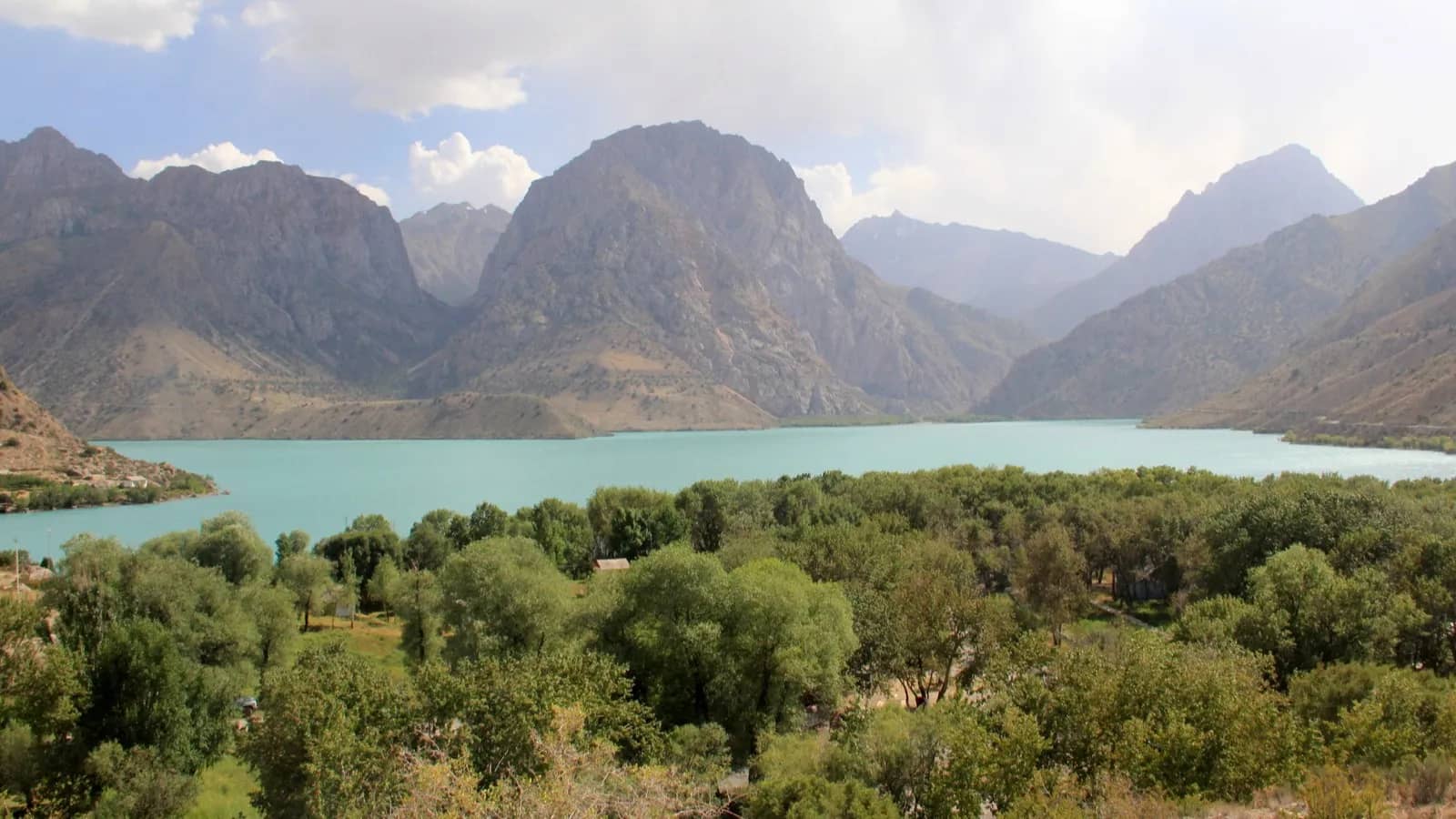
Iskanderkul Lake
Children can walk a selected stretch of shore, compare the lake with the surrounding dry mountains and, if conditions suit the family, follow a confirmed route toward the waterfall. The water is cold and the official page does not establish a supervised family swimming area, so this guide does not recommend swimming.
Iskanderkul lies at about 2,195 metres and roughly 130 kilometres from Dushanbe. A current tourism itinerary estimates about 3.5 hours by road, but weather, stops and surfaces can extend that. Stay near Sarytag rather than committing to a late return.
The shore and waterfall route are not stroller assumptions. Confirm toilets, food, safe drinking water, seating, shelter, mobile signal and the exact walking surface with the lodging or operator. Book a suitable vehicle and check the official Iskanderkul listing close to departure. It was last verified on September 1, 2026.
Panjakent: combine archaeology with one mountain day
Seven Lakes
The Seven Lakes route is a sequence of road stops and walks, not one lakeside attraction. A family can choose a lower subset and turn back rather than treating all seven as a checklist. The tourism portal identifies the route near Panjakent and places the highest lakes around 3,000 metres.
Allow a full day from Panjakent. Road surfaces, water crossings, weather and the chosen lake determine the vehicle and walking demand. The portal advises carrying drinking water and sun protection but does not guarantee toilets, food, shade, seating or changing space. Confirm every one of those points with the operator.
Children should remain away from steep edges and cold water. Keep the day after the drive flexible. The official Seven Lakes listing was last verified on September 1, 2026.
Proto-urban Site of Sarazm
Sarazm gives older children a clear archaeology exercise: identify a dwelling, a working area and the evidence that people traded across long distances. UNESCO dates the settlement from the fourth to the end of the third millennium BCE.
Allow 60 to 90 minutes. The site is exposed and archaeological paths do not imply step-free access. Confirm the entrance, guide availability, toilets, shade, seating, food and changing space with the reserve or local tourism office. Carry water and avoid the hottest part of the day.
Sarazm is near Panjakent and pairs with a city afternoon, not the same full day as Seven Lakes. UNESCO's Sarazm record was last verified on September 1, 2026.
Realistic Tajikistan itineraries with children
Five days: Dushanbe and Hisor
- Day 1: Arrive, eat and stay close to the accommodation.
- Day 2: Rudaki Park and one National Museum section before a long rest.
- Day 3: Hisor Fortress with a vetted driver, then an unbooked evening.
- Day 4: Museum of Antiquities or Kohi Navruz, depending on confirmed access.
- Day 5: Weather and transport buffer before departure.
Seven days: add Iskanderkul carefully
Spend four nights in Dushanbe, travel to Iskanderkul on day five and sleep near Sarytag. Use day six for a short shore and waterfall plan chosen against current weather and road conditions. Return toward Dushanbe on day seven only if the flight is not the same evening. Otherwise add another night.
Ten days: Dushanbe, Iskanderkul and Panjakent
Use three full Dushanbe days, two nights around Iskanderkul, then three nights in Panjakent for Sarazm and one limited Seven Lakes day. Keep the final night near the departure airport or border. Do not add the Pamir Highway to this route. It is a separate expedition with a GBAO permit, much higher altitude, remote healthcare and longer drives.
Families combining countries can compare rail-led city planning in Uzbekistan with kids and the more developed city and mountain mix in Kazakhstan with kids. Treat every border as a separate legal and transport plan.
Roads, airport transfers, seatbelts and child seats
Dushanbe's Ministry of Transport publishes city surface routes, but a family with luggage should confirm the current airport connection before arrival. For Hisor and the Fann Mountains, a vetted driver is usually more practical than a rental car. Ask who owns the vehicle, whether the driver knows the selected road and what happens if conditions change.
Current UK government guidance says drivers and all passengers must wear seatbelts. It also warns that many taxis lack rear seatbelts. The reviewed public English sources did not state a child-specific restraint rule, so this guide will not invent one. Ask Tajik traffic authorities or the embassy for the current legal requirement, then prebook an age and size-appropriate restraint. Refuse a vehicle without the confirmed belts and seat.
Mountain roads can be damaged or closed by snow, avalanche, landslide, flooding or local restrictions. Four-wheel drive may be necessary on some rural access roads. Never place a mountain return on the same day as a non-refundable international flight.
Stroller and luggage rules vary by vehicle. Send the folded dimensions and bag count to the operator. Shared minibuses are a poor default for a family carrying a restraint, stroller and several bags because space and scheduled stops are uncertain.
Heat, health, water, registration and access
- Weather: Check the Tajik government hydrometeorology service before every road day. Its September 1 alert showed why a national forecast is not enough: mudflow risk can affect particular mountain districts.
- Healthcare: Current travel advice describes care outside Dushanbe as basic or absent in some places. Carry adequate insurance, including evacuation cover appropriate to the route, and bring regular medicine in original packaging.
- Altitude: Seek medical advice before taking a child above the family's normal sleeping elevation. Headache, nausea, unusual fatigue or breathing difficulty requires prompt action and may require descent.
- Water: Do not rely on an unverified tap or spring. Carry sealed or properly treated water, especially on mountain roads.
- Emergency help: Call 101 for fire, 102 for police and 103 for an ambulance from a mobile. Operators may speak only Tajik or Russian, so keep the accommodation and insurer details ready.
- Registration: The consular department says foreign visitors generally register within 10 working days, with exceptions based on nationality and agreement. Ask the accommodation to confirm the current rule for each adult and child and retain the record.
- GBAO: The Foreign Ministry says Pamir or GBAO travel requires separate permission. This guide's standard routes do not enter GBAO.
- Accessibility: None of the tourism labels used here certifies a complete step-free route. Ask about the exact entrance, surface, toilet and evacuation plan your family needs.
Apps and offline tools worth preparing
- Tajik hydrometeorology: Use the government weather service for current forecasts and alerts before road travel.
- Ministry route list: Save Dushanbe's official surface-route page and the accommodation's nearest stop.
- Offline maps: Download Dushanbe, Hisor, Iskanderkul and Panjakent. Pin accommodation entrances and agreed driver meeting points.
- Translation: Save Tajik and Russian offline packs. Photographing a sign may be easier than typing it.
- Rohnamo: Public discussions describe this as an offline Dushanbe transport guide, but it is community-produced. Verify the current official app-store publisher and route date before relying on it.
- Emergency documents: Store passport copies, insurance contacts, registration records and the driver's details on two adult phones, plus one offline copy.
Data for long road days and changing meeting points
Families use data here for driver messages, weather alerts, translation and the latest meeting point. Mountain coverage can still disappear, so download maps and documents before leaving Dushanbe or Panjakent and agree on a fallback meeting time.
Roaming eSIM's public catalog currently shows two relevant purchase routes: an exact Tajikistan plan and Central Asia 4 Areas covering Tajikistan, Uzbekistan, Kyrgyzstan and Kazakhstan. This is more useful than a generic competitor mention of "patchy internet" because families can compare a country-only trip with a named cross-border route before arrival. It does not promise signal on every mountain road. Coverage, hotspot use, activation timing and reloadability remain package-specific.
The Tajikistan Roaming eSIM page owns commercial terms such as "best eSIM for Tajikistan" and plan selection. This family guide owns trip planning. Use the data calculator, installation guide and phone compatibility checker before purchase.
The clearest competitor gap was route judgment. Several pages move quickly from Dushanbe to the Fann Mountains or Pamirs without separating a normal family holiday from an expedition. This guide keeps five days in and around Dushanbe, adds one mountain base at seven days, and waits until ten days for Panjakent and Seven Lakes.