Vuelta a España 2026 spectator guide: stages, routes and road closures

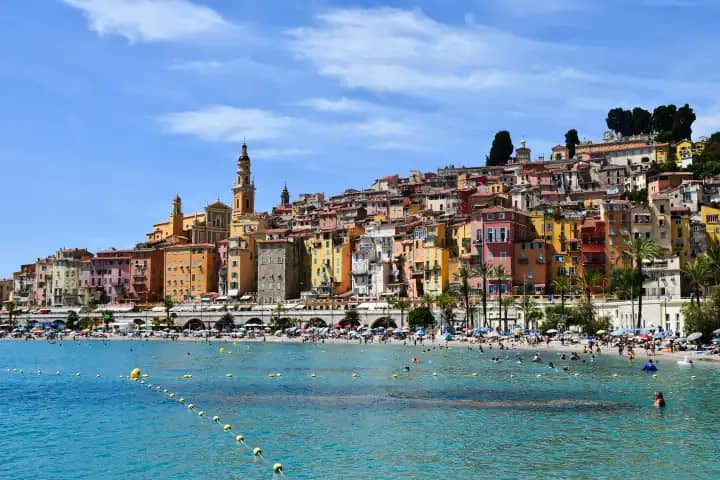
Photo: _morgado via Wikimedia Commons, CC BY 2.0.
La Vuelta a España 2026 runs from August 22 to September 13. It opens with a 9.6 km individual time trial in Monaco, crosses France and Andorra, then follows Spain's Mediterranean side before spending its final ten stages in Andalusia. The race ends in Granada rather than Madrid.
For a first roadside visit, choose one part of the route and build the trip around it. Monaco, Andorra, the Costa Blanca and the final week in Andalusia each offer a workable cluster. Trying to chase the race every day usually means more driving, more road closures and less time watching.
The hardest part is not buying a spectator ticket. Most open roadside viewing does not require one. The real work is choosing a legal place to stand, arriving before the road closes and keeping a route out that does not depend on the race road reopening immediately.
La Vuelta 2026 at a glance
| Detail | 2026 information |
|---|---|
| Race dates | August 22 to September 13, 2026 |
| Number of stages | 21, with rest days on August 31 and September 7 |
| Start | Monaco individual time trial |
| Countries visited | Monaco, France, Andorra and Spain |
| Finish | Granada city circuit |
| Total route | 3,275 km |
| Time trials | Monaco on stage 1 and Jerez on stage 18 |
| Mountain stages | Seven |
| Official route source | La Vuelta route hub |
| Detailed planning source | Interactive roadbook and official app |
The organizer can change a stage, schedule or access plan. Check the official stage page, roadbook and local traffic authority again during race week. A route profile is not a road-closure notice.
Why interest is rising now
The race begins in three weeks, and recent coverage is accelerating around whether Tadej Pogacar will add La Vuelta to his 2026 program after winning the Tour de France. The race director has discussed the possibility publicly, but a possible start is not a confirmed start.
That uncertainty is useful for trip planning: choose a stage because the route and location work, not because one rider might appear. The full start list and daily schedules become more useful closer to the opening weekend.
There is also an unusual travel story this year. The official route announcement describes more than 58,000 metres of climbing, two time trials and a four-country route. Granada hosts the final stage because Madrid is preparing for its Formula 1 weekend.
Which Vuelta 2026 stage should you watch?
The best stage depends on whether you want repeated views, a mountain atmosphere or simple public transport. A flat roadside point gives only a few seconds with the peloton. A time trial sends riders past one by one. A circuit can provide several passes, while a mountain finish gives a long day outside and a much harder exit.
| Stage | Date | Why it works for spectators | Useful base | Main difficulty |
|---|---|---|---|---|
| 1, Monaco to Monaco | August 22 | Riders pass separately in a short city time trial | Nice, Menton or Monaco | Dense closures and limited space |
| 4, Andorra la Vella circuit | August 25 | Compact mountain stage entirely in Andorra | Andorra la Vella or Escaldes | Few alternative roads once closures begin |
| 9, Villajoyosa to Alto de Aitana | August 30 | First-week summit finish and a Sunday date | Benidorm, Alicante or Villajoyosa | Heat, uphill walking and restricted vehicle access |
| 18, El Puerto de Santa Maria to Jerez | September 10 | Long individual time trial with repeated riders | Jerez, Cadiz or El Puerto | Exact barriers and crossing points appear late |
| 19, Velez-Malaga to Penas Blancas | September 11 | Final-week mountain finish near the Costa del Sol | Estepona or Malaga | Parking low and walking up before closure |
| 20, La Calahorra to Collado del Alguacil | September 12 | Last mountain test and likely general-classification action | Granada or Guadix | The hardest access and exit of this shortlist |
| 21, Granada circuit | September 13 | Four city laps and the final podium | Granada | City-centre closures and a large finish crowd |
Monaco opening weekend
Stage 1 is the easiest way to see every rider for more than a blink. The official stage presentation describes a technical 9.6 km course through Monaco, starting near Casino Square and using streets associated with the Formula 1 circuit.
Monaco is compact enough to explore on foot, but that does not make race-day movement easy. Once barriers and controlled crossings are in place, a short map distance can turn into a long walk. Pick one section of the course and stay there until the final riders have passed.
Nice and Menton are practical bases because regional trains serve Monaco-Monte-Carlo. Check SNCF Connect and TER Sud during race week, then allow for station queues and any event timetable. Do not rely on a taxi crossing the course or reaching a hotel inside the closed area.
Stage 2 starts in Monaco the next day and finishes in Manosque. Watching the start can pair with the time trial without requiring a chase across southern France.
Andorra mountain stage
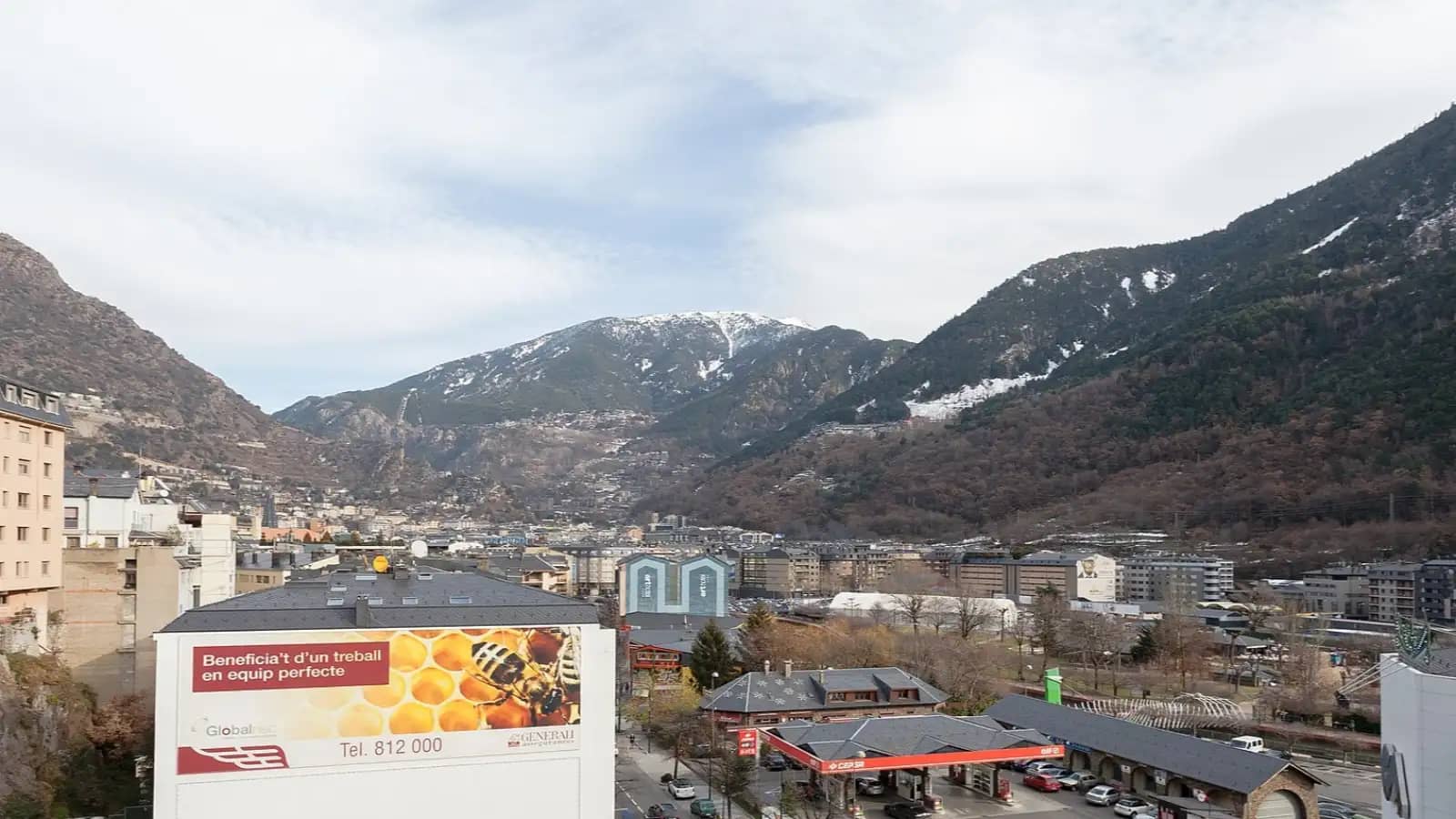
Stage 4 is only 104.9 km, but it crosses Port d'Envalira, Beixalis, Coll d'Ordino and Alto de la Comella before returning to Andorra la Vella. The short distance does not mean a short disruption. The route uses roads that also carry normal movement through a narrow mountain country.
Stay in Andorra if this stage matters. Driving in from France or Spain on race morning creates a single point of failure. Visit Andorra confirms the stage date, while Mobilitat.ad is the better source for live road conditions and closures.
Choose a viewing point you can reach on foot from the accommodation, by local bus before service changes, or with a legal parking plan outside the race road. Do not park on a verge, block an emergency route or assume a mountain pass will reopen as soon as the riders pass.
Costa Blanca and Valencia stages
Stages 5 to 9 stay relatively close to Spain's east coast, moving from Falset and Roquetes through Castellon, Valencia and Alicante province. This is the most workable section for a longer holiday because the race changes towns without crossing half the country each night.
Stage 8 finishes in Xeraco and stage 9 climbs from Villajoyosa to Alto de Aitana the next day. A coast base can work for both, but the summit finish requires a separate access plan. Expect to leave the car well below the finish and walk or cycle the remaining distance only where officials allow it.
August heat is part of the decision. A mountain road may have little shade, no shop and no reliable water source. Carry what you need, protect food from the heat and keep enough water for the walk back after the convoy clears.
Andalusia final week
The final ten stages stay in Andalusia. That makes the last week easier to follow than a normal cross-country chase, but the race still covers a large region. Pick a western or eastern cluster instead of treating every stage as a day trip.
Jerez is the simple choice for stage 18. The 32.5 km time trial sends riders along the route separately, and El Puerto de Santa Maria, Jerez and Cadiz have rail links. Stage 19 near Estepona suits visitors based on the Costa del Sol, though the Penas Blancas finish will require an early mountain-access plan.
Stages 20 and 21 can share a Granada base. Collado del Alguacil is the harder day: it is a new summit finish with very steep sections, after two climbs of Alto de Hazallanas. The Granada finale is much easier for a first-time spectator because the city circuit gives several chances to see the race and does not require a mountain descent after dark.
When do stage times and road closures appear?
Travelers are already asking for exact passage times, but those details do not all arrive at once. Use this order:
- Start with the official stage page for the route, profile and towns.
- Download the current interactive roadbook. Replace an old copy if the organizer posts a revision.
- Check the official La Vuelta app, which lists stage maps and scheduled passage times.
- Look for notices from the host municipality, regional transport operator and road authority.
- Check again the evening before and the morning of the stage.
Passage tables often show several estimates based on different race speeds. They are not promises. The publicity caravan, police vehicles and race convoy arrive before the riders, and officials may close a road well before the first listed race time.
In Spain, the DGT traffic restriction map covers most of the country, but Catalonia has its own traffic authority. Local police and municipal notices can contain the street-level detail that a national map does not.
If a mountain finish is the whole reason for the trip, arrive much earlier than the predicted peloton time. The closer a point is to the summit, the more likely access is controlled. Keep a lower viewing point as a fallback.
Do you need tickets to watch La Vuelta roadside?
You generally do not buy a ticket to stand on an open public-road section. Starts, finishes, hospitality areas, team zones and restricted mountain sections can have barriers or controlled access. Official tour packages sell hospitality, but paying for one is not required for an ordinary roadside view.
Choose a place with room to stand fully off the road. A corner, narrow bridge, tunnel, traffic island or steep descent may look good on a map and still be unsafe or closed to spectators. Follow marshals and police even when another spectator is standing somewhere you cannot enter.
The safest first visit is often a town start, time trial or finishing circuit. Mountain stages have the atmosphere many fans want, but they demand more walking, water and patience for the road to reopen.
Can you follow several stages without a tour package?
Yes, if the route moves in your direction and you stop trying to see both the finish and the next morning's start. Build around two or three stages and accept a transfer day.
Two-day Monaco plan
Watch the stage 1 time trial from one fixed section. Stay in Nice, Menton or Monaco, then watch the stage 2 start rather than attempting to reach Manosque after the race. This plan works without a rental car.
Five-day east-coast plan
Choose two stages between 5 and 9. Use Valencia, Castellon, Alicante or Benidorm as a base according to the stages selected. Do not move hotels every night. A car helps with rural points, but rail works better for some city starts and finishes.
Final-week Andalusia plan
Use Jerez for the stage 18 time trial, the Costa del Sol for stage 19, then Granada for stages 20 and 21. This still involves transfers. Keep the stage 20 mountain visit optional if road access or heat makes it unrealistic.
Trying to drive behind the race is not a shortcut. The convoy occupies the same route, local roads are closed and the fastest route in a navigation app may point straight back into the closure.
Car, train or bicycle?
Use rail for Monaco, Jerez and central Granada when the accommodation and stage section permit it. A rental car is useful for rural roads and moving between bases, but it should get you near a stage rather than onto the race route.
If you drive:
- Park legally outside the closed route and keep the car facing the way you need to leave.
- Expect to walk farther than the map suggests.
- Keep a second exit route that does not cross the stage.
- Do not move barriers or follow an official vehicle onto a closed road.
- Never stop in dry grass or block emergency access.
Cycling to a mountain point can work for experienced riders, but it is not guaranteed access. Officials can stop bicycles as the race approaches, and descending through a walking crowd requires care. Bring lights if the return may run into dusk, and do not ride against a closure instruction.
Rules for carrying a bicycle vary by train, region and service. Check the exact operator and departure before booking accommodation around a bike plan.
What should you bring for a roadside stage?
Pack for a long wait rather than the few seconds when the race passes.
- Water and food for the full walk, wait and return
- Sun protection, a hat and a light layer for altitude
- Closed shoes suitable for rough shoulders or steep paths
- A compact seat only where the location permits it
- A small rubbish bag so nothing is left on the route
- A charged phone and a separate power bank
- Offline maps, screenshots and one written contact number
Keep every person, bag, flag and camera outside the riders' line. Do not run beside the peloton, lean into the road for a photo or hold a phone over the course. Keep children behind an adult and use a fixed meeting point in case the crowd separates the group.
Southern Spain can still be very hot in September. Check AEMET and local civil-protection alerts, then change the plan if fire, extreme heat or a closure affects the route. The Europe wildfire travel guide explains how to verify an exact location without relying on a social-media map.
Useful apps and pages for a Vuelta trip
Set these up before leaving reliable WiFi:
- Official La Vuelta app for profiles, maps, passage schedules, live tracking and results
- Interactive roadbook saved to the phone for route details
- SNCF Connect or TER Sud for Nice, Menton, Monaco and southern France trains
- Mobilitat.ad for Andorra traffic incidents and closures
- DGT traffic information for Spanish roads outside regions with separate traffic powers
- AEMET for official Spanish weather warnings
- Google Maps, Apple Maps or an offline map app with the viewing point, parking place and return route saved
The official app is the first source for race timing. It is not a substitute for a local road notice. The local authority controls access, parking and public transport on the day.
Mobile data and offline preparation
This is a four-country route, so a Europe Roaming eSIM is the logical starting point for travelers following more than one stage. Check the live coverage list for Monaco, France, Andorra and Spain before buying. A Spain-only plan can be enough for a trip focused on the final two weeks.
Install the Roaming eSIM before departure when the plan's activation rules allow it. The installation timing guide explains the difference between installing a profile and starting its validity. Check phone compatibility before checkout.
Maps, messages, weather and stage updates use modest data. Repeated live video and hotspot use do not. Use the travel data calculator for the full trip rather than choosing an allowance for one race day.
A Roaming eSIM cannot guarantee capacity beside a packed finish or service on an isolated climb. Save these offline:
- The stage map and latest roadbook pages
- The official passage-time table
- Parking location and walking route
- Accommodation address and check-in contact
- Train or bus alternatives for the return
- Weather and emergency alerts
- Group meeting point and one written phone number
Keep the phone in low-power mode during the wait. The power-bank flight guide covers airline packing rules for the journey to Europe.
Vuelta a España 2026 questions spectators ask
What are the Vuelta a España 2026 dates?
The race starts in Monaco on Saturday, August 22 and finishes in Granada on Sunday, September 13. Rest days are August 31 and September 7.
What is the best Vuelta stage for a first-time spectator?
Choose the Monaco or Jerez time trial if repeated rider views matter. Choose the Granada circuit for several race passes and easier city access. Pick a mountain stage only if you can handle an early arrival, a long walk and a slow exit.
When will exact Vuelta stage times be available?
The official stage pages, roadbook and app carry scheduled passage times. Check them again close to the stage because route documents and local access plans can change.
How early do roads close for La Vuelta?
There is no single closure time for every stage. It depends on the road, town, convoy and local police plan. Arrive well before the first scheduled race vehicle and use the local authority's notice as the final source.
Can you drive to a Vuelta mountain finish?
Do not plan on parking at the summit. Park legally below the controlled section and expect to walk or cycle only where officials permit it. Keep a lower viewing point as a backup.
Can spectators ride the stage route on race day?
Sometimes cyclists use part of a climb before the closure tightens, but access is never guaranteed. Police and marshals can stop bicycles, and riders must leave the route before the race convoy arrives.
Is it possible to follow La Vuelta without a VIP package?
Yes. Most roadside viewing is open, and a sensible trip can cover two or three stages from a small number of bases. Hospitality mainly changes access and convenience, not whether the race can be seen.
Is a stage finish better than a mountain climb?
A finish provides screens, commentary and the podium but also the largest controlled area. A climb has a longer roadside atmosphere and can show time gaps, yet food, shade, toilets, parking and the journey out are harder.
Can children watch La Vuelta roadside?
Yes, with a short walk, shade, food, water, hearing protection where needed and an adult between the child and the road. A city time trial or circuit is usually easier than a remote summit.
Will phone service work beside the race?
Usually, but a mountain may have weak coverage and a busy finish may be congested. Keep the map, schedule, return route and meeting point offline even with a Roaming eSIM.
La Vuelta is easier to enjoy when the stage choice controls the trip instead of the other way around. Pick one cluster, wait for the official timing detail and assume the closed road will take longer to clear than you hope.