Angola with kids: attractions, itineraries and family travel tips

Angola with kids suits experienced traveling families who are comfortable arranging drivers, checking health requirements and leaving large gaps around transfers. Five days is enough for Luanda and one carefully planned day south of the city. Seven days can add either Malanje or Lubango by air and road. Ten days gives that extension room to breathe. The main difficulty is not finding places to see; it is connecting them safely without turning the trip into a sequence of long drives.
This is not a casual self-drive destination for a first visit with small children. Current UK advice warns against all but essential travel to parts of Cabinda and a one-kilometre strip along the Democratic Republic of the Congo border in Lunda Norte. It also advises against walking around Luanda, especially alone or after dark, and describes poor roads, limited emergency response and landmine risk outside established routes. Check the advice issued for your nationality and exact provinces before paying.
This guide was verified against government, protected-area, health, transport and cultural sources on August 28, 2026. Suggested ages and visit lengths are editorial planning estimates unless a law is named. Museum access, roads, health notices and domestic schedules can change; confirm every stop and transfer directly.
Angola family trip decisions at a glance
| Decision | Practical starting point |
|---|---|
| Best first trip | Luanda plus Quiçama, or Luanda plus one flight-based extension |
| Best ages | School age and older, especially for Kalandula or Lubango |
| Car needed? | Use a reputable prearranged driver; independent driving is a specialist choice |
| Main difficulty | Traffic in Luanda and unreliable journey times outside it |
| Best rhythm | One main stop before lunch, an indoor reset, then a prearranged return |
| Child restraint | Under 12 and under 1.5 m must ride in back with an appropriate restraint |
| Emergency numbers | Police 110, ambulance 112 and fire 118 |
| Health planning | Yellow fever rules, malaria prevention, cholera precautions and evacuation cover |
Which Angola attractions fit your children?
| Image | Destination | Best ages | Indoor or outdoor | Allow | Book ahead? | Best base |
|---|---|---|---|---|---|---|
 | Fortress of São Miguel | 7 and older | Indoor and exposed ramparts | 2 hours | Confirm current access | Central Luanda |
 | Currency Museum | 5 and older | Indoor | 1 to 2 hours | Confirm groups and exhibits | Luanda waterfront |
 | National Museum of Natural History | 4 and older | Indoor | 1 to 2 hours | Confirm current galleries | Kinaxixe, Luanda |
 | National Museum of Anthropology | 6 and older | Indoor | 1 to 2 hours | Confirm opening | Coqueiros, Luanda |
 | Dr António Agostinho Neto Memorial | 8 and older | Indoor and outdoor | 1 to 2 hours | Yes for a guided visit | Praia do Bispo, Luanda |
 | Iron Palace | 6 and older | Cultural building | 45 to 90 minutes | Confirm the current programme | Central Luanda |
 | National Museum of Slavery | 10 and older | Indoor and outdoor | 1 to 2 hours | Confirm access | Luanda south corridor |
 | Quiçama National Park | 7 and older | Four-wheel-drive wildlife outing | Full day or overnight | Essential | Luanda or park lodge |
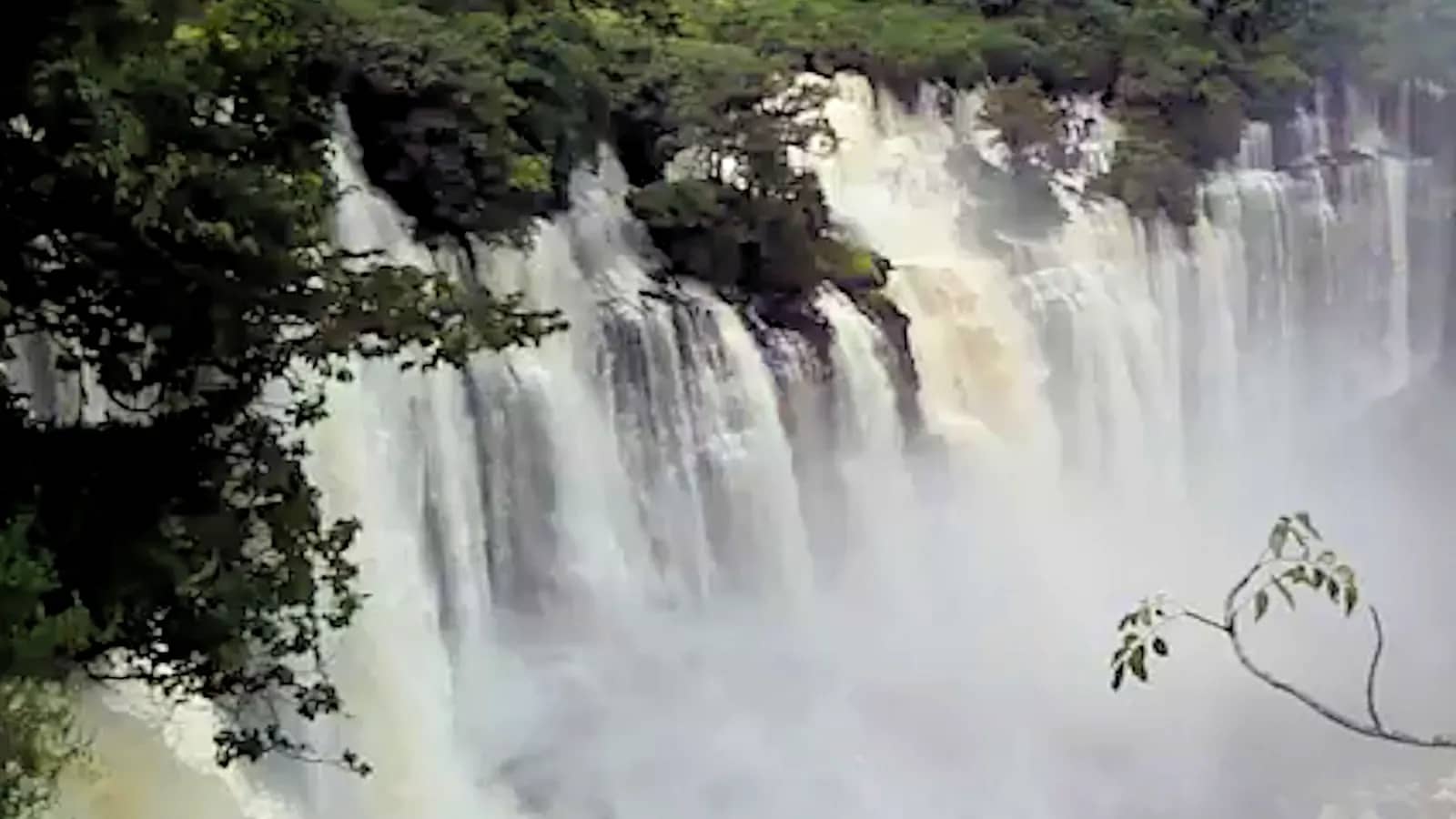
 | Kalandula Falls | 9 and older | Outdoor viewpoint | Half day within a 2-night trip | Driver and lodging essential | Kalandula or Malanje |
 | Tundavala Gap | 10 and older | Exposed outdoor viewpoint | Half day | Driver essential | Lubango |
These age ranges reflect heat, road time, exposed edges, difficult surfaces and the subject matter inside each museum. They are not admission rules. Ask the venue or operator about toilets, food, shade, seats, changing space, steps and the exact route before setting out.
Ten Angola questions families keep asking
Public Angola travel discussions supplied these recurring questions. The discussions show uncertainty; the answers below use current official or first-party evidence.
- Is Angola a sensible first family trip? It can work for an experienced family using prearranged transport and a narrow route. It is not the easiest choice for a first independent trip in Africa.
- Can families walk around Luanda? Do not build the itinerary around walking between sights. Current UK advice says not to walk around Luanda, especially alone or after dark. Use door-to-door transport and short, locally approved daytime walks.
- Do ride-hailing cars provide child seats? Never assume they do. Reserve the exact restraint and rear seating position through a provider who confirms them in writing.
- Can a long airport connection include the city? Only with a large buffer. The new airport is 52 km from Bungo by rail, and road time varies with traffic. A short connection should stay at the airport.
- Is public transport practical with children and luggage? The airport train can be useful when its limited timetable matches the flight. Crowded city transport is not the default recommendation for a first family visit.
- How many days does Luanda need? Three full days covers two museum clusters and one south-corridor day without crossing the city repeatedly.
- Can Kalandula Falls be a day trip from Luanda? Do not plan it that way with children. Use two nights and a driver, or fly to Malanje and arrange the remaining road transfer.
- Should a family use buses for long distances? A reputable driver or domestic flight usually gives more control over restraints, stops and luggage. Current road advice warns against night travel and highlights limited assistance outside cities.
- Are August and September good months? They fall in the cooler, drier period for many routes, but school calendars, haze, road conditions and attraction operations still need a date-specific check.
- What health preparation matters most? Arrange a travel-health appointment early for yellow fever, malaria and cholera advice, and buy cover that includes treatment and evacuation from every province booked.
Central Luanda: build days in compact clusters
Traffic can turn a short line on a map into a missed visit. Put the fortress and waterfront together; keep Kinaxixe and central cultural buildings for another block. Ask the driver to wait or set a precise pickup point. Current advice warns about theft from stationary cars, so keep phones and bags out of sight.
Fortress of São Miguel
Children inspect cannon positions, tiled wall panels and the military-history collection while seeing how the fort sits above Luanda Bay. Seven is a useful planning age because the history is complex and parts of the visit are exposed. Allow about two hours rather than treating the ramparts as a quick photo stop.
A stroller may help on some level approaches but not on every stair, threshold or uneven surface. Confirm the step-free route, barriers, toilets, seats, drinking water, food, shade and changing space directly. Keep children beside an adult at ramparts and follow photography instructions around military displays.
Confirm current opening and any guided-visit requirement before departure. Heat favors the morning. Use door-to-door transport and agree where the driver will meet the family; do not assume the next central attraction is a suitable walk.
Read the current Fortress of São Miguel overview. Details checked August 28, 2026.
Currency Museum
The museum turns Angola's exchange history into a manageable indoor visit, from pre-monetary objects to the kwanza. Children from about five can compare shapes, materials and symbols without needing a long historical lecture. One to two hours leaves room for questions and an early exit if attention fades.
The building is partly below the waterfront, but that design does not prove a fully step-free family route. Ask about lifts, toilets, seating, bag rules, food, changing space and any interactive area. The photograph shows the neighboring National Bank building, which makes a useful meeting-point landmark but is not the museum entrance.
Confirm current galleries, hours, group rules and photography policy. Pair it with the fortress only when the driver can handle both pickups without a rushed cross-city move. Midday works well for heat or rain.
The Luanda provincial government records current cultural programming at the Currency Museum. Details checked August 28, 2026.
Angola's natural-history museum in Kinaxixe
Children see specimens linked to Angola's animals, plants and geology. Four and older can manage a focused visit built around two or three displays. This is the strongest indoor reset for a child who has already had enough monuments for the day.
Published route information does not establish every facility. Ask about working galleries, stairs or lifts, toilets, seats, food, changing space and stroller storage. A compact carrier may be easier if the route includes steps. Avoid promising a particular specimen or education activity until staff confirms it.
Check current opening before leaving the hotel. Use a driver for Kinaxixe and keep the remainder of the day nearby rather than crossing south to Quiçama. Heavy rain or midday heat makes this a sensible substitute for an outdoor stop.
The Luanda historical and cultural route describes the museum's scientific purpose and government oversight. Details checked August 28, 2026.
Anthropology collections in Coqueiros
Children explore masks, musical instruments, tools, textiles, jewelry and photographs from communities across Angola. Six and older can choose one object from each room and ask how it was used. Allow one or two hours; fourteen rooms can become tiring if every label turns into a lesson.
The collection spans two floors. Ask staff about a lift or alternative route, toilets, seating, changing space, food, bag storage and stroller access. Some objects relate to ritual and social history, so adults should give context without presenting Angola's many communities as one culture.
Confirm access and any guided option before arrival. Combine it with one nearby central stop, not a same-day flight or park outing. A morning visit avoids making the child absorb a substantial collection at the end of a traffic-heavy day.
See the collection outline in the Luanda cultural route. Details checked August 28, 2026.
Dr António Agostinho Neto Memorial
Older children learn about Angola's first president through a museum, documentation center, library, exhibition spaces and the monumental site. Eight and older are more likely to connect the building with independence, poetry and political memory. Allow up to two hours and leave space for questions rather than presenting one official narrative as the whole history.
The access regulation names museum, library, classrooms, workshops, gallery, auditorium and water features, but it does not guarantee that every space is open on the day. Ask about step-free access, toilets, seats, food, shade, changing space and stroller storage. Photography is restricted in the sarcophagus area unless specifically authorized.
Arrange the visit ahead and follow staff instructions. Formal events can alter access, while open exterior areas can be hot. Use a driver to Praia do Bispo and agree the pickup before entering.
Read the public-access regulation for the memorial and Luanda visitor overview. Details checked August 28, 2026.
Iron Palace
The Iron Palace is best treated as a short architecture and cultural-program stop, not a guaranteed museum experience. Children can look at its metal structure and compare it with stone colonial buildings nearby. Six and older can handle 45 to 90 minutes when there is a current exhibition or event.
Facilities depend on the programme and open areas. Confirm toilets, seating, shade, food, changing space, steps and stroller access before making it the day's anchor. Do not rely on old claims about the building's designer; Luanda's route notes that its origin is not securely documented.
Check the current programme and public entrance before departure. If no interior access is available, replace it with rest rather than adding another cross-city journey. Use a driver and keep valuables out of sight while stopped in traffic.
See the Luanda historical and cultural route. Details checked August 28, 2026.
South of Luanda: history and wildlife on separate days
The National Museum of Slavery and Quiçama lie along the broad southern corridor, but they should not be squeezed into one aggressive schedule with children. Miradouro da Lua, a common stop on older itineraries, was closed for six months from April 28, 2026 for stabilization work. Do not detour to the edge until the tourism authority confirms reopening and safe public access.
National Museum of Slavery
The museum occupies a former chapel associated with the Atlantic slave trade. Older children can use the visit to connect individual objects and the coastal landscape with forced movement across the ocean. Ten and older is a cautious planning range because the subject requires preparation and decompression. Allow one to two hours.
Ask about steps, toilets, seating, shade, food, changing space, photography and the best route for limited mobility. A stroller may manage the grounds more easily than old thresholds. Adults should explain the subject beforehand and give the child permission to pause outside.
Confirm current access and a guided visit. Use a prearranged driver, keep the return in daylight and avoid turning the stop into an incidental photo break before a beach. The history deserves its own pace.
The site appears in the current Angola visitor experience list. Details checked August 28, 2026.
Quiçama National Park
Children watch the landscape shift among savannah, river and coastal habitats from a suitable vehicle. Wildlife is not staged and sightings are never guaranteed. Seven and older are more likely to manage the road time and quiet observation. A full day is the minimum; an overnight can reduce pressure when current accommodation and transfers are confirmed.
Leave the stroller at the base. Reserve a roadworthy four-wheel-drive vehicle with rear belts and appropriate child restraints. Ask the operator about toilets, meals, drinking water, shade, vehicle seating, changing arrangements, first aid, communication and the response to a breakdown. No child should leave the vehicle unless a ranger instructs the group.
Book the vehicle, park access and any lodging as one chain. INBAC places the park about 71 km from Luanda and describes a much larger protected area beyond the visitor route. That distance is not a journey-time promise. Start early, travel in daylight and cancel rather than improvising after heavy rain or a vehicle problem.
Read the official INBAC Quiçama profile and environment ministry overview. Details checked August 28, 2026.
Malanje extension: make Kalandula a two-night decision
Kalandula is not a spare day trip from Luanda. A family should reserve transport, two nights and a safe viewpoint plan. The official government tourism page includes it among Angola's seven natural wonders, but a list is not an access guarantee.
Kalandula Falls
Children hear and see the Lucala River drop across a broad horseshoe waterfall. Nine and older is a sensible planning range because the outing involves a long transfer, exposed viewpoints and uneven or slippery ground. Use a half day at the falls within a two-night Malanje or Kalandula block.
A stroller is unlikely to help beyond firm approach areas. Confirm barriers, path condition, toilets, seats, shade, food, changing space and the nearest medical help with the driver or host. Do not take children down an unverified path to the base or onto wet rock for a closer photograph.
Arrange a reputable driver and accommodation before leaving Luanda, or fly to Malanje and confirm the remaining road transfer. Rain can increase both flow and road difficulty. Keep the day flexible and return before dark.
See the official Angola government tourism list and a current Malanje planning overview. Details checked August 28, 2026.
Lubango extension: use one base for the highlands
Lubango is an alternative to Malanje, not an addition to a seven-day trip. Fly when the schedule is workable, then use a local driver for the highland viewpoints. Build a weather buffer and keep the departure day free of exposed-road sightseeing.
Tundavala Gap
Children see how the Huíla plateau drops sharply toward the lowlands and can compare the cooler highland climate with Luanda. Ten and older is a cautious range because the main decision is staying well back from an exposed edge. Allow a half day with a local driver rather than racing between Tundavala, Serra da Leba and a flight.
Do not count on a stroller route, barriers, toilets, food, shade, seats or changing facilities. Ask the driver about the current stopping point, surface, weather and safe viewing area. Hold younger children by the hand and stop the visit when cloud, wind or rain reduces control or visibility.
Book the driver before arrival in Lubango. Avoid night driving and do not ask for a fast descent of Serra da Leba as an extra. Tundavala appears on the government tourism list, but current access conditions still need a local check.
Read the official Angola government tourism page and Huíla route overview. Details checked August 28, 2026.
Realistic Angola family itineraries
These plans deliberately remove attractions when transport slips. They are not attempts to cover the country.
Five days: Luanda and one south-corridor day
Arrive on day one and use a prearranged airport transfer. Put the fortress and Currency Museum on day two. Use the Natural History or Anthropology museum on day three, with a long lunch and rest. Choose the Slavery Museum or Quiçama for day four, not both. Keep day five for departure. A family with a short airport connection should not copy this plan; it needs overnight buffers.
Seven days: Luanda plus Malanje or Lubango
Spend three full days in Luanda, including one central cluster and one south-corridor choice. On day four, fly or transfer to one extension. Use days five and six for Kalandula from a confirmed base, or for Lubango and Tundavala with a local driver. Return or depart on day seven with no must-do attraction scheduled. Do not combine Malanje and Lubango.
Ten days: one city block, one nature block and recovery time
Use four nights in Luanda, then three nights in either Malanje or Lubango. Keep two nights for transport recovery and a quiet final base before the international flight. Quiçama can replace a museum day or form a separate overnight, but it should not be added after Kalandula merely to increase the wildlife count. Current flight schedules and road advice control the final order.
Transport, child restraints and airport transfers
Use a driver unless the family already has local road experience
Current UK advice says roads outside major urban centers vary greatly, assistance can be limited and longer journeys may need a roadworthy four-wheel-drive vehicle. It recommends avoiding night travel and notes that visitors outside cities often use two-vehicle convoys. Landmines and unexploded weapons remain a concern around roads, verges and bridges, especially where flooding moves soil.
That rules out spontaneous shortcuts. Use established routes and a reputable provider, verify the driver and vehicle, and send the itinerary to the accommodation. A rental car is unnecessary for a Luanda-only visit. Independent overland driving belongs to families with current local support, appropriate vehicles and recovery plans.
Angola's child-restraint rule
Article 55 of Angola's road code prohibits a child under 12 and shorter than 1.5 m from sitting in front. The child must ride in the rear using a restraint adapted to size and weight. A 2017 presidential regulation requires approved restraint systems and describes booster use for children over 36 kg when needed for safe belt fit.
The law is a minimum, not proof that a transfer car carries the right seat. Send each child's age, height and weight before booking. Ask for a rear position, compatible belt and photograph or model of the restraint. If bringing a seat, confirm vehicle installation and airline carriage before travel.
Read the Angolan road code and 2017 restraint regulation. Details checked August 28, 2026.
The new airport is not central Luanda
Dr António Agostinho Neto International Airport lists official taxis, shuttles and executive vehicles. The airport rail link to Bungo resumed in April 2026. The Ministry of Transport published departures from Bungo at 06:00 and 14:00 and from the airport at 07:30 and 18:10; a July ministry update identifies the line as 52 km.
Those limited times will not suit every flight. Recheck the schedule on the travel date and use a prearranged car with the correct child restraint when it does not. Allow a large road buffer and keep the first day empty. Confirm stroller and car-seat carriage with every operating airline; do not assume one carrier's rule applies to a codeshare or domestic leg.
Use the official airport site and Ministry of Transport rail notice. Details checked August 28, 2026.
Health, water and everyday family logistics
Arrange health advice before the itinerary becomes non-refundable
CDC recommends prescription malaria prevention for travelers to all of Angola and reports widespread active cholera transmission. Its traveler page states that Angola requires yellow-fever vaccination for arriving travelers aged nine months and older. Requirements and individual medical suitability are different questions, so take the child's itinerary and records to a travel-health clinician well before departure.
Current UK advice lists yellow fever, malaria, dengue, Zika and cholera risks. It says competent private clinics exist in Luanda but can require high advance payment, while care outside Luanda is very limited. Insurance should cover treatment and evacuation from Quiçama, Malanje or Huíla, not only a city clinic. Carry sufficient prescription medicine in original packaging and a clinician-approved fever plan.
Drink treated water and plan food conservatively
Use sealed bottled or properly treated water for drinking, ice and tooth brushing when safety is uncertain. Cholera precautions make handwashing and food handling part of the daily plan, not a final packing note. Ask accommodation staff how drinking water is supplied and avoid assuming a clear stream or hotel tap is safe.
Grilled fish, chicken, rice, beans, funge, fruit and bread can give children simple options, but food availability changes outside Luanda. Carry familiar snacks within customs rules, oral rehydration supplies recommended by a clinician and enough water for every road segment. Ask for meals earlier than a late adult dinner when a child needs sleep.
Heat, rain, altitude and accessibility
Luanda can be humid, while Lubango sits much higher and can feel cooler. The rainy period can disrupt roads, and exposed viewpoints offer little shelter. Pack hats, breathable layers, a light warm layer for the plateau, waterproof storage, sunscreen and mosquito protection recommended for the child's age.
Accessibility is venue-specific. Published sources do not establish a continuous step-free path for this itinerary. Ask about stairs, thresholds, toilets, bathroom setup, distances from drop-off and evacuation before payment. A compact carrier may be more practical than a stroller at forts, waterfalls and highland viewpoints.
Police is 110, ambulance 112 and fire 118 in current UK guidance. Save the insurer, accommodation, driver and nearest confirmed clinic as well; an emergency number is not a promise of fast response outside Luanda.
Apps and files to save before arrival
Install an offline map for Luanda and the exact extension corridor, a Portuguese translation tool, the operating airline's app or alert channel, a weather source and the transport app named by the booked provider. App coverage changes, so an app-store listing is not proof that a driver will be available at an attraction or late at night.
Save the airport train notice, flight confirmation, accommodation pin, driver's name and vehicle, insurance policy, child medical notes and passport copies offline. Photograph the child restraint after installation. Keep a paper address in Portuguese for each base and agree on a family meeting point before entering a museum.
Connectivity that supports the plan without replacing it
Mobile data can help with driver messages, maps, flight changes and translation in Luanda. It cannot replace downloaded documents, a confirmed pickup or the operator's emergency process in a park or on a long road. Coverage varies by partner network, terrain and congestion.
The public Roaming eSIM catalog listed nine Angola packages on August 28, 2026, using listed Unitel 3G/4G partner coverage. Eight were marked top-up eligible and one was not; daily-plan allowances and reduced speeds also varied. The current Africa and global destination records did not list Angola, so this article shows only the exact Angola Roaming eSIM page. Do not buy a regional plan for this trip on the strength of its name.
Roaming eSIM gives travelers a direct catalog and published support route without requiring an airline promotional message. That is useful for a TAAG passenger starting in Angola because the earlier TAAG and Kolet story found that the airline's initial promotion excluded the Angolan market. It does not mean a Roaming eSIM guarantees coverage everywhere, supplies voice or SMS on every plan, or replaces emergency arrangements. Check the selected package for calls, hotspot, start timing and reloadability.
Before buying, use the travel data calculator, check whether the phone supports eSIM, and follow the installation timing guide. Families managing several phones can use the family eSIM setup index. The country versus regional eSIM guide explains why the visible country list matters more than a product label.
Angola booking checks before a deposit
- Check current advice for every province, border and transit country.
- Reserve door-to-door transport and the exact rear child restraint.
- Keep all long road travel in daylight on established routes.
- Choose Malanje or Lubango for a seven-day trip, not both.
- Confirm each museum's opening, toilets, steps, seating and changing space.
- Verify Miradouro da Lua has officially reopened before including it.
- Arrange yellow-fever, malaria and cholera advice early.
- Buy medical and evacuation cover for the complete route.
- Download tickets, maps, contacts and health documents before departure.
- Use only the Angola product card unless a current regional plan explicitly adds Angola.
Families choosing between southern African wildlife routes can compare Botswana with kids, Zambia with kids and South Africa with kids. Those are separate country decisions; none makes a long multi-country road route automatically suitable for children.