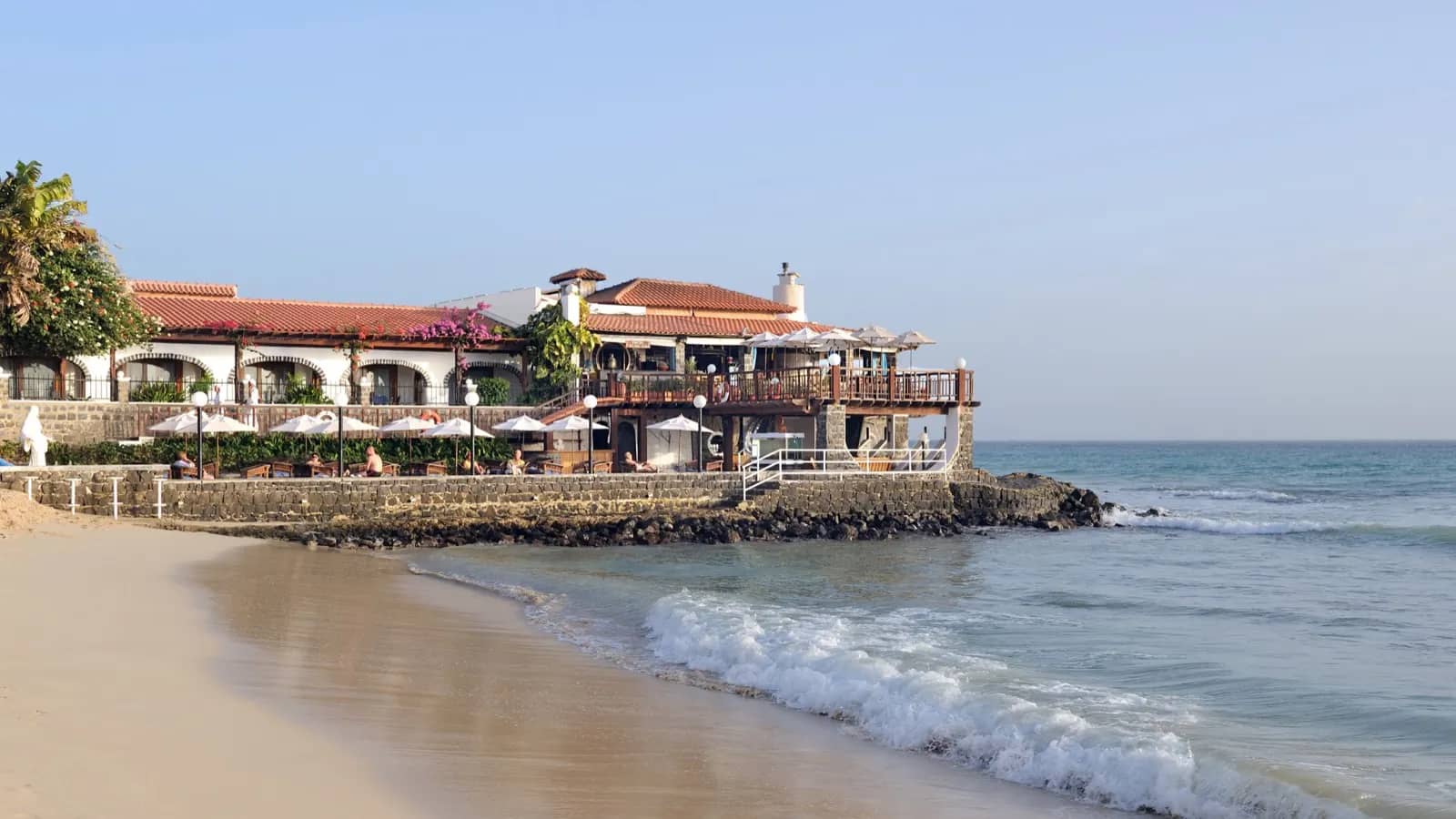
Cape Verde with kids: islands, itineraries and family travel tips

Cape Verde with kids works best as a one-island beach trip or a slow two-island route. Sal is the easiest first base for short transfers and bookable outings. Boa Vista suits families who want a quieter resort week and do not mind arranging transport. Santiago gives school-age children more history and mountain scenery. Five days is enough for one island, seven days lets that island breathe, and ten days can support a second island if the final night remains near the departure airport. The main difficulty is not finding activities. It is resisting an itinerary that depends on several domestic flights or ferries running exactly as planned.
Toddlers need reliable shade, familiar food, a correctly fitted restraint and a beach plan that does not assume calm Atlantic water. School-age children can connect the salt industry, dunes, sea-turtle conservation and Cidade Velha's difficult history. Older children who already hike can add Serra Malagueta. This guide uses Cape Verde, the familiar English search term, while official sources increasingly use the country's official short name, Cabo Verde.
Operational details were checked against tourism, transport, road-law, health, weather, conservation and product sources on August 29, 2026. Ages and visit lengths are editorial planning estimates, not venue rules. Confirm opening, access, sea conditions, child-seat supply and transport on the day.
Cape Verde family decisions at a glance
| Decision | Practical starting point |
|---|---|
| Best first island | Sal for the simplest airport-to-base trip |
| Quieter beach stay | Boa Vista, with more pre-arranged driving |
| Culture and nature | Santiago for Cidade Velha and Serra Malagueta |
| Useful first trip | Five to seven nights on one island |
| Car needed? | Not for central Santa Maria; useful for flexible island days |
| Inter-island plan | Add one island only, with a disruption buffer |
| Child restraints | Required for children under 12 or shorter than 150 cm under the reviewed official regulation |
| Emergency contacts | 112 is the national emergency number; current travel advisories also list ambulance 130, fire 131 and police 132 |
Which Cape Verde stops fit your children?
| Image | Destination or attraction | Best ages | Indoor or outdoor | Allow | Book ahead? | Best base |
|---|---|---|---|---|---|---|
 | Santa Maria Beach and pier | All ages | Outdoor beach and working pier | 2 to 3 hours | No; check sea conditions | Santa Maria, Sal |
 | Pedra de Lume salt crater | 5 and older | Outdoor industrial landscape and salt water | 2 to 3 hours | Arrange transport; check entry | Santa Maria, Sal |
 | Buracona | 6 and older | Outdoor volcanic coast | 60 to 90 minutes | Use a driver or tour | Santa Maria, Sal |
 | Salt Museum | 6 and older | Indoor cultural centre | 45 to 75 minutes | Check current opening | Santa Maria, Sal |
 | Viana Desert | 5 and older | Outdoor dunes | 60 to 90 minutes | Yes, for a child-suitable transfer | Sal Rei, Boa Vista |
 | Shipwreck Museum | 6 and older | Indoor museum | 60 to 90 minutes | Check opening before travel | Sal Rei, Boa Vista |
 | Cidade Velha | 8 and older | Outdoor historic town and fort | 3 to 4 hours | A guide helps with context | Praia, Santiago |
 | Serra Malagueta Natural Park | Fit children 8 and older | Outdoor mountain trails | Half day | Book a suitable guide | Praia or Tarrafal, Santiago |
Use the table to reject stops that do not fit the child or the day's weather. It does not promise step-free access, a working changing table, lifeguards or a supplied restraint. Ask the venue or operator about the exact entrance, toilets, shade, food, seating and mobility arrangement before leaving.
Ten questions families ask before booking Cape Verde
Public travel discussions keep returning to the same planning problems. The questions below come from those discussions; the answers use current official or first-party evidence.
- Is Sal or Boa Vista easier with a toddler? Sal usually asks less of the day because Santa Maria, the airport and several outings sit within one compact island. Boa Vista works when the resort and transfers are the holiday, not when every day requires an improvised taxi.
- Can a family visit several islands in one week? It is possible, but a good seven-day family plan normally stays on one island. A missed connection costs more than the island count adds.
- Are Cape Verde beaches calm enough for young children? Conditions vary by beach, tide, wind and day. Use a protected pool or a locally confirmed swimming area when the Atlantic is rough, and never treat a resort photograph as a safety report.
- Do taxis have child seats? Do not assume so. Reserve the exact restraint in writing, check its fit and confirm the vehicle has a compatible rear belt. Bring a seat you can install correctly if the provider cannot guarantee one.
- Is a stroller useful? It helps on level hotel paths and parts of central Santa Maria. Sand, cobbles, broken pavements, dunes and mountain trails make a carrier more useful elsewhere.
- Should we book a turtle walk? Only through a conservation-led operator that sets distance, lighting, silence and age rules. Nesting or hatching is never guaranteed, and a late, quiet wait does not suit every young child.
- How much time should we leave between an island connection and the flight home? Keep the last night on the international departure island. A same-day ferry or domestic-flight connection creates a failure point the family cannot control.
- Can we drink the tap water? Current US travel guidance advises against it. Use sealed bottled or properly treated water and ask how ice and infant feeds are prepared.
- Is Santiago suitable for a first family trip? Yes for families who prioritize history, markets and mountain scenery over a resort beach. It requires more road planning than Sal.
- Will mobile data work everywhere? No provider can promise that. Save tickets, addresses, ferry details and an offline map before long drives, beaches and mountain walks.
Sal: the lowest-friction first family island
Sal is the practical answer for many first trips because the family can stay in Santa Maria, walk to food and beach time, then choose one outing at a time. Put only one north-island excursion on a given day. Pedra de Lume and Buracona can be combined by a driver, but a toddler may get more from doing one and returning for lunch.
Santa Maria Beach and pier
Children can build on the sand, watch fishing boats around the working pier and take short movement breaks between meals. All ages can use the beach, but useful swimming depends on the day's flags, current and wind rather than age alone. Allow two to three hours in the morning or late afternoon instead of making the exposed shoreline an all-day plan.
A stroller works on some town approaches but not on soft sand. Toilets, food, shade, seats and changing space depend on the part of the beach and the family's accommodation. Bring drinking water and a portable shade option. Keep children clear of working areas where fish, boats and equipment move across the pier.
There is no attraction ticket to reserve. Ask lifeguards or accommodation staff about the current safe swimming area and leave the water when conditions change. The tourism authority describes Santa Maria's eight-kilometre beach, but length does not make every section equally suitable for a child.
The town is the useful transport stop and base. The airport transfer is by road, while restaurants and the central waterfront can be reached on foot from many addresses. Read the official Sal island guide. Official details checked August 29, 2026.
Pedra de Lume salt crater
Children enter an extinct volcanic crater, see the remains of the salt operation and learn why the mineral shaped Sal's economy. Floating in dense salt water may be offered, but children with cuts, sensitive skin or a habit of rubbing their eyes can skip it and still understand the site. Ages five and older are a practical fit. Allow two to three hours including the drive and rinsing time.
The ground is uneven and shade is limited. Ask about the current walking surface, steps, toilets, showers, seats, drinking water and changing area. A stroller may reach only part of the site. Carry footwear for hot or sharp ground and fresh water for rinsing, without treating the salt water as a medical treatment.
Confirm admission, bathing rules and facilities before departure. Wind, heat and a busy excursion period can shorten the useful visit. Keep the salt water out of eyes and mouths, and supervise children even when buoyancy makes floating feel easy.
Pedra de Lume is reached by road from Santa Maria or Espargos, not by a reliable child-friendly public transport schedule. Arrange a vehicle with the required restraint. The official family tourism page explains the salt history. Official details checked August 29, 2026.
Buracona
Children see waves working against black volcanic rock and, under suitable sun and sea conditions, the light effect known as the Blue Eye. Ages six and older can understand that this is a coastal geology stop, not a guaranteed swimming pool. Allow 60 to 90 minutes once there.
Rock, spray and uneven edges make a stroller a poor fit. Ask the operator about the current barrier, viewing surface, toilets, shade, food, seating and safe distance from the water. Hold younger children close and do not step onto wet rock for a photograph.
Use a guide or driver who will cancel or change the stop when surf is unsafe. The light effect depends on conditions and should not control a rigid family schedule. Crowds can gather in the middle of the day, while the strongest visual moment can coincide with the hottest period.
Buracona sits on Sal's northwest coast and is normally part of a road outing from Santa Maria. There is no useful public-transport stop to build a timed family day around. Read the official Sal natural-wonders guide. Official details checked August 29, 2026.
Salt Museum
Children can connect the island's name, the Pedra de Lume landscape and the workers' story through objects and exhibitions. Ages six and older will get the most from a short visit, especially after seeing the crater. Allow 45 to 75 minutes and use it as a heat or wind fallback.
The museum is in Santa Maria's historic Cultural Centre building. Ask about step-free entry, interior circulation, toilets, seating, stroller storage and changing space. Food and a longer rest are easier to plan elsewhere in town.
Check the current opening and exhibition position before walking over; tourism pages describe the museum's role but do not provide a permanent promise that every gallery is open. A school group or closure can turn this into a town walk instead.
Central Santa Maria is the transport anchor, so many families can reach the museum on foot and continue to lunch without another vehicle. Read the official Cape Verde family page. Official details checked August 29, 2026.
Boa Vista: plan the vehicle before the activity
Boa Vista spreads family stops farther apart than central Santa Maria. Decide whether the trip is a quiet resort week or a Sal Rei-based stay, then reserve child-suitable transfers. A dune outing and a museum are enough for one active day; the beach should remain a separate, conditions-led choice.
Viana Desert
Children walk on pale wind-shaped dunes, compare the sand with the island's dark volcanic rock and look for tracks without needing a motorized thrill ride. Ages five and older can enjoy a 60-to-90-minute visit. Choose walking and a suitable transfer over quad or buggy products that do not clearly publish child, helmet and restraint rules.
There is little natural shade, and pushing a stroller through sand is unrealistic. Ask the operator about toilets, water, a shaded stop, seating and the distance from vehicle to dunes. Closed shoes can be more comfortable when sand is hot or windblown.
Book a vehicle that can carry the family and its restraints correctly. Visit early or late, check wind and visibility, and turn back if blowing sand makes the stop unpleasant. Do not drive over protected vegetation or follow tracks into an area the operator is not allowed to enter.
The desert lies inland from Sal Rei and needs a road or track transfer. The tourism authority describes it as roughly five kilometres long and one kilometre wide, but families only need a small, supervised section. Read the official Viana Desert guide. Official details checked August 29, 2026.
Shipwreck Museum
Children use art, models and maritime stories to understand why ships and navigation matter to the archipelago. Ages six and older can spend 60 to 90 minutes here. It is a useful indoor counterweight to dunes and beach time, not a reason to drive across the island during a short resort day.
Ask the museum directly about step-free access, toilets, seating, stroller storage, changing space and languages used in current interpretation. Plan snacks and a longer meal in Sal Rei rather than assuming food is available inside.
Check opening and admission on the day. A small museum can change hours without the booking infrastructure of a large national attraction. Keep a Sal Rei harbour walk as the fallback, while supervising children around boats and working waterfront edges.
The museum is in Sal Rei, the practical town base for taxis, food and local services. It combines naturally with the centre, not with a remote beach at the opposite end of the island. The official Boa Vista guide identifies the museum and Sal Rei context. Official details checked August 29, 2026.
Santiago: history first, mountain trail second
Santiago gives a family the clearest cultural contrast with Sal or Boa Vista. Base in Praia for Cidade Velha and city services, or near Tarrafal when the mountain park and north coast are the main purpose. Do not place both major stops around a domestic-flight day.
Cidade Velha
Older children can follow the history of Ribeira Grande, Rua Banana, the fort, churches and the site's role in colonial trade and enslavement. Ages eight and older are the best starting point because the value comes from explaining what these places witnessed. Allow three to four hours with breaks.
Cobbles, slopes, steps and heat create different access problems across the town. Ask the guide about the shortest route, fort access, toilets, food, shade, seating and a stroller-safe alternative. A carrier may be more useful, but it does not remove heat exposure.
A knowledgeable guide helps present enslavement honestly and in language suited to the child. Confirm fort and church access before arrival. Start early, pause in shade and avoid turning every building into a checklist. The UNESCO listing confirms the site's significance; it does not provide a family accessibility guarantee.
Cidade Velha is about 15 kilometres west of Praia according to the tourism authority. Use a taxi, booked driver or tour with the correct child restraint. Read the UNESCO World Heritage listing and official Cidade Velha route. Official details checked August 29, 2026.
Serra Malagueta Natural Park
Fit children can take a short guided route through Santiago's mountain landscape, compare the cooler uplands with the coast and look for endemic plants and birds. Start around age eight for a deliberately short walk; the guide's assessment and the child's hiking experience matter more than a birthday. Reserve half a day.
This is not a stroller attraction. Ask for the exact distance, ascent, path exposure, toilet position, drinking-water plan, shade and turnaround options. Carry layers because cloud and wind can make the ridge feel different from Praia, plus sun protection for exposed sections.
Book a guide who will match the route to the youngest walker. Check the national weather and local cloud before leaving. Fog, rain, heat or tired legs are reasons to use a viewpoint and stop early, not to push toward a summit.
The park is inland on the road between Praia and Tarrafal, so a driver or arranged tour is the practical connection. Do not depend on an informal shared vehicle for a timed return with young children. Read the official Santiago island guide. Official details checked August 29, 2026.
Realistic five, seven and ten-day routes
These plans include meals, slower mornings and recovery time. Domestic schedules and road times can change, so they are route shapes rather than promises.
Five days: stay on Sal
- Day 1: Airport transfer, check-in, groceries and a short Santa Maria waterfront walk.
- Day 2: Beach morning, long lunch and the Salt Museum if it is open.
- Day 3: Pedra de Lume with a booked restrained vehicle, then a quiet afternoon.
- Day 4: Buracona only if sea conditions suit; otherwise repeat the easiest beach or pool day.
- Day 5: Unscheduled buffer, packing and the international flight. Do not add another island.
Seven days: one island with room for weather
- Days 1 to 3: Follow the first three Sal days without compressing them. - Day 4: Full rest day. This protects naps and gives a second chance after strong wind. - Day 5: Buracona or a conservation-led turtle activity in season. Do not promise a sighting. - Day 6: Child-chosen repeat, simple boat outing only with current safety equipment, or another beach-and-pool day. - Day 7: Buffer and departure.
A Boa Vista version uses the same rhythm: Sal Rei and the Shipwreck Museum, one Viana Desert outing, then beach days selected by current conditions. A Santiago version uses Praia, Cidade Velha and one north-island day, with Serra Malagueta only for established walkers.
Ten days: add Santiago without gambling the flight home
- Days 1 to 4: Sal base, using the five-day plan but leaving Buracona optional.
- Day 5: Domestic flight to Santiago, followed by check-in and no major attraction.
- Day 6: Praia orientation and an indoor or shaded cultural stop chosen locally.
- Day 7: Cidade Velha with a guide.
- Day 8: Serra Malagueta for suitable walkers, or a lower-effort north-island road day.
- Day 9: Return to the island of the international departure if required. Treat this as transport, not sightseeing.
- Day 10: Departure with no same-day ferry dependency.
Getting around the Cape Verde islands with children
Airport and island choice
Sal, Boa Vista, Santiago and São Vicente have the main arrival patterns families compare. Book the flight first and make that island the centre of the trip. A cheap package to Boa Vista does not create a quick road link to Sal, and an international arrival on Sal does not make Santiago a day trip.
Airport-to-base transport should be reserved with the child's height and weight, not just the phrase "child seat." Confirm rear belts and installation before the family boards. Central Santa Maria can then work on foot for short trips, while Boa Vista and Santiago need more driving.
Rental car, taxi and aluguer
A rental car is not necessary for a Santa Maria beach week. It can help with naps and equipment on Sal, Boa Vista or Santiago only when the company guarantees a suitable restraint and the driver is comfortable with local roads. Taxis and shared aluguers are useful local transport, but a seat, luggage space, timetable and restraint are not automatic.
Cape Verde's 2020 official vehicle regulation requires child-restraint systems for children under 12 or shorter than 150 cm. The wider road code places children in the rear with a restraint suited to size and weight, subject to specified exceptions. Read the official road-vehicle regulation, reserve the exact seat in writing and bring one you can install correctly if the provider cannot meet the rule.
Domestic flights and ferries
Domestic flights shorten the map but add check-in, baggage rules and schedule risk. Confirm the current operator and route on CVSky's official site rather than relying on an old airline article. Ask about stroller handling, infant baggage and the latest check-in time before paying.
CV Interilhas publishes routes and schedules for inter-island ferries. Sea conditions and timetable changes matter more with children than the nominal sailing time. Confirm the sailing directly, ask about boarding steps, seating, toilets, luggage, stroller storage and seasickness, and never attach a ferry arrival to the international flight home.
Cape Verde family logistics that change the trip
Seasons, sun and ocean
Cape Verde is dry and exposed, with wind and Atlantic conditions that differ by island and coast. Use the National Institute of Meteorology and Geophysics climate portal for current bulletins. Pack high-factor sun protection, hats, rash vests, water and portable shade. A cooling wind does not remove UV exposure.
School holidays and winter-sun demand can fill family rooms and direct flights. Turtle nesting activity is seasonal and controlled by conservation rules. Project Biodiversity is a useful first-party starting point for Sal conservation work; book only a current ethical activity and accept that wildlife may not appear.
Food, water and health
Family-friendly basics such as rice, beans, grilled fish, chicken, bread and fruit are widely understandable choices, but children who need a specific formula, allergy product or medicine should bring an adequate supply. Meal service may run later than a young child's routine, so keep snacks and choose accommodation that can handle breakfast or an early simple meal.
Current US travel guidance says tap water is not safe to drink. Use sealed bottled or properly treated water, including for infant feeds, and ask about ice. The same guidance notes limited ambulance availability and the possibility of medical evacuation for serious illness. Buy insurance that covers the children, planned activities and evacuation, and carry prescriptions and essential medicines.
Save 112 as the official national emergency number. Current UK and US government guidance also lists ambulance 130, fire 131 and police 132. Ask the accommodation which number and clinic are the right local first call. The Cape Verde government travel portal and current UK emergency page should be checked again shortly before departure.
Accessibility
Do not treat an island or town as accessible because one hotel has a ramp. Sand, cobbles, broken pavements, ferry boarding, unpaved tracks and mountain paths create separate barriers. Ask for measurements, steps, toilet details and vehicle boarding arrangements. Keep one low-effort alternative for every outdoor day.
Useful apps and saved tools
- CVSky website: current domestic-flight search and booking. Save the booking offline.
- CV Interilhas website: current ferry routes and schedules. Reconfirm with the operator.
- Google Maps: download the chosen island before travel and pin the accommodation, clinic and pickup point.
- Google Translate: download Portuguese for basic messages; Cape Verdean Creole is also widely used.
- Weather tool: save the national climate portal and a live forecast for the exact island.
- Family messaging: create one group with the accommodation address, insurance details and an offline meeting point.
Apps do not replace a confirmed transfer, current beach advice or an offline document. Screenshots are especially useful when a check-in desk, ferry terminal or driver has weak signal.
Connectivity and Roaming eSIM in Cape Verde
Mobile data helps with flight changes, ferry checks, map pins, translation and family messages. Download the essentials first because beaches, roads and mountain areas can have gaps. Keep the usual SIM available if it receives bank or airline messages, then prevent unintended home-line data roaming in the phone settings.
The public catalog returned eleven Cape Verde Roaming eSIM plans at this review, including fixed allowances and daily data formats. All listed Cape Verde coverage records showed cvmovel 4G access and a 3G/4G network-speed field. Ten plans reported top-up support and one did not, so reloadability must be checked on the selected card. That is catalog evidence, not a promise of 4G at every beach, ferry route or trail.
Roaming eSIM's practical edge over a generic travel-data news story is that the family can inspect the live destination, allowance, validity, network and top-up field before checkout, install on a compatible unlocked phone before departure and use the public support path if setup needs attention. The support centre publishes 24/7 help. This is a planning advantage, not a claim that Roaming eSIM is always the cheapest or fastest option.
Only the exact-country Cape Verde card belongs below this guide. A regional card should appear only when its reviewed live coverage list actually contains Cape Verde. Compare the current Cape Verde Roaming eSIM plans, estimate maps and messaging with the travel data calculator, read when to install a Roaming eSIM, and check phone compatibility. The country versus regional plan guide owns the broader plan-choice question.
Families routing through Lisbon can keep that separate decision in Portugal with kids. A mainland North Africa comparison belongs in Morocco with kids, not in this island guide.