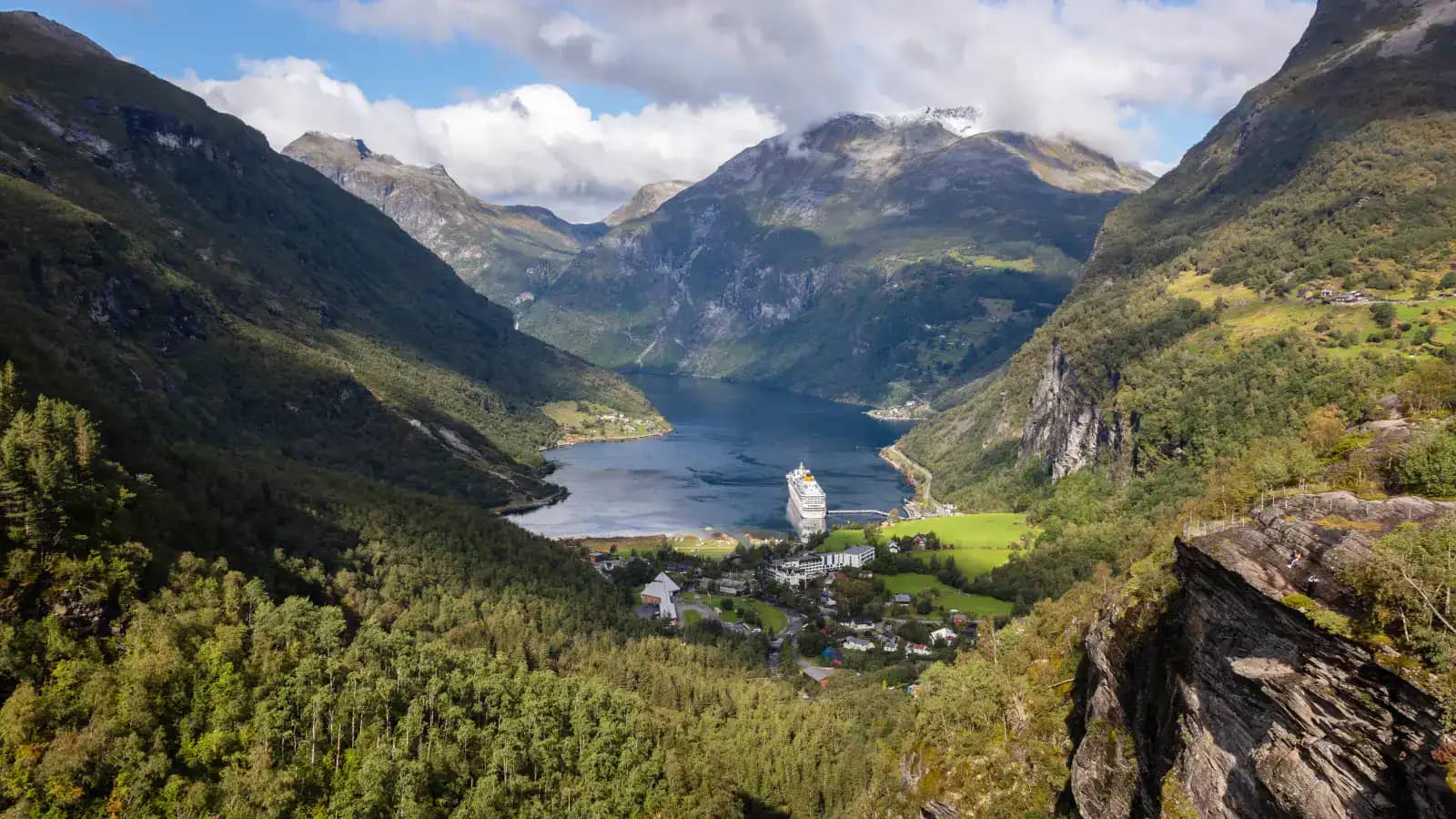
Norway with kids: attractions, itineraries and family travel tips

Norway with kids suits families who enjoy trains, ferries, hands-on museums and outdoor time, and who are willing to leave large parts of the country for another trip. Five days is enough for Oslo. Seven days can combine Oslo and Bergen. With ten days, add either two nights around Flam or a Lillehammer family stop, but not both.
Distance is the main difficulty. Oslo, Bergen, Stavanger, Kristiansand and Tromso are not a compact circuit, even when a map makes them look connected. Weather can also change a mountain or fjord day. Children aged about six to fourteen fit the Oslo, Bergen and railway route most easily. With babies or toddlers, use fewer bases, keep a carrier as backup for the stroller and give every long transfer its own day.
The ten attractions below are route choices, not a collection challenge. The core first trip uses Oslo and Bergen. Flam, Lillehammer, Kristiansand, Stavanger and Tromso are alternatives for a particular season or family interest.
Norway family trip at a glance
| Decision | Practical answer |
|---|---|
| Best first-trip length | Seven days for Oslo and Bergen; ten days if the family wants a slower fjord or Lillehammer branch |
| Best ages for the core route | About 6 to 14; younger children need fewer transfers and one dependable indoor pause each day |
| Car needed? | No for Oslo, Bergen or the Bergen Line; useful for a focused road route only after confirming the correct child restraint |
| Main planning risk | Adding distant regions because each individual train, ferry or flight looks possible |
| Best daily pace | One fixed booking, one nearby flexible activity and a protected meal or rest block |
| Emergency numbers | 110 fire, 112 police and 113 medical; 116117 for non-life-threatening urgent medical help |
| Water rule | Tap water is safe to drink unless a local notice says otherwise |
| Weather rule | Check Yr for the forecast and Varsom for relevant natural-hazard warnings before an exposed outing |
Cut the map before booking
| Route or base | Strongest family fit | Transport choice | Leave out when |
|---|---|---|---|
| Oslo | Five days, toddlers, first visits and museum-heavy trips | Local transit, ferries and walking | The family wants mostly fjords and will resent several city days |
| Oslo and Bergen | Seven days for a balanced first trip | Bergen Line with a full transfer day | The children struggle with a seven-hour train day even with breaks |
| Oslo, Bergen and Flam | Ten days for rail and fjord scenery | Bergen Line plus the Myrdal and Flam branch | Two extra changes with luggage would outweigh the scenery |
| Oslo and Lillehammer or Hafjell | Five to seven days for a seasonal theme-park or winter focus | Train to Lillehammer, then current local transport | Hunderfossen is outside its relevant operating season |
| Kristiansand, Stavanger or Tromso | A replacement regional holiday with one clear purpose | Direct arrival where practical, then local transport | The plan already contains Oslo, Bergen and Flam in ten days |
The phrase "Norway in a Nutshell" is commonly used for a bookable route that links train, mountain railway, fjord vessel and bus segments. It is not one attraction. A family should inspect the exact changes, luggage plan and current operator timetable instead of treating the name as proof that the day will be easy with a toddler.
Ten Norway attractions compared for families
| Image | Destination or attraction | Best age range | Indoor or outdoor | Recommended visit time | Booking requirement | Best base city |
|---|---|---|---|---|---|---|
 | Norwegian Museum of Science and Technology | 4 to 14 | Indoor | 3 to 5 hours | Advance ticket useful in holidays | Oslo |
 | Fram Museum | 6 to 15 | Indoor | 2 to 3 hours | Advance ticket useful in busy periods | Oslo |
 | Norsk Folkemuseum | 4 to 15 | Mostly outdoor | 2 to 4 hours | General admission can usually be bought on arrival | Oslo |
 | Floibanen and Mount Floyen | 2 to 15 | Outdoor with enclosed ride | 2 to 4 hours | Buy ahead for a fixed busy-day plan | Bergen |
 | VilVite Science Centre | 4 to 14 | Indoor | 3 to 5 hours | Timed ticket useful in rain and holidays | Bergen |
 | Flam Railway | 5 to 15 | Indoor ride with outdoor views | About 2.5 to 4 hours return | Yes in busy travel periods | Flam |
 | Hunderfossen Adventure Park | 3 to 13 | Mostly outdoor | Full day | Yes; confirm season and attraction rules | Lillehammer or Hafjell |
 | Kristiansand Zoo and Amusement Park | 3 to 14 | Mostly outdoor | Full day | Date-specific ticket recommended | Kristiansand |
 | Norwegian Petroleum Museum | 6 to 15 | Indoor | 2 to 3 hours | Usually flexible; check busy-day admission | Stavanger |
 | Polaria | 4 to 14 | Indoor | About 2 hours | Advance ticket useful for a fixed seal session | Tromso |
The age ranges and durations are editorial planning judgments, not admission rules. They account for reading load, ride rules, time outdoors, terrain and the patience required for transport. Current tickets, opening dates, access arrangements and operating conditions belong to the linked official source.
Ten questions families ask about Norway
Public travel discussions repeatedly return to pace, luggage, child seats and weather. The discussion sample is self-selected, so it identifies uncertainty rather than proving what every family prefers. Official transport, government and venue sources settle the operational details below.
- Can Norway in a Nutshell work with a toddler, stroller and suitcase? It can, but only when the adults can handle each transfer, know where the stroller goes and avoid turning the full route into a race. An overnight in Flam is more forgiving than a same-day chain.
- Should the family travel from Oslo to Bergen or Bergen to Oslo? Choose the direction that avoids a rushed arrival flight or a tight onward connection. The scenery does not justify placing a long rail day beside an international departure.
- Is one night in Flam enough? One night can break the route. Two nights provide a weather buffer and a day without packing, which is often more valuable with a young child.
- Is public transport easier than a rental car? Yes for an Oslo and Bergen trip. A car becomes useful when the route is deliberately rural and the family can confirm child-seat, ferry, parking and winter-driving arrangements.
- Can fjords, Lofoten and Tromso fit into seven or ten days? Not as a calm first family trip. Northern Norway should replace the southern route, not sit on top of it.
- How many bases are realistic with small children? One base in five days, two in seven days and no more than three in ten days is a useful ceiling. A two-night stay is still only one full unpacked day.
- Should a family bring or rent child seats? Confirm that a seat is approved for use in Norway and fits the vehicle. Do not assume a taxi, tour bus or rental desk will have the correct size without a written reservation.
- Does the Bergen Line have room for a stroller? Vy permits one stroller per adult free of charge, subject to space, and says Bergen Line stroller space should be reserved. Fold it when staff require it and keep essential child items in a separate small bag.
- Which activities still work in heavy rain? Oslo's science and polar museums, VilVite in Bergen, the Petroleum Museum in Stavanger and Polaria in Tromso are useful indoor anchors. A rain plan should be in the same base, not a distant rescue trip.
- Can a baby join a northern-lights trip? Tour conditions, temperatures, road time and child-seat availability vary. Ask the operator directly and be ready to skip a late outing when sleep, cold or road conditions make it a poor fit.
Oslo: three family days without changing hotels
Oslo is the easiest place to absorb a delayed arrival or a rainy morning. The science museum sits north of the centre. Fram and Norsk Folkemuseum are both on Bygdoy and can share a day only when the children still have energy after the first stop.
Norwegian Museum of Science and Technology
Children operate exhibits about energy, industry, communication, medicine and transport rather than moving through a silent object collection. Ages four to fourteen have the widest fit. Allow three to five hours, but choose two or three exhibition themes before arrival so a preschooler is not asked to finish the whole building.
The museum publishes stroller-friendly and wheelchair-accessible routes. Its visitor map identifies toilets and a baby room, and the building has places to sit and pause between galleries. Check the current food service before relying on a full meal, and carry a small snack that complies with the museum's rules.
An advance ticket is useful during school holidays or a wet weekend. This is an indoor weather anchor, which also means rain can make it busier. The museum schedules its Technical MiniMuseum for ages zero to six to open in autumn 2026; do not build a toddler visit around it until the museum confirms that it has opened.
Kjelsas is the nearest useful rail and local-transit area. Check the current journey in Entur because engineering work or a replacement bus can change the final approach. Use the official directions and accessibility information before travel. Official details checked August 28, 2026.
Fram Museum
Children explore polar history, see the ship Fram and learn how crews lived during long expeditions. Ages six to fifteen are most likely to follow the story as well as enjoy the scale of the vessel. Allow two to three hours. A younger child may need the visit shortened after the first ship interior.
The museum building is wheelchair accessible and wheelchairs are available, but boarding and moving through historic ship interiors can involve steps and narrow spaces. Do not describe every part of the ship as step-free. Published facilities include toilets, lockers, a museum map and a cafe; confirm current changing facilities directly when that is essential.
Buying ahead helps on a busy summer or cruise-ship day. The museum is indoors, though the transfer between nearby Bygdoy venues is exposed to rain and wind. If a child is tired after Fram, use the cafe and waterfront rather than forcing a second paid museum.
Bus 30 and the seasonal passenger ferry serve Bygdoy, with the useful stop depending on the current service. A ferry is part of the outing, but it should not be the only plan when wind or schedule changes matter. Check the official plan your visit page and Entur before leaving. Official details checked August 28, 2026.
Norsk Folkemuseum
Children move through an open-air collection of historic buildings, farm areas and changing demonstrations, with Gol Stave Church as one visible landmark. Ages four to fifteen can engage at different levels. The museum recommends allowing roughly two to four hours, and a family interested in living history may stay longer.
Main paths include gravel and gradients, and many protected historic buildings cannot offer the same access as a modern museum. A sturdy stroller handles the outdoor route better than a small-wheeled model, while a carrier helps at thresholds and narrow interiors. The visitor centre has toilets and changing facilities, and the site publishes a cafe, picnic areas and seating.
General admission can often be bought on arrival, but seasonal activities and busy summer dates deserve a current check. Rain changes the value of the outdoor route, and some buildings or demonstrations operate on limited calendars. Pair it with Fram only after checking the children, weather and closing time.
Bus 30 stops at Folkemuseet. The seasonal ferry requires an additional walk, so it is not automatically the easier stroller choice. Use the museum's current visit guide for the program, access and food status. Official details checked August 28, 2026.
Bergen and the fjord branch
Bergen needs at least two nights because a late arrival and an early departure leave almost no usable weather window. Floyen and VilVite answer opposite conditions. Flam is a separate base or a deliberate railway stop, not an afternoon detour from central Bergen.
Floibanen and Mount Floyen
Children ride the funicular, use the playground and follow short forest routes around the upper station. The official site also highlights the troll forest and resident goats when available. Ages two to fifteen can enjoy different parts of the outing. Allow two to four hours without assuming that every family needs a long hike.
Floibanen says all stations accommodate prams and wheelchairs, but only a limited number fit on each departure. The upper area has toilets and changing facilities. Choose wide, signed paths that match the stroller and weather instead of assuming every trail on Mount Floyen is accessible. Food, benches and shelter options vary by area and season.
Tickets can be bought on the day, although advance purchase reduces one queue when the itinerary is fixed. The site identifies roughly 10:00 to 14:00 as a busy period. Wind, rain, ice or low cloud can change both the comfort and the view, so do not make the funicular the only acceptable outcome for the day.
The lower station is a short uphill walk from Bergen's central harbour area. Use local transit only if it genuinely reduces the climb with luggage or a tired child. Check the official Floibanen questions and access page for current operations. Official details checked August 28, 2026.
VilVite Science Centre
Children test exhibits through movement, water, energy, health and problem-solving activities. Ages four to fourteen have the strongest fit, though a younger sibling can use a shorter route. Allow three to five hours and plan a meal break before attention disappears.
Most of the centre is on one level, with a lift for other areas. VilVite publishes an accessible toilet, changing facilities, seating, quiet areas, hearing protection and stroller access through the exhibition. Its cafe and restrooms sit on the same level, which makes the centre a workable long indoor stop.
A timed ticket is useful during school holidays and on a day when rain sends families indoors. Not every demonstration is continuous, so check the program rather than promising a particular show. Families with sensory needs can use the published quiet spaces and hearing protection but should still expect active, noisy exhibits.
Florida is the nearest useful light-rail and bus stop, followed by a short walk. Use Skyss or Entur for the current connection. The centre's official plan your visit page covers access, facilities and current admission. Official details checked August 28, 2026.
Flam Railway
Children watch the valley, waterfalls, tunnels and steep mountain landscape from the train between Flam and Myrdal. Ages five to fifteen are most likely to remain engaged for the full ride, although a train-focused toddler may also enjoy it. The journey is about 60 minutes each way; allow roughly two and a half to four hours for a return outing and platform time.
Vy permits one stroller per adult free of charge subject to space and asks Bergen Line passengers to reserve stroller space. The exact rolling stock and platform handoff matter, so ask the operator about a large stroller, wheelchair or assistance instead of assuming staff can move it through every change. Flam station has lockers, and the free railway museum beside it offers a short indoor waiting option.
Popular departures can sell out, so reserve the rail segment before fixing a fjord connection or hotel. Low cloud or heavy rain can obscure views, and a tight chain of rail, vessel and bus tickets leaves little recovery time. An overnight in Flam turns a delay into an inconvenience rather than a missed sequence.
Flam station is the transport stop and Myrdal is the connection to the Bergen Line. Check each segment with the operator that sells the ticket. Use the official Flam Railway technical information and current Vy or Entur schedule. Official details checked August 28, 2026.
Regional alternatives that replace part of the core route
Each attraction below can justify its own base. None should be inserted merely because Norway looks incomplete without the south coast, Stavanger or the Arctic.
Hunderfossen Adventure Park
Children use storybook, ride and play attractions built around Norwegian tales and the large park troll. The most useful age range is about three to thirteen, but height and accompaniment rules decide individual rides. Allow a full day, with a slower start after any travel day.
The park describes its main paths as wide, paved and relatively flat, with alternative routes around steeper sections. That suggests a practical stroller route, but the current English FAQ does not publish a blanket stroller rule, so confirm it before the visit. Accessible toilets and reservable wheelchairs are published; changing facilities are not confirmed on that page. Families may bring food, and the park lists several food outlets. A mobility-friendly park route does not mean every ride is step-free.
Book only after confirming the operating season, daily calendar and ride rules. Much of the day is outdoors, so cold rain changes the pace even when the park remains open. Carry layers and give younger children a warm indoor or seated pause instead of trying to recover value from every ride.
Hunderfossen station is the nearest rail reference, while local transport and park access vary by season. A taxi or hotel transfer may still need a correctly reserved child seat. Use the official Hunderfossen questions page and Entur for the travel date. Official details checked August 28, 2026.
Kristiansand Zoo and Amusement Park
Children move between animal areas, themed play and seasonal rides or water activities. Ages three to fourteen have the broadest fit. The site is large enough for a full day, and a family should select a few zones rather than promise every enclosure and show.
Wheelchairs can be rented and wheelchair spaces at shows may be limited. Strollers work across much of the park but are not permitted inside some tents or controlled areas, so use the current map and staff instructions. Toilets, food outlets and family facilities are spread across the grounds; place a meal and changing stop into the route before crossing to a distant zone.
The park operates across the year, but the program, rides and water park are seasonal. Date-specific tickets are the safer choice for a fixed holiday day. Sun, rain and crowds affect a mostly outdoor visit, and show capacity can disappear before the family reaches the entrance.
Dyreparken has its own useful bus stop east of central Kristiansand. Use Entur for the current city or airport connection and do not rely on an old seasonal timetable. Review the official ticket information and access questions before booking. Official details checked August 28, 2026.
Norwegian Petroleum Museum
Children use the rescue chute, explore the disaster room and play around an offshore-platform setting while older visitors examine how petroleum shaped modern Norway. Ages six to fifteen have the clearest fit. Allow two to three hours, with additional time only when the children are reading the full exhibition.
The museum publishes wheelchair-adapted exhibitions and toilets and can lend a wheelchair. Seating and family activity areas make it a practical indoor stop. The restaurant was awaiting a new operator when researched, so do not plan a meal there without checking the current museum notice.
Admission is usually a flexible city-day decision, but a rainy weekend or group visit can increase demand. The mostly indoor route works in poor weather, while the exposed waterfront approach can be wet and windy. Confirm any temporary gallery closure before using it as the only Stavanger plan.
The museum is on the central Stavanger waterfront and can be reached on foot from the station or nearby bus stops. Families arriving with luggage should store it before the museum rather than assume a large bag will be accepted. Use the official visit page for current access and food information. Official details checked August 28, 2026.
Polaria
Children watch seal sessions, learn about Arctic marine life and move through exhibits about the polar environment. Ages four to fourteen have the broadest fit, and the standard visit is suitable across ages when the child can handle the darkened exhibition atmosphere. Allow about two hours.
Polaria permits strollers and publishes ramps, a lift, wheelchair access and seating. Its current FAQ does not confirm a changing facility or private breastfeeding room. Reception sells drinks, ice cream, light snacks and baked goods, while the main cafe is closed, so do not count on a full lunch inside.
An advance ticket is useful when a seal session anchors a short winter day. Indoor conditions make Polaria a strong weather fallback, although a popular session can feel crowded. Separate animal encounters have their own age, access and booking rules and should not be confused with standard admission.
Polaria is about a five-minute walk from Tromso's tourist-information area, with current bus options shown in Entur. Winter pavement can still be icy during a short walk. Check the official plan your visit page for sessions, access and current food service. Official details checked August 28, 2026.
Five, seven and ten-day Norway family itineraries
These routes protect sleep, meals and weather changes. They assume the family arrives the evening before day one or treats day one as an arrival day. A late flight should remove an activity, not remove the rest block.
Five days: Oslo without a transfer race
Day 1: Arrive, eat near the hotel and take one short neighbourhood walk. Do not prepay a major attraction beside an uncertain flight.
Day 2: Use the Norwegian Museum of Science and Technology as the main visit. Keep the late afternoon free for a playground, nap or early meal.
Day 3: Travel to Bygdoy for Fram Museum. Add a waterfront pause, and visit Norsk Folkemuseum only if the children have enough time and energy.
Day 4: Choose Norsk Folkemuseum if it was skipped, or use a flexible central Oslo day. Keep an indoor substitute ready when rain makes an open-air visit poor value.
Day 5: Leave the morning lightly scheduled so packing and the airport or rail transfer do not compete with one last ticket.
Seven days: Oslo and Bergen with one full rail day
Days 1 to 3: Follow the first three Oslo days above. Put the most weather-sensitive Bygdoy plan on the better forecast day.
Day 4: Take the Bergen Line. Vy describes the direct Oslo to Bergen journey as roughly seven hours, with route schedules varying. Reserve family and stroller space where available, carry a meal and treat the train as the day's main activity.
Day 5: Ride Floibanen outside the busiest period when weather is suitable, then use the upper paths and playground at the child's pace.
Day 6: Use VilVite as the fixed indoor visit. If the weather is better than expected, swap days five and six rather than crossing the city repeatedly.
Day 7: Keep a slow morning and leave enough time for the airport light rail or onward train. The family gains more from a calm departure than from a distant final attraction.
Ten days: Oslo, Bergen and either Flam or Lillehammer
Days 1 to 3: Stay in Oslo, using one science day and one Bygdoy day with a recovery block.
Day 4: Travel toward Bergen or Flam. Do not combine an early hotel checkout, the full scenic route and a late child bedtime unless every change has been checked.
Days 5 and 6: Use two nights in Flam for the railway, a fjord segment chosen for current conditions and an unpacked weather-buffer day. Alternatively, omit Flam and spend these nights around Lillehammer or Hafjell when Hunderfossen's current season fits the trip.
Day 7: Continue to Bergen or return to the main rail corridor. This is a transfer day, not a spare attraction day.
Days 8 and 9: Use Floibanen on the clearer day and VilVite on the wetter day. Keep one unbooked afternoon for laundry, food shopping or rest.
Day 10: Depart from Bergen when the air itinerary allows. Backtracking to Oslo consumes time and should be a price or flight decision, not the default.
Kristiansand, Stavanger and Tromso do not belong on top of this ten-day route. Replace Bergen and Flam with one of those bases when the zoo, petroleum story or Arctic setting is the family's main reason for travelling.
Choosing trains, ferries or a family car in Norway
Train, public transport or rental car?
| Trip shape | Best starting choice | Why | Main check |
|---|---|---|---|
| Oslo only | Ruter and walking, planned through Entur | No parking or child-seat problem in the central route | Step-free path and stroller space on the actual service |
| Oslo to Bergen | Vy train | Direct city-centre link and no one needs to drive | Reserved seats, family carriage availability, stroller space and food |
| Oslo, Bergen and Flam | Train and booked fjord transport | The route itself is part of the trip | Every transfer, baggage handoff and last departure |
| Lillehammer branch | Train plus current local transfer | Avoids a long drive before a park day | Seasonal local service and any taxi child seat |
| Rural road trip | Rental car | Useful when the chosen places do not align with rail | Correct restraints, ferry bookings, weather, parking and realistic drive time |
Entur brings Norwegian public transport modes and counties into one journey planner. It is the best first check, but it does not make every operator's ticket, stroller rule or disruption identical. Buy through the operator specified for the journey and keep the current ticket available offline.
Bergen Line, luggage and strollers
Vy says the Oslo to Bergen trip usually takes about 6.5 to 7.5 hours and offers several daily departures. The family carriage on relevant services includes a play area, changing room and pram space, but it is limited inventory rather than a guarantee on every train.
One stroller per adult travels free subject to space. Vy asks travelers to reserve stroller space on the Bergen Line and says a folded stroller may be treated as hand luggage. Its conditions allow up to three pieces and 30 kg per passenger, including prams, while another operator can apply different rules. Put food, medicine, one layer and changing supplies in a bag that stays with the child if the larger stroller is stored elsewhere.
Norway restraint rules for children
The Norwegian Public Roads Administration says the driver is responsible for passengers under 15 being correctly restrained. Children under 135 cm must use an approved child restraint. Children between 135 and 150 cm must use an approved restraint when one is available in the vehicle. A rear-facing seat is required for children under 15 months, and an active front airbag cannot be used in front of a rear-facing child seat.
Check the official Norwegian child car-safety rules for the approval label and current details. A rule that describes the minimum does not prove that a rental seat fits the child or that a taxi will supply it. Reserve the correct category in writing and inspect the seat before travel.
Norwegian road distances need more time than the map suggests. Ferries, mountain roads, tunnels, weather, charging and child breaks can turn a short-looking route into the day. The official Vegvesen traffic app and road service are more useful than a fixed blog estimate when conditions change.
Oslo and Bergen airport transfers
Flytoget advertises a 19-minute airport express trip between Oslo Airport and the city centre, with children under 16 travelling free when accompanied by an adult under its current conditions. That is the train segment, not the complete aircraft-to-hotel time. Add baggage, border formalities when applicable, walking, the train wait and the final hotel connection.
Bergen Airport connects to the centre on Skyss light-rail Line 1. Use the current Skyss or Entur planner because route works and service notices can alter a saved journey. A stroller, several bags and a sleeping child may justify a taxi, but only after the required child restraint is confirmed.
Norway family logistics that alter the itinerary
Seasons, daylight and school-holiday crowds
Summer offers long daylight and the broadest transport and attraction calendars, but it also brings peak demand on scenic railways, fjord vessels and family venues. Spring and autumn need stronger rain and closure backups. Winter can suit a deliberate Oslo, Lillehammer or Tromso trip, but short daylight, ice and mountain-road conditions make a summer itinerary poor winter copy.
Check the school-holiday calendar that affects the actual region and date, then inspect each venue. A nationally famous holiday week can fill trains before a small museum looks crowded. Book the scarce transport first and leave an ordinary indoor museum flexible.
Meals, water and daily pace
Norway's meal rhythm may place dinner earlier than families expect in parts of southern Europe, but kitchen hours differ by venue and town. On transfer days, carry a simple child-approved meal rather than depending on one station connection. At attractions, use the published cafe and picnic rules instead of assuming outside food is accepted indoors.
Official tourism guidance says Norwegian tap water is safe to drink. Refill bottles unless a local authority or accommodation posts a temporary notice. A bottle, weather layer and snack should still stay in the day bag because an open mountain area is not the place to discover that the next service is closed.
Medical help, pharmacies and emergency numbers in Norway
Call 113 for a life-threatening medical emergency, 112 for police and 110 for fire. For urgent medical help that is not life-threatening, Helsenorge directs visitors to the out-of-hours medical service at 116117. Save the numbers separately from the phone contact list so another adult or older child can find them.
Helsenorge explains that visitor eligibility and charges depend on residence, documentation and the care required. Travel insurance remains important. Pharmacies are marked apotek; opening hours can be limited outside larger centres, so carry enough prescription medicine in original packaging and do not leave a refill until a rural travel day.
Rain, cold, sun and natural hazards
Use Yr for place-specific forecasts and Varsom for relevant avalanche, flood, ice and landslide warnings. The Norwegian emergency-alert service can send serious public warnings to compatible phones in the affected area without requiring a separate app. These tools support a decision; they do not make a trail, road or fjord departure safe by themselves.
Pack layers and rain protection even in summer. In winter, account for darkness and icy pavement. In the mountains, follow the Norwegian mountain-safety code, turn around when conditions or a child's energy changes and keep a lower-exposure alternative in the same base.
Where step-free access ends
Modern museums and funicular stations can publish strong step-free support while historic ships, protected buildings, mountain paths and snow-covered streets remain difficult. Ask about the exact route, not just whether a venue uses the word accessible. A stroller-friendly main path does not establish that every exhibit, historic doorway, ride or trail is suitable.
Families needing a wheelchair, quiet entry, assistance, changing facility or reserved space should contact the venue before buying a transport chain around it. Keep the reply with the booking and allow enough time to use the supported entrance.
Useful Norway travel apps
| App or service | Useful family job | Important limit |
|---|---|---|
| Entur | Plan rail, bus, ferry, metro and other public transport across Norway | Ticketing and stroller conditions can still belong to the operator |
| Vy | Book relevant trains, manage tickets and check Bergen Line information | Family carriage and stroller space are limited and service-specific |
| Ruter | Plan Oslo public transport | It does not cover every Norwegian local network as its own ticket system |
| Skyss | Plan Bergen-area light rail, buses and relevant local transport | Current works and service notices can change the saved route |
| Yr | Check a place-specific forecast | A forecast is not a mountain or marine safety clearance |
| Vegvesen trafikk | Check road, tunnel, ferry and driving conditions | It does not replace the rental company's vehicle and restraint checks |
| Fairytale Finder | Find child-focused road-trip stops and transfer a planned route to a map app | Useful for a deliberate family road trip; it does not replace Entur, Vegvesen or operator checks |
| Varsom | Review current natural-hazard warnings and planning guidance | The family must still match the outing to ability and local conditions |
| Offline maps | Save the hotel, stations, pharmacies and meeting points | Download the area before a rural or underground segment |
| Translation tools | Read short notices or explain a simple need | Use staff, emergency services or a qualified interpreter for critical medical or legal communication |
Download the core tickets, maps, hotel address and operator contacts before a long train or fjord day. Give older children the name of the next stop and one offline meeting point rather than relying entirely on a group chat.
Keeping tickets and maps available between signal gaps
Mobile data helps a family reload an Entur route, show a ticket, check Yr, open a venue message and find the nearest pharmacy. It does not replace offline copies. Mountain valleys, tunnels, ferries and busy venues can interrupt coverage, and a depleted battery is just as disruptive as a weak signal.
The live Roaming eSIM catalog returned 15 Norway packages when checked on August 28, 2026. Fourteen currently support top-up and one does not, so reloadability must be checked on the selected card rather than assumed. Fixed and daily allowance types are both present. The selected product card remains the source of truth for allowance, validity, operator label, speed treatment, hotspot support, calls, SMS and start timing.
Use the travel data calculator before choosing a package, then check when to install an eSIM and whether the phone supports eSIM. A route that continues into Sweden, Denmark or another country should compare a country eSIM with a regional eSIM against the actual coverage list.
Roaming eSIM and the airport-store alternative
The Airalo and WHSmith North America story added trained eSIM help at 90 participating US airport stores. Its public announcement did not publish a complete airport and terminal list or one airport price. A confirmed counter has the advantage when a traveler wants face-to-face setup help and the shop is on the route.
Roaming eSIM is the better fit for this Norway trip when the family wants to prepare before reaching the airport. The family can compare live Norway and regional cards, check an unlocked compatible phone, and use the public support hub to see whether the chosen package starts at installation or on its first supported network connection. That leaves time to install on dependable WiFi when the package instructions permit, without first locating a participating US airport store. This is not a universal price, network or performance claim. The separate Airalo airport-store analysis documents the rollout limits.
Roaming eSIM options for this Norway route
Choose the Norway card for a Norway-only trip. Compare Europe 33 or Europe when the itinerary crosses borders, and use the broader global option only when its listed countries match the full journey. The page stops at four live cards so the family guide remains focused on travel decisions.
Related Nordic family and planning guides
Families building a longer Nordic journey can compare this route with Denmark with kids or Iceland with kids. Keep the country itineraries separate: Oslo, Bergen and Flam already use the full ten days, while adding Copenhagen or Iceland requires more time or a different route.