Bhutan with kids: attractions, itineraries and family travel tips

Bhutan with kids is best suited to families with school-age children who enjoy museums, monasteries, wildlife and walking, and who can tolerate winding road journeys. Five days is enough for Paro and Thimphu. Seven days can add Punakha without rushing. Ten days gives Phobjikha two proper nights. The main difficulty is the combination of a nightly Sustainable Development Fee, slow valley-to-valley roads and altitude, not a shortage of things to do.
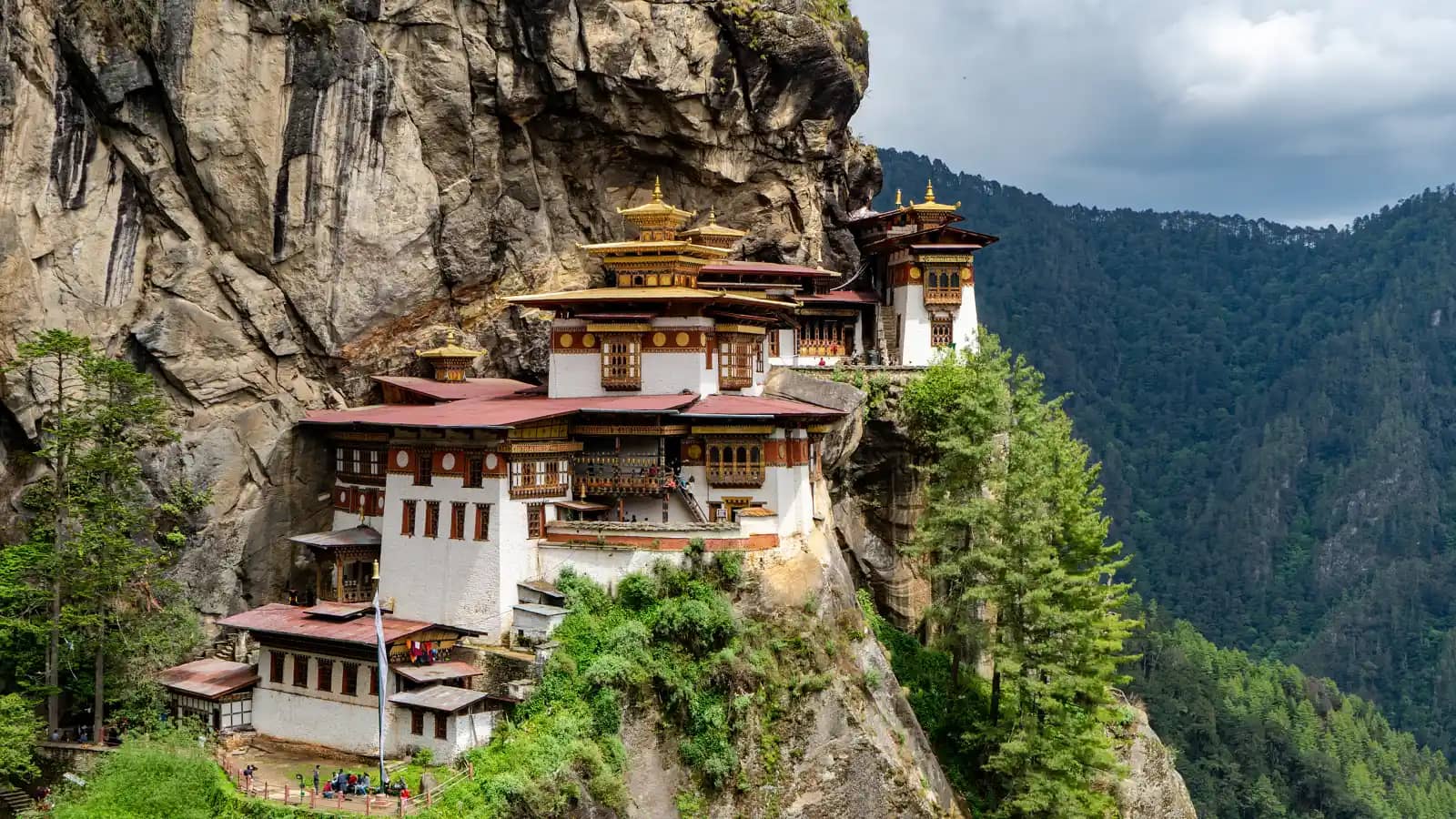
Decide whether Tiger's Nest is right for each child before building the trip around it. The monastery sits at the end of a steep mountain route with stairs and no stroller access. A family can still have a complete Bhutan trip without reaching it: Paro's museum and dzong, Thimphu's textile and wildlife stops, and a slower Punakha route all stand on their own.
Operational details were checked against Bhutanese tourism, district, museum, transport, health, road-safety and product sources on August 29, 2026. Ages and visit lengths are editorial planning estimates rather than venue rules. Confirm the current guide, entry, weather and facility position with a certified provider before travel.
The Bhutan family budget gate
The nightly levy changes the value of every extra buffer day. At this review, Bhutan's official tourism FAQ listed these Sustainable Development Fee rates:
| Traveller | SDF per night |
|---|---|
| Adult, except Indian nationals | USD 100 |
| Child from age 6 until before age 12, except Indian nationals | USD 50 |
| Child who has not yet turned 6 | No SDF |
| Indian adult | Nu. or INR 1,200 |
| Indian child from age 6 until before age 12 | Nu. or INR 600 |
Most visitors also need a visa, and the official page lists a one-off USD 40 application fee. Indian visitors use a permit; Bangladeshi and Maldivian visitors follow separate visa processes described by the tourism authority. Rules, concessions and temporary incentives can change, so calculate the family total in the official portal before booking non-refundable flights.
Bhutan family decisions at a glance
| Decision | Practical starting point |
|---|---|
| Useful first trip | Paro, Thimphu and Punakha over seven days |
| Best ages | Roughly 7 and older for road days, cultural visits and optional hikes |
| Car needed? | Hire a vehicle and driver; visitor self-drive rentals are not available |
| Guide needed? | Official tourism guidance says visitors must be accompanied by a certified local guide |
| Main difficulty | Nightly SDF, winding roads, changing mountain weather and altitude |
| Tiger's Nest | Optional; assess fitness, stairs, weather and altitude child by child |
| Child-restraint position | WHO records no national child-restraint use law; reserve the right rear restraint anyway |
| Emergency numbers | Fire 110, ambulance 112, police 113 |
Which Bhutan stops fit your children?
| Image | Destination | Best ages | Indoor or outdoor | Allow | Book ahead? | Best base |
|---|---|---|---|---|---|---|
 | National Museum of Bhutan | 7 and older | Indoor museum in a historic building | 90 minutes | Confirm holiday closure | Paro |
 | Rinpung Dzong | 7 and older | Courtyards and sacred interiors | 60 to 90 minutes | Guide and entry check | Paro |
 | Paro Taktsang | Fit older children | Steep outdoor hike and monastery | Most of a day | Yes | Paro |
 | Motithang Takin Preserve | 4 and older | Outdoor wildlife paths | 60 to 90 minutes | Check current entry | Thimphu |
 | Royal Textile Academy | 7 and older | Indoor museum | 60 to 90 minutes | Check working day | Thimphu |
 | Buddha Dordenma | 6 and older | Outdoor plaza and sacred interior | 60 to 90 minutes | Confirm access | Thimphu |
 | Punakha Dzong | 7 and older | Historic courtyards and interiors | 90 minutes | Guide and entry check | Punakha |
 | Gangtey Nature Trail | 8 and older | Four to five-kilometre valley trail | 2 to 3 hours | Arrange a guide and pickup | Phobjikha |
The table is a route filter, not a promise of step-free access or full facilities. Ask for the exact entrance, toilet, changing, food, shade, seating and current trail conditions that apply on the planned day.
Ten questions families ask before booking
Public travel discussions keep returning to these practical problems. The questions identify real uncertainty; the answers below use current official sources.
- Is Bhutan realistic with children under five? It can be, but the SDF exemption does not remove the road, restraint, nap and medical constraints. Keep to Paro and Thimphu and skip the long circuit.
- How many nights justify the SDF? Seven nights is a useful first-trip balance for Paro, Thimphu and Punakha. Five works if changing hotels is limited; ten is better for Phobjikha.
- Do we have to buy a fixed tour package? No. Official guidance says travellers can book independently, but a certified guide is mandatory and hired driver transport is the practical default.
- Can a child hike to Tiger's Nest? Age alone cannot answer it. Consider current fitness, altitude response, the steep return, stairs, weather and whether the child can walk the whole route without being carried unsafely.
- Should Tiger's Nest be on arrival day? No. Use the first day for food, rest and a low-effort Paro stop. Put the hike after the family has settled and keep a spare day.
- How do we manage motion sickness? Break the Paro-Thimphu-Punakha route into separate nights, travel in daylight and discuss child-appropriate medicine with a clinician before the trip.
- Is Phobjikha worth the extra road time? Yes for a ten-day nature-focused trip. It is poor value as a one-night detour squeezed between Punakha and an international flight.
- Can we rely on a child seat from a driver? Only after the exact rear restraint, size, installation and working seatbelt have been confirmed in writing. Bring one when that certainty is unavailable.
- Will children find food that is not spicy? Rice, eggs, noodles, vegetables and mild preparations may be available, but ask rather than assuming. Carry familiar snacks for road sections.
- What should we do if weather changes the route? Move the outdoor day, do not chase it with a longer drive, and protect the final Paro night before the flight.
Paro: culture before the big hike
Paro should get at least two nights at the start and one before departure. The museum and Rinpung Dzong can share a day if the family takes a proper lunch break. Tiger's Nest needs its own day and a weather alternative.
National Museum of Bhutan
Children move through a former watchtower containing thousands of objects, including natural-history material, textiles, religious art and royal or cultural artefacts. School-age children can follow a simple theme such as animals, clothing or tools. Allow about 90 minutes; trying to read every label will outlast most attention spans.
The historic circular building has multiple levels, so a stroller or step-free route needs direct confirmation. The museum says lockers are available for cameras and indoor photography is not permitted. Ask about accessible circulation, toilets, seating, changing space and whether bags or carriers must be stored.
The government museum page lists daily opening with government and local holiday exceptions, but check again before leaving the hotel. Use this as a rain or fatigue option, not as a guaranteed all-weather refuge if roads or the building close.
The museum is above Rinpung Dzong rather than beside central Paro streets. Arrange a driver drop-off at the visitor entrance and do not make a young child climb uphill merely because the two sites look adjacent on a map. Read the official National Museum visitor page. Official details checked August 29, 2026.
Rinpung Dzong
Children enter a working fortress-monastery with courtyards, carved timber and both religious and administrative functions. Ages seven and older are the clearest fit because silence, respectful clothing and restricted areas matter. Allow 60 to 90 minutes with a guide rather than treating the building as a photo stop.
Expect steps, thresholds and uneven historic surfaces. Ask the guide which courtyards can be reached without stairs, where a stroller can be left, and where the nearest toilet, seat, drinking water and changing stop are. Do not assume food is available inside a sacred complex.
Official tourism guidance requires a guide for monuments and dzongs. Confirm current admission, clothing, photography and ceremony restrictions before arrival. Rain can make exterior stone slippery; a festival or official function can also change public access.
Use a driver or taxi to the agreed entrance. The traditional bridge and town approaches may add stairs or a longer walk, so decide whether they suit the child before the vehicle leaves. See the Paro district administration profile of Rinpung Dzong. Official details checked August 29, 2026.
Paro Taktsang, or Tiger's Nest
Children who are ready for the route hike through forest to viewpoints and, if conditions and entry allow, continue through steep stairs to the monastery. This is for fit older children who want the walk, not a compulsory badge for every family. Reserve most of the day and stop at a viewpoint if continuing would turn the descent into a problem.
There is no stroller route. The path is uneven and can be dusty, muddy or crowded, while the final approach includes many stairs. Confirm toilet, water, food, seating and bag-storage points with the guide before starting. An adult carrying a tired child on a steep descent is not a fallback plan.
Arrange the certified guide, transport and current monument entry in advance. The official district page mentions horses, but that does not establish a universal child, route, weather or safety policy. Do not promise a pony solution. Rain, ice, heat, low cloud or altitude symptoms are valid reasons to turn around.
The trailhead is reached by road from Paro; there is no useful public-transport stop at the monastery. Agree on the driver pickup and emergency communication plan before leaving the vehicle. Read the official Paro district account of Taktshang. Official details checked August 29, 2026.
Thimphu: wildlife, textiles and an open hillside
Thimphu works as a two-night base. Put the outdoor preserve early, use the Textile Academy around midday, and move Buddha Dordenma when cloud or rain removes the value of the view.
Motithang Takin Preserve
Children look for Bhutan's national animal along a wooded hillside rather than watching a staged show. The short format suits ages four and older, especially after a museum day. Allow 60 to 90 minutes, with no promise that animals will stand close to the path.
Paths, slopes and viewing points need checking for stroller or wheelchair use. Ask about the current surface, steep sections, toilets, shade, seats, snacks and baby-changing space. Keep children back from fences and do not feed or touch animals.
Check admission and opening information through the guide on the morning of the visit. Rain can make paths muddy, while mist, vegetation and animal movement affect sightings. Treat seeing a takin as likely purpose, not a guaranteed performance.
The preserve is outside central Thimphu; the tourism authority describes it as about a 15-minute drive from the city centre. Use a driver rather than expecting a city bus at the gate. See the official family-travel profile of the preserve. Official details checked August 29, 2026.
Royal Textile Academy
Children compare colours, weaving structures and ceremonial clothing, then look for how a pattern is built rather than walking past cases. Ages seven and older usually get the most from the collection. Allow 60 to 90 minutes and ask whether a demonstration or education activity is actually running that day.
The museum is a stronger bad-weather choice than an exposed hillside, but accessibility should still be confirmed. Ask about lifts or ramps, stroller storage, toilets, seating, food and changing facilities. The academy is a museum, not a child play space, so set a small observation task.
The first-party museum page lists office hours and Monday-to-Saturday working days. It does not guarantee every gallery schedule on every date. Check admission, holidays, photography and any guided session before travelling; avoid copying an old opening time into the itinerary.
The academy is in Thimphu and is practical by driver or taxi from a central base. Use the Textile Museum at the Royal Textile Academy page for current contact details. Official details checked August 29, 2026.
Buddha Dordenma
Children see the large seated Buddha from the approach, walk the plaza and learn why the interior contains many smaller statues. Ages six and older can use a one-hour visit well. Keep it short if the family has already spent the morning in a museum or dzong.
The road reaches the complex, but the plaza, interior thresholds and hillside paths may still create mobility gaps. Ask about the nearest drop-off, step-free entrance, toilets, seating, drinking water and changing space. The open site has limited shelter in wind or strong sun.
Confirm current interior access, ceremonies, clothing and photography rules. Cloud can remove the valley view and rain can make the large paved areas uncomfortable. A closed interior should not trigger another distant attraction on the same afternoon.
The site is in Kuenselphodrang Nature Park above Thimphu, so a driver is the useful transport connection. The Thimphu district administration page explains the monument and setting. Official details checked August 29, 2026.
Punakha: one major building, not a checklist
Punakha is reached across mountain roads and should be a two-night base in a family itinerary. The dzong is the core visit. Add a short riverside or village stop only if the children still have energy after the transfer.
Punakha Dzong
Children explore a fortress at the meeting of two rivers and can compare its courtyards and painted timber with Rinpung Dzong. Ages seven and older are the best planning fit. Allow about 90 minutes, then leave space for lunch rather than adding the suspension bridge automatically.
Historic stairs, courtyards and thresholds interrupt a stroller route. Ask which entrance is in use, whether any section is step-free, where to store a stroller, and where the nearest toilets, seat, food, water and changing facilities are. River edges require close supervision outside the complex.
A certified guide is required for dzong entry. Confirm admission, clothing, photography and any religious or government closure. Punakha is warmer than Paro at some times of year, but rain, heat and ceremonial crowds can still change the useful visit window.
There is no rail link or urban transit stop. Travel with the same driver used for the inter-valley route and agree on the entrance and pickup point. Read the Punakha district administration profile. Official details checked August 29, 2026.
Phobjikha: add it only when ten days allow
Phobjikha earns its place through a slower landscape day, not a hurried photo between hotels. Stay two nights. In winter, the crane centre can add context, but wildlife timing and centre access must be checked directly.
Gangtey Nature Trail and crane context
Children walk through pine forest and pasture with views toward Gangtey and the Phobjikha landscape. Bhutan's tourism authority describes the nature trail as roughly four to five kilometres and relatively gentle, but that does not mean flat, dry or suitable for every child. Ages eight and older are a reasonable starting point. Allow two to three hours.
This is not a stroller route. Ask the guide about mud, steep or narrow sections, livestock, toilets, food, shelter and pickup access. Carry water, layers and a small snack; do not depend on a cafe appearing at the point a child gets tired.
Arrange the guide and vehicle pickup in advance. Winter crane viewing should use the designated visitor centre or hide and current RSPN guidance, never an approach into roosting habitat. Rain, frost and low cloud can make a shorter valley walk the better decision.
Phobjikha is reached by winding road, not a fast public-transport hop. Sleep in the valley before and after the trail, and never place the return drive on an international departure day. Read the official Gangtey Nature Trail description and the RSPN visitor-centre information. Official details checked August 29, 2026.
Build a five, seven or ten-day Bhutan route
These routes protect arrival time, meals and slower mornings. Road journeys are approximate planning blocks, not timetable promises. Let the driver and guide adjust them for weather, road works and the children in the car.
Five days: Paro and Thimphu only
- Day 1: Arrive in Paro, pre-arranged airport pickup, food and rest. No major hike.
- Day 2: National Museum and Rinpung Dzong with a long lunch gap.
- Day 3: Transfer to Thimphu; visit the Textile Academy if everyone is settled.
- Day 4: Motithang Takin Preserve, rest, then Buddha Dordenma if weather helps.
- Day 5: Return to Paro with a protected airport buffer. Tiger's Nest does not fit responsibly unless a later flight or extra night exists.
Seven days: Paro, Thimphu and Punakha
Use two Paro nights, two Thimphu nights and two Punakha nights, followed by a final Paro night. Put the National Museum and Rinpung Dzong on the first full day. Use the Thimphu stops across one full day. Travel to Punakha in daylight, visit its dzong the next morning, and return to Paro without adding Phobjikha. Tiger's Nest can replace a Paro culture day only if the family is ready, or sit on the last full day with a weather alternative.
Ten days: add two nights in Phobjikha
- Days 1 to 3: Paro arrival, culture day and a movable Tiger's Nest or valley day.
- Days 4 and 5: Thimphu with wildlife, textiles and an unscheduled half-day.
- Days 6 and 7: Punakha transfer and one complete Punakha day.
- Days 8 and 9: Phobjikha transfer, Gangtey Nature Trail or crane-centre visit, and a quiet second night.
- Day 10: Return toward Paro. Add another Paro night if the international flight is early; do not race from Phobjikha to the airport.
Transport, restraints and mountain roads
From Paro airport
Bhutan's tourism authority says taxis wait outside the airport and hotels or tour operators can arrange a transfer; there is no other public transport at the airport. Put the child's restraint, luggage count and meeting point in writing before the flight. Paro weather can affect aviation, so do not place a separate international connection against a tight same-day margin.
Drukair and Bhutan Airlines publish their own baggage rules. The current Drukair page lists cabin and checked allowances by class, while Bhutan Airlines gives separate infant-bag, pushchair and security instructions. Check the operating carrier, route and fare rather than borrowing a number from another airline. Confirm whether a stroller is checked at the counter or gate and how a child seat will be handled.
Driver, guide and journey times
Official guidance says a hired vehicle and driver is the most convenient way to travel, self-drive rental is not available, and visitors must be accompanied by a certified local guide. A visitor bringing an eligible private vehicle across a land border follows different rules and should not be confused with renting a car inside Bhutan.
Map distance is a poor estimate on winding roads. Treat Paro to Thimphu as a transfer block, Thimphu to Punakha as most of a morning, and Punakha to Phobjikha as a substantial road day. The exact time depends on stops, road works, weather and motion sickness. Travel in daylight and give the child a front-facing view only when it is compatible with the correct rear restraint.
Bhutan child-restraint law and the safer decision
WHO's 2023 Bhutan road-safety profile records no national child-restraint use law and no national rule governing children in the front seat. A legal gap is not evidence that an unrestrained journey is safe. CDC advice says to wear a seatbelt, use the back seat and avoid night driving.
Reserve an age- and size-appropriate rear restraint and confirm the vehicle has a working belt that can install it correctly. Ask for a photograph or exact model. If the provider cannot guarantee it, bring a compatible seat and installation instructions. Never treat a lap-held child or a generic cushion as equivalent.
Bhutan logistics to settle before paying
Seasons, monsoon and festival pressure
Bhutan's official tourism FAQ describes spring, summer monsoon, autumn and winter conditions that vary sharply with altitude. Late June or July through late September brings monsoon effects, especially in the south, while frost and snow are common at higher elevations in winter. A national forecast cannot promise the state of one pass or trail.
Spring and autumn can be comfortable for the western valleys, but festivals tighten flights, guides, vehicles and approved accommodation. Book the scarce pieces first: visa or permit, correct restraint, certified guide, driver, flight and family room. Keep outdoor stops movable.
Altitude, road sickness and healthcare
Paro and Thimphu already place a newly arrived family at elevation, and Tiger's Nest goes higher. CDC warns that altitude illness can affect travellers above 8,000 feet and that young children may show only unusual fussiness. Use a quiet arrival day, avoid hard exercise at first, and do not ascend with worsening symptoms. Seek medical advice before travel for a child with relevant heart, lung or other conditions.
Serious emergency care may not be available or meet a family's expected standard, especially away from Thimphu. Carry the medicines your children need, translated allergy information and insurance that covers the route and medical evacuation when appropriate. Police is 113, ambulance 112 and fire 110.
Meals and drinking water
Rice, noodles, eggs, vegetables and mild dishes can make meals manageable, but Bhutanese chilli-and-cheese dishes can be too hot for some children. Ask for a mild preparation and repeat allergy questions at each kitchen. Road stops may have limited choice, so carry familiar snacks without assuming packaged food replaces a meal.
Food and water standards vary. Use sealed or appropriately treated water when safety is uncertain, including for teeth and drink preparation. Avoid untreated freshwater and floodwater. Ask the accommodation about its water source rather than relying on a country-wide tap-water claim.
Accessibility and sacred-site etiquette
No country-wide accessibility label can describe a historic dzong, circular museum, wildlife slope and mountain trail. Request entrance-level information from each venue: drop-off, gradient, steps, doorway width, accessible toilet, seating and evacuation route. A modern road to the gate does not make the interior step-free.
At sacred sites, cover shoulders and knees, remove hats when asked, keep voices low and follow photography restrictions. A guide can explain which rooms are closed and how to move around people who are praying. Prepare children before arrival rather than correcting them after they cross a threshold.
Apps and phone tools worth setting up
- Bhutan visa or permit portal: save the approved documents offline and keep a paper copy with the adult who carries the passports.
- Druk Ride: Bhutan's tourism FAQ names it for booking local drivers, transport providers, flights and tour operators. Verify the provider and restraint separately.
- Drukair or Bhutan Airlines: keep the booking, baggage rules and schedule notices available offline; use the app or first-party site for the operating carrier.
- Weather: ask the guide which Bhutanese forecast or warning source applies to the day's pass and trail. A generic icon is not a road-open notice.
- Offline maps: download Paro, Thimphu, Punakha and Phobjikha, but let the driver follow current road instructions rather than an offline shortcut.
- Translation and notes: download Dzongkha support where available, and store allergies, prescriptions, hotel addresses and emergency numbers in plain text.
- Family messaging: share the driver's contact, guide's contact, accommodation and a meeting point with every connected adult.
- Bank of Bhutan goBoB or MyPay: the tourism authority lists both digital wallets, but setup and international-card use can change. Carry cash as a fallback.
Data for tickets, weather and the next road decision
Families use mobile data in Bhutan for driver messages, guide contact, airline changes, weather checks, maps, translation and document access. The Bhutan Roaming eSIM is the exact-country commercial option. No reviewed Roaming eSIM regional or global catalog record contained BT on August 29, 2026, so this guide shows one product card rather than padding the section with irrelevant plans.
The public catalog returned 11 Bhutan plans. Fixed and daily formats were present, the displayed coverage record listed TashiCell with 4G, and all 11 plans reported top-up support. The public plan speed field displayed 3G/4G. That is catalog evidence, not a promise of signal on every pass, trail or inside every dzong; service depends on the chosen plan, device, terrain, congestion and local network conditions.
That current, destination-specific catalog is Roaming eSIM's useful edge over a generic travel-data news story: the family can inspect the actual destination, data format, listed operator and top-up field before checkout. It is not evidence that Roaming eSIM is always cheaper or faster than every alternative. Estimate usage with the travel data calculator, check phone compatibility, and save the pre-travel installation guide.
Families combining the Himalayas should plan each border and flight separately. The Nepal with kids guide and India with kids guide own their respective country decisions; neither implies a fast or simple land connection to Bhutan.
Review this guide before each major spring and autumn travel period, and immediately after a material SDF, visa, guide, road or airline change.
Hero by Nina R, edited by UnpetitproleX, CC BY 2.0. National Museum, Rinpung Dzong, Taktsang trail, Takin Preserve, Buddha Dordenma and Punakha Dzong by Bernard Gagnon, CC BY-SA 4.0. Royal Textile Academy by Afifa Afrin and Gangtey Gompa by Prof Ranga Sai, CC BY-SA 4.0. Source pages are recorded in article metadata and the research evidence.