Janmashtami Mathura Vrindavan 2026: traffic, darshan and travel
Krishna Janmashtami is observed in Mathura and Vrindavan on Friday, September 4, 2026, with celebrations continuing after midnight into September 5. The special traffic plan is already in force. Current advisories say vehicle controls run from 8 a.m. on September 3 until 9 a.m. on September 5 around the main temple corridors.
The hardest decision is not which temple deserves a visit. It is whether to spend the peak night in Mathura or Vrindavan. Trying to move between both after the evening restrictions begin can turn a short map distance into hours of walking, waiting and uncertain transport.

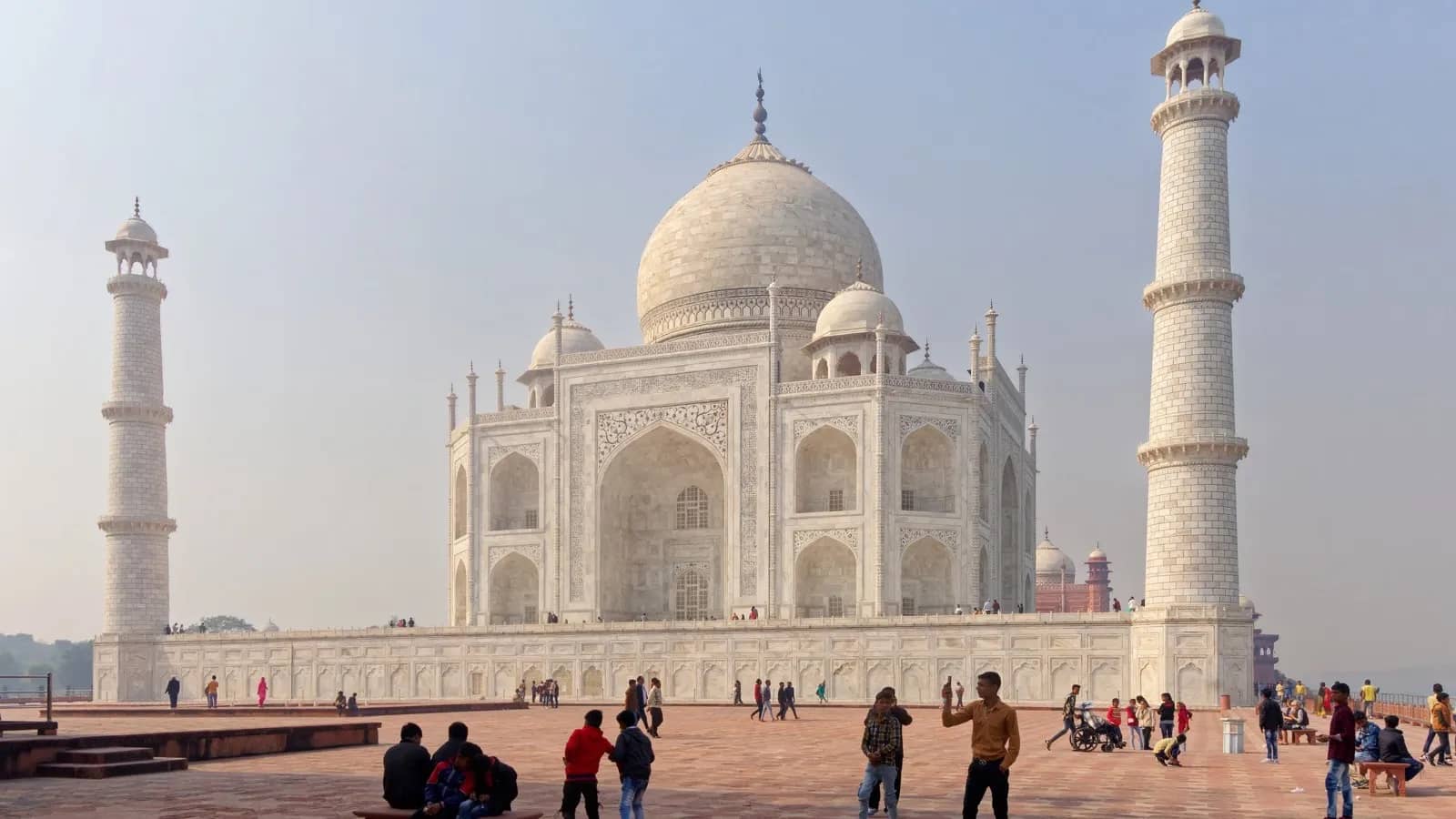
Photo: Shoot stufz via Wikimedia Commons, licensed under CC BY-SA 4.0. The photograph was taken in the Mathura and Vrindavan area on September 28, 2024, not during Janmashtami 2026.
The practical answer: choose Mathura for Shri Krishna Janmabhoomi and the midnight birth celebration, or choose Vrindavan for the Banke Bihari and other temple programs. Do not plan both peak-night centers unless the authorities publish a workable route and you are ready to miss one. Arrive before the late-afternoon pressure, leave the private car at the correct outer parking area and agree on a meeting point that does not depend on a working phone.
This guide was checked at 16:30 WEST on September 3, 2026. Police can close an approach earlier when a holding area fills. Temple access, pass distribution, live-stream links and local transport can also change during the final hours. Follow staff at the barriers even when a map app suggests a shorter route.
Janmashtami 2026 at a glance
| Decision | Current answer |
|---|---|
| Main date in Mathura and Vrindavan | Friday, September 4, with midnight events continuing into September 5 |
| Traffic-control window | 8 a.m. September 3 to 9 a.m. September 5 in current advisories |
| Best Mathura anchor | Shri Krishna Janmabhoomi, with Dwarkadhish Temple and Vishram Ghat only if movement remains practical |
| Best Vrindavan anchor | One temple area, such as Banke Bihari or the Raman Reti and ISKCON side |
| Drive to a temple gate | No. Use the designated outer parking for the direction of arrival |
| Banke Bihari Mangala Aarti | Current 2026 reporting says 1:55 a.m. on September 5 and only 600 pass holders inside |
| Best arrival mode | A confirmed train to Mathura Junction is often easier than taking a car into the controlled zone |
| Family plan | Skip the densest midnight queue with small children, frail relatives or anyone who cannot stand and walk for a long period |
| Phone plan | Save tickets, hotel details, parking location, train status and a meeting point offline |
| Emergency number | 112 |
Why September 4 and September 5 both appear online
Search results show both dates because observance can vary by religious tradition and because the birth celebration crosses midnight. Current Mathura and Vrindavan visitor advisories place the principal local celebration on Friday, September 4, followed by post-midnight worship and September 5 programs.
Do not use a generic calendar entry to decide a specific temple visit. A temple may publish its own sequence, entry method and closing interval. The District Mathura Janmashtami page explains the festival and identifies Mathura and Vrindavan as major centers, but it does not publish a complete 2026 gate schedule.
That missing schedule is important. Treat a precise time from a tour seller as a lead to verify, not permission to enter.
Mathura or Vrindavan for Janmashtami?
Choose Mathura for the birthplace celebration
Mathura is the practical choice when Shri Krishna Janmabhoomi is the reason for the journey. It is also the easier city for a rail arrival because Mathura Junction is a major station. The district travel page lists regular rail and bus connections and places Mathura about 145 kilometres southeast of Delhi and roughly 58 kilometres from Agra.
Build the evening around one central objective. Dwarkadhish Temple and Vishram Ghat may fit earlier in the day, but adding them is conditional on crowd controls and walking time. A list of nearby places is not an itinerary when barriers divide the city.
Choose Vrindavan for Banke Bihari or a temple cluster
Vrindavan suits visitors whose priority is Banke Bihari Temple or the eastern temple cluster around ISKCON and Prem Mandir. These are different sides of the city. Pick one before the busiest evening period rather than attempting every famous temple.
On the Chhatikara approach, current traffic reports say vehicles cannot continue beyond the multilevel parking area. Other approaches, including Rukmini Vihar, Sau Shaiya and Panigaon, can also be stopped or diverted. Expect the last part of the trip to involve walking or an authorized local vehicle when available.
Do not switch cities after the peak begins
Mathura and Vrindavan are close on an ordinary map. Janmashtami changes the calculation. Roads between them feed into controlled areas, autos and e-rickshaws can be held back, and a driver who drops the group may not be able to collect it from the same place.
Choose the night's anchor before leaving the hotel. If the group wants both cities, visit the second one during a quieter daytime window on September 3 or 5, subject to the current temple program.
Current Mathura traffic restrictions
Reports published on September 3 describe restrictions on the main approaches to Shri Krishna Janmabhoomi, including Bhuteshwar, Masani, Deeg Gate, Bharatpur Gate, Chowk Bazaar and Krishnapuri. Buses, four-wheelers, autos, e-rickshaws and two-wheelers can all face controls closer to the core.
The useful rule is simple: navigate to the parking assigned to your arrival direction, not to the temple.
Parking by Mathura approach
| Arrival direction | Parking named in the current plan |
|---|---|
| Yamuna Expressway or Vrindavan side | PMB Polytechnic School and designated Jaisinghpura lots |
| NH-19 near Gokul Restaurant and Masani | ISBT bus stand or Ramlila Ground, as directed |
| NH-19 toward Shri Krishna Janmabhoomi | Mandi complex |
| Dhaulipyau side | Railway Ground |
| Township crossing or Gokul Barrage side | Designated college grounds or Vikas Bazar multilevel parking |
| Govardhan or Mandi crossing side | Parking assigned near the Bhuteshwar and Fire Service approach |
These names help select the correct side of the city. They do not guarantee a vacant space. The district parking directory lists permanent municipal facilities, while the festival plan adds temporary and direction-specific areas. Follow the current police sign rather than crossing town for a parking name saved from an article.
Photograph the parking entrance, zone sign and nearest recognizable landmark. Save the pin offline, but also write the name in a note. A dropped map pin is less useful when roads force a different walking return.
Current Vrindavan traffic restrictions
The clearest confirmed boundary is on the Chhatikara to Vrindavan road: current advisories say no vehicle proceeds beyond the multilevel parking facility during the restriction. Heavy vehicles and, at some controls, four-wheelers are also restricted from the Rukmini Vihar, Sau Shaiya, Vrindavan Cut and Panigaon sides.
Visitors arriving from Delhi by the Yamuna Expressway should not assume Chhatikara remains the only usable entrance. Police may redirect traffic toward another approach as parking fills. Visitors coming from Mathura face the same problem in reverse.
Once parked, ask the officer or marshal which pedestrian corridor is open and where return transport is operating. Do not accept an informal claim that a driver can bypass a barrier.
Train, road and airport choices
Train to Mathura Junction
For many visitors, rail removes the parking problem but not the crowd problem. Check the booking in IRCTC and live running status in NTES before leaving. Save the train number and station exit in a note.
Do not plan a tight return immediately after the midnight celebration. The walk back, controlled station access and platform crowd can consume the buffer. A reserved seat on a later train is more useful than an optimistic taxi estimate.
Driving from Delhi, Noida or Agra
The Yamuna Expressway is a common approach from Delhi and Noida, while NH-19 serves Delhi, Mathura and Agra. Neither road removes the local controls. The final route depends on the parking side assigned by police.
Avoid arriving during the evening surge with a car full of luggage. Hotel access may differ from normal, and a booking address inside a restriction does not grant vehicle entry.
Flying
The district identifies Agra as the nearest airport in ordinary conditions. Delhi has more flight choices but leaves a substantial road or rail transfer. No airport option solves the festival-night last mile.
If arriving on September 4, keep the plan modest. A delayed flight plus a cross-city transfer is not a sound foundation for a midnight temple queue.
Banke Bihari Mangala Aarti: verify the 2026 pass and time
Banke Bihari Temple's standing Janmashtami explainer says Mangala Aarti is held only once a year and gives a 3:30 a.m. time. Current 2026 reporting, however, quotes the court-appointed management committee saying darshan opens at 1:45 a.m., Mangala Aarti begins at 1:55 a.m. on September 5 and only 600 people with committee-issued passes may enter for the Aarti. It also says the ceremony will be live-streamed for the first time.
That is a material conflict between an evergreen temple page and a dated 2026 announcement. Use the current committee announcement for planning, then verify it through the temple's live channel before joining the queue.
Do not buy a so-called VIP or Mangala Aarti pass from a stranger in a message group. The reporting does not describe a general public ticket sale. A screenshot, forwarded PDF or promise from a driver is not evidence permission.
Visitors without an authorized pass should plan around general darshan instructions or the live stream. Waiting outside in the hope that the limit disappears is not a reliable plan.
Visiting with children, older relatives or reduced mobility
The peak period combines long standing, narrow approaches, security holds and a very large moving crowd. A child who is comfortable in an ordinary temple queue may struggle when the route back is also crowded.
Use a lower-pressure plan:
- visit one temple in daylight or early evening rather than aiming for the innermost midnight position;
- keep one adult responsible for each child or relative;
- put a contact number and hotel name in every child's pocket;
- agree on a fixed meeting point outside the moving queue;
- carry prescribed medicine, water where permitted and only essential items;
- avoid a stroller in a dense temple lane unless the temple confirms a usable route;
- use the announced live stream when the physical queue is not suitable.
The sources reviewed for this guide do not publish a complete step-free route for every temporary holding area. Contact the selected temple before travel if a visitor needs wheelchair assistance, seating or a shorter standing period. Do not infer accessibility from an ordinary-day map.
A realistic two-day plan
September 4: one city, one main objective
Arrive before the late-afternoon pressure if transport and accommodation are already confirmed. Check into the stay, remove unnecessary luggage and ask which approach is operating. Eat before entering a long holding area.
In Mathura, make Shri Krishna Janmabhoomi the anchor. Add another stop only if police movement and the group's energy allow it. In Vrindavan, choose Banke Bihari or the Raman Reti side rather than treating the city as one walkable temple circuit.
After the main event, pause before joining the first exit surge if staff allow people to remain safely. Then follow the signed outbound route. Do not walk against a one-way crowd to recover a missed attraction.
September 5: recover before adding another town
Sleep, eat and check the live transport picture before moving. If the group handled the first night well, a daytime visit to the second city may be possible after the official restriction window ends at 9 a.m. Conditions can remain busy after a formal restriction expires.
Visitors interested in Nandotsav should verify the exact local program and transport before leaving. Do not bolt Gokul or Nandgaon onto a tired morning because a generic itinerary calls it quieter.
What to save before entering the crowd
Create one offline folder and test it in airplane mode. Keep:
- identity document and stay confirmation;
- train or flight booking and return details;
- temple and official traffic links;
- the parking-zone name and a photograph of the entrance;
- a screenshot of the walking route, plus a written landmark;
- the group meeting point and two contact numbers;
- medicine details and the national 112 emergency number;
- enough battery for the return, not only for photographs.
Check the India Meteorological Department before setting out. September can bring heat, humidity and rain, but a national seasonal description is not a same-day Mathura forecast.
Mobile data during Janmashtami
A mobile plan is useful for train status, traffic notices, hotel calls and family messages. It cannot guarantee a connection inside a dense crowd. When many phones compete for the same local capacity, any network can slow down or fail temporarily.
The public Roaming eSIM catalog for India currently lists plans whose coverage data includes Airtel, Idea, Jio, Vi India and Vodafone, with 3G, 4G and 5G shown at the catalog level. Actual service depends on the selected plan, device, local network and congestion. The list is useful because it can be checked before purchase; it is not proof that every listed network will be selectable at a particular temple gate.
Set up the Roaming eSIM before entering Mathura or Vrindavan while dependable Wi-Fi is available. Keep the usual SIM enabled only as needed for calls or bank messages, and check its roaming charges first. Roaming eSIM also publishes a 24/7 support route, which is more useful before the crowd than after the phone is already low on battery.
Roaming eSIM's practical edge for this trip is preparation, not a promise to defeat congestion. A visitor can inspect current India and regional options before arrival, keep the physical SIM in place and avoid searching for a local SIM shop inside the traffic zone. Start with the India Roaming eSIM page, check whether the phone supports Roaming eSIM, and use the installation timing guide before departure. The travel data calculator can estimate the allowance without turning a two-day pilgrimage into a large monthly-data purchase.
Ten Janmashtami Mathura and Vrindavan questions
1. Is Janmashtami in Mathura on September 4 or 5 in 2026?
The main local observance is Friday, September 4, with the midnight birth celebration and later temple events continuing into September 5. Check the chosen temple because traditions and program times differ.
2. Should a first-time visitor choose Mathura or Vrindavan?
Choose Mathura for Shri Krishna Janmabhoomi. Choose Vrindavan for Banke Bihari or another Vrindavan temple cluster. Pick one for the peak night.
3. Can I visit Mathura and Vrindavan on the same Janmashtami night?
It is a poor plan during peak restrictions. Short ordinary-day distance does not account for barriers, parking, walking corridors and unavailable return vehicles.
4. When are the 2026 traffic restrictions?
Current advisories place the special controls from 8 a.m. on September 3 until 9 a.m. on September 5. Police may impose shorter rolling holds within that period.
5. Can I drive to Shri Krishna Janmabhoomi or Banke Bihari Temple?
Do not plan on it. Use the designated outer parking for your direction of arrival and complete the last section as officials instruct.
6. What is the best way to reach Mathura from Delhi?
A confirmed train to Mathura Junction often avoids the parking problem. Driving via the Yamuna Expressway or NH-19 remains possible, but the car must follow the assigned outer approach.
7. How do I get a Banke Bihari Mangala Aarti pass?
Current reporting says only 600 committee-issued pass holders may enter the 2026 Aarti. It does not describe an open public ticket sale. Verify directly with the temple and do not buy a forwarded pass.
8. Is the midnight celebration suitable for young children or older people?
Not for every family. Anyone who cannot manage prolonged standing, dense crowds and a long walk should choose a daylight visit, an outer viewing position or the announced live stream.
9. Will mobile data work in the Janmashtami crowd?
It may work, slow down or become temporarily unavailable. No provider can guarantee local capacity in a crowd of this scale. Keep the meeting and exit plan offline.
10. What should I download before going?
Save transport bookings, stay details, parking location, temple links, identity documents, a map screenshot, the meeting point and emergency contacts. Test the files in airplane mode.
Sources and updates
The festival, travel and parking details come from District Mathura, the Banke Bihari Temple Janmashtami explainer, dated September 2026 traffic reports, the current committee announcement on Mangala Aarti access, and the linked IRCTC and NTES tools.
This guide will be updated if police, temple or committee instructions change. For wider family planning, use India with kids.