Nepal floods travel update: roads, flights and border routes

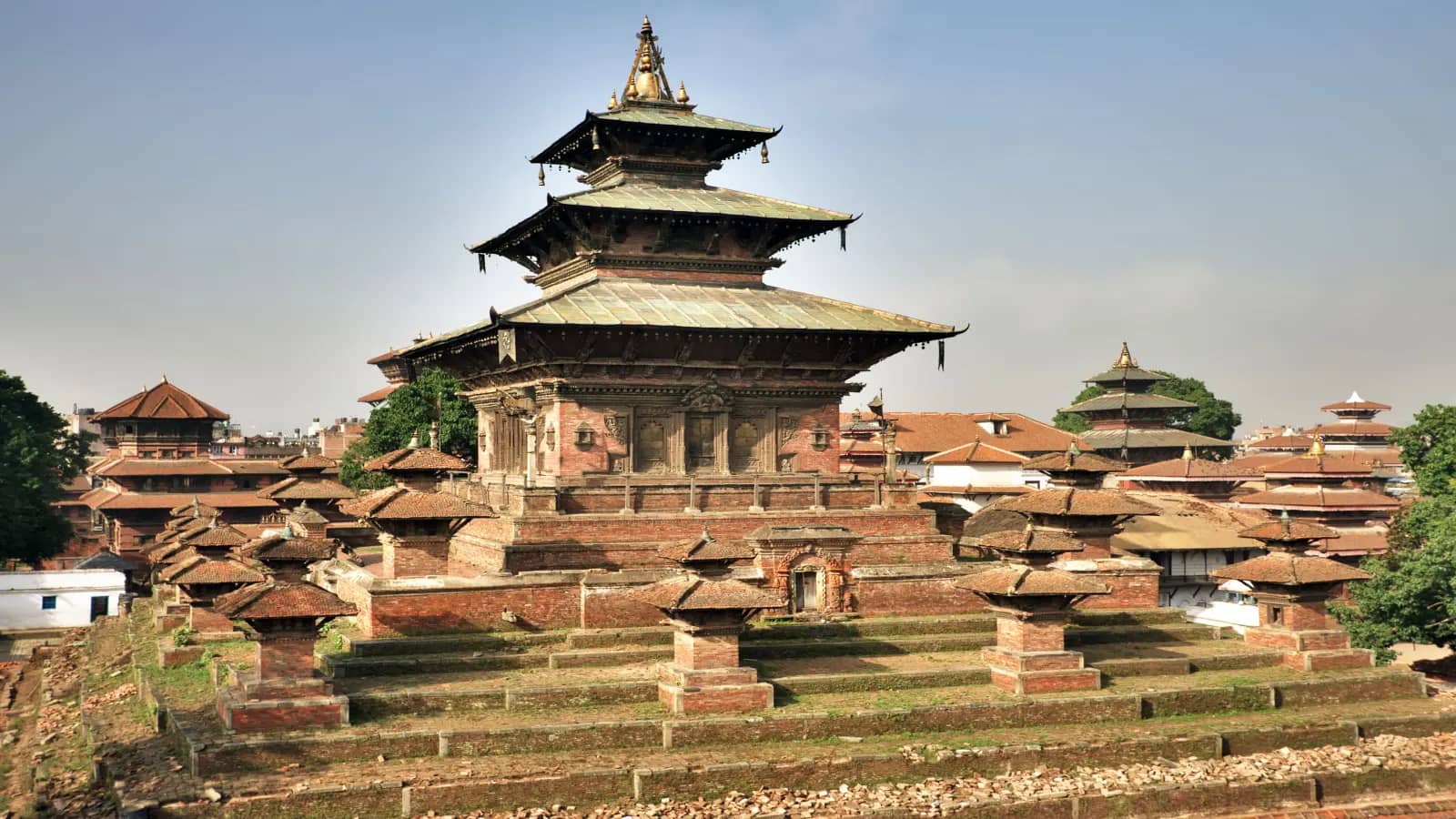
Photo: Pustam.EGR via Wikimedia Commons, licensed under CC BY 4.0. The 2023 photograph shows normal conditions in Rasuwa, not the August 2026 flood or current road access.
Major flash flooding struck Rasuwa district and the Nepal-China border area on August 26, 2026. Roads, communications and settlements in the northern corridor suffered severe damage. Chitwan and other areas were also affected, but this does not prove that every part of Nepal or every flight is closed.
Families planning beyond this incident should use the evergreen Nepal with kids guide for Kathmandu, Pokhara, Chitwan and Lumbini route choices, child restraints, altitude boundaries and venue planning. This page remains the owner of current flood, road, border and flight-status decisions.
The short answer: do not travel into Rasuwa, Rasuwagadhi, Timure, Syafrubesi, Langtang or another flood-affected area. Current official advice also says to avoid the Prithvi Highway, the Galchhi-Nuwakot-Rasuwa-Syafrubesi road and the Mugling-Narayangadh road until restrictions are removed. Kathmandu airport's official site was still displaying live flight information on August 28, but each flight and the journey to or from the airport must be checked separately.
This page was last checked at 12:44 PM WEST on August 28, which was 5:29 PM in Nepal. Conditions can change within hours. Follow Nepalese authorities and your airline, tour operator or embassy when their instructions differ from this article.
Nepal flood travel status at a glance
| Trip or route | Current decision | What is confirmed |
|---|---|---|
| Rasuwa, Rasuwagadhi, Timure, Syafrubesi and Langtang | Do not travel into the affected area | Government advisories describe major flood damage and further risk |
| Galchhi-Nuwakot-Rasuwa-Syafrubesi road | Avoid until restrictions are removed | New Zealand SafeTravel named this road in its August 27 warning |
| Prithvi Highway | Avoid until restrictions are removed | The same official warning names the highway |
| Mugling-Narayangadh road | Avoid until restrictions are removed | The same official warning names this road |
| Kathmandu airport | Check the exact flight | The official airport site displayed a live flight board, but that is not a guarantee for every departure or arrival |
| Delhi-Kathmandu bus | Confirm the dated departure directly | DTC reported specific August 28 and 29 trips held up; an indefinite shutdown was not established |
| Everest or Annapurna trip | Do not assume it is open or closed from national headlines | Check the exact airport, road, trail, guide and weather chain before leaving |
| Kailash route through Rasuwagadhi | Pause and contact the operator | The affected Nepal-China corridor is used by Kailash pilgrims |
Which part of Nepal is affected?
The clearest confirmed damage is in Rasuwa district and the Nepal-China border area along the Bhote Koshi corridor. Official travel advice names Rasuwagadhi, Timure, Syafrubesi and Langtang. Those places sit on access routes used for Langtang trekking and some journeys toward the Gyirong border crossing.
The FCDO Nepal warning also says Chitwan was affected. That matters because a Kathmandu itinerary can still encounter disruption well away from Rasuwa, especially on a road journey south or west.
Do not turn that evidence into either of these claims:
- "All of Nepal is closed."
- "Kathmandu looks normal, so the whole trip is safe."
Both are too broad. Nepal's mountain, road and air networks behave differently. A flight into Kathmandu can operate while a road, trekking start point or border corridor remains inaccessible.
Is Kathmandu airport open after the floods?
Tribhuvan International Airport's official website was displaying a current arrivals and departures board when this article was checked on August 28. The site did not present the airport as closed at that time.
That does not prove an individual flight will operate. Weather, aircraft positioning, airspace disruption elsewhere and ground access can still cause delay or cancellation. Use this sequence before leaving for the airport:
- Check the airline's app or flight-status page using the booking reference.
- Compare it with the Tribhuvan International Airport flight board or the Civil Aviation Authority of Nepal flight-status page.
- Ask the accommodation or driver whether the planned road to the airport is usable.
- Keep the airline's disruption message, receipts and travel-insurance policy offline.
Do not travel to the airport only because a third-party tracker says "scheduled." Scheduled is not the same as departed, and an operating flight does not confirm safe road access from another district.
Should you cancel, pause or reroute your Nepal trip?
Langtang, Syafrubesi and Rasuwa
Pause the trip. Do not try to reach a trailhead, lodge or pickup point in the affected corridor. Contact the trekking company and insurer from a safe place. Ask for the latest written status of the road, guide, accommodation and permit arrangements.
Do not substitute an unofficial map or a driver's confidence for an authority lifting restrictions. A route that appears passable on a map may have damaged bridges, unstable slopes or no emergency access beyond the visible point.
Kailash and Manasarovar through Rasuwagadhi
Contact the pilgrimage operator before moving toward the border. The August 27 SafeTravel flood notice identifies the Nepal-China border area as a corridor used by Kailash pilgrims and says not to travel into affected areas.
Ask the operator to identify the exact crossing, current location of the group, transport provider, revised accommodation and emergency contact. A different border route should only be accepted when the operator and relevant authorities confirm it, not because someone forwards a social post suggesting a detour.
Kathmandu to Pokhara or Chitwan by road
Do not start the road journey while the named restrictions remain in place. The Prithvi Highway and Mugling-Narayangadh road are central to common Kathmandu, Pokhara and Chitwan itineraries. A bus ticket or private-car booking does not override a road warning.
Ask the operator whether the service is cancelled, delayed or diverted, and which official notice supports the answer. If a domestic flight is offered instead, check the flight itself and the roads at both airports. Keep an extra night in the itinerary rather than building a same-day international connection after a disrupted transfer.
Everest and Annapurna
The Rasuwa warning does not automatically close Everest or Annapurna. It also does not prove they are unaffected. A trekking decision still depends on the domestic flight or road transfer, trail weather, landslide risk, guide, lodge access and rescue capacity.
Check the exact chain. For Everest, that may include the Kathmandu-Lukla flight and the guide's route report. For Annapurna, it may include the road or flight to Pokhara and the trailhead transfer. If one link is unverified, do not leave Kathmandu merely because the trek itself is far from Rasuwa.
Is the Delhi-Kathmandu bus running?
The answer depends on the departure date. Delhi Transport Corporation's public timetable still lists the international route. A later DTC communication, reported on August 28, said these specific services were held up:
- the DTC Delhi-Kathmandu and Kathmandu-Delhi trips scheduled for August 28
- the Nepali operator's Delhi-Kathmandu trip scheduled for August 29
That evidence supports dated disruption, not an indefinite closure. If traveling after August 29, check directly with DTC or the ticket issuer. Confirm the operator, departure point, date, border crossing and refund or rebooking position in writing.
Do not rely on an old DTC timetable alone. Do not rely on a headline that drops the affected dates either. The useful status is the one attached to the exact bus you booked.
What to do if you are already near the affected area
Move away from riverbanks and low ground and seek higher ground when local authorities instruct you to do so. Do not drive through floodwater, cross a damaged bridge on foot or enter the area to retrieve luggage. Follow evacuation instructions even when a map suggests a shorter route.
Use this contact order:
- 1144: Nepal's dedicated tourist and emergency hotline, accessible in Nepal.
- 1234: the Nepalese-language toll-free emergency number published after the flood.
- 100: Nepal Police.
- Your registered guide, travel company or accommodation.
- Your embassy or consulate's current emergency line.
The Nepal Tourism Board Tourist Police page lists local units and numbers. A listed unit in an affected district may itself face communications or access problems, so start with the national hotlines when possible.
Indian nationals can also use the emergency numbers currently published by the Embassy of India in Kathmandu: +977 985 131 6807, +977 970 910 7500 and +977 981 032 6117. The embassy says all three accept WhatsApp.
How to contact someone you cannot reach
A silent phone does not prove that someone is missing. Power loss, damaged towers, a flat battery and overloaded networks can all stop a message. Use one clear process instead of sending dozens of calls from several people:
- Send a short message asking for location, safety and battery level.
- Contact the person's guide, hotel or tour company with their full name, booking reference and last confirmed location.
- Call Tourist Police on 1144 and the relevant embassy emergency line.
- Nominate one family contact to collect updates and prevent conflicting reports.
- Record the time, source and exact wording of each update.
Do not publish passport numbers, medical records or unverified missing-person claims in a public group. Share identifying details with the authorities and consular team through their official contact route.
If you are safe, send one message to family before posting photos or forwarding alerts. Include the current location, travel company and next check-in time.
Booking, insurance and refund steps
Take screenshots of the official warning and the operator's cancellation or change notice while they are current. Ask each supplier for its position in writing before accepting a voucher or alternative route.
Keep these records together:
- booking confirmation and fare conditions
- cancellation, delay or road-closure message
- replacement transport and accommodation receipts
- travel-insurance policy and assistance number
- passport and visa copies stored securely
- medication list and prescription details
Coverage depends on the policy wording and when the trip was purchased. This article cannot determine whether a flood, government warning or missed connection qualifies under a particular policy. Contact the insurer before paying for a major alternative unless immediate safety requires action.
Tools and information to save offline
| Tool or file | Why it matters | Offline action |
|---|---|---|
| Airline app and airport flight board | Confirms the booked flight rather than a national rumor | Save the booking reference and latest status |
| Official travel advice | Shows named affected roads and districts | Screenshot the dated warning |
| Nepal Tourist Police details | Provides 1144 and local units | Save 1144, 1234 and 100 in contacts |
| Maps app | Helps identify rivers, higher ground and alternative safe meeting points | Download the relevant district before moving |
| Weather and flood alerts | Tracks further rain and local warnings | Enable alerts for the actual route, not only Kathmandu |
| Tour operator messages | Records the revised plan and who authorized it | Export or screenshot the conversation |
| Insurance documents | Supports assistance and later claims | Save the policy and international phone number |
| Group messaging | Gives family one consistent update | Create one small check-in group |
An offline map is a backup navigation tool, not proof that a road is open. The offline maps travel index explains how to choose a map that retains useful details without service.
Mobile data during the Nepal flood disruption
A Roaming eSIM can provide data for flight checks, route messages, embassy contacts and family updates while the usual SIM remains installed. It cannot restore a damaged mobile tower, guarantee reception in a mountain valley, replace an emergency hotline or make a restricted road safe.
The public Roaming eSIM catalog returned 14 Nepal plans when checked on August 28. A current 1 GB for 7 days example cost USD 3.88 and listed Ncell and NT Mobile with 4G. Several plans supported top-up, but not every Nepal package was reloadable, so check the selected card before purchase.
The Nepal Roaming eSIM is the direct country option. The Asia regional plan below includes Nepal and may suit an itinerary continuing elsewhere in Asia. The practical advantage over depending only on hotel or airport Wi-Fi is a data profile that can move with the traveler where its listed local network is available. It is still subject to local infrastructure, congestion, terrain and the selected plan.
Install and test the profile while a stable Wi-Fi connection is available, but follow the selected package's activation instructions. Use the travel data calculator for the full trip, check whether the phone supports Roaming eSIM, and read when to install it before travel. Keep emergency numbers and the meeting plan offline even after mobile data works.
Ten Nepal flood travel questions answered
1. Is Nepal safe to visit after the August 2026 floods?
There is no useful countrywide yes or no answer. Do not enter Rasuwa and the Nepal-China border flood area, and avoid the roads named in current official advice. Check every other itinerary by its exact flight, road, trail and local authority status.
2. Is Kathmandu airport closed?
The official airport site displayed live flight information on August 28 and did not state that the airport was closed. Check the exact airline and flight because individual operations can still change.
3. Are flights to Nepal operating normally?
Do not assume normal operation from an open airport. Check the airline, airport board, transit airspace and road access to the airport. A scheduled status is not a departure guarantee.
4. Can I travel to Langtang or Syafrubesi?
No. Current official advice says not to travel into affected areas and specifically names Syafrubesi and Langtang. Pause the trek and contact the registered operator and insurer.
5. Can I drive from Kathmandu to Pokhara or Chitwan?
Current official advice says to avoid the Prithvi Highway and Mugling-Narayangadh road until restrictions are removed. Do not start the trip until the operator and authorities confirm the route.
6. Is the Delhi-Kathmandu bus suspended?
Specific DTC departures on August 28 and a Nepali operator departure on August 29 were reported held up. An indefinite route shutdown was not established, so travelers on later dates must confirm their exact bus.
7. What should Kailash pilgrims do?
Do not move toward Rasuwagadhi or the affected Nepal-China border corridor. Contact the registered pilgrimage operator for the group's location, crossing, revised transport and official authorization for any alternative.
8. Are Everest and Annapurna closed?
The current Rasuwa warning does not establish a blanket closure of either area. It also does not prove access is safe. Verify the domestic flight or road, trail, guide, lodge and weather chain separately.
9. Which number should a tourist call in Nepal?
Call 1144 for the dedicated tourist and emergency hotline. Nepal Police is 100, and the post-flood Nepalese-language toll-free number is 1234. Use the relevant embassy line as well.
10. Will a Roaming eSIM work during the floods?
It can connect through a listed local network where infrastructure, power, terrain and congestion allow. It cannot guarantee service in Rasuwa or another damaged area. Save maps, contacts and the safety plan offline.
Final decision checklist
- Do not enter Rasuwa, Rasuwagadhi, Timure, Syafrubesi, Langtang or another affected area.
- Avoid the three roads named in the current SafeTravel warning until restrictions are removed.
- Check the exact flight with the airline and official airport board.
- Confirm a Delhi-Kathmandu bus by operator and date.
- Ask a trekking or pilgrimage operator for written route evidence.
- Save 1144, 1234, 100 and the relevant embassy number.
- Send family one clear location and check-in message.
- Keep bookings, warnings, receipts and insurance details offline.
- Download maps, but never treat a map as proof that a road is open.
- Treat mobile data as a communication backup, not emergency infrastructure.
This article uses current government travel advice, Nepal Tourism Board contacts, official transport status pages and dated operator reporting. It separates confirmed facts from unresolved conditions and omits changing casualty totals. It was last verified on August 28, 2026. This same URL will be updated when authorities materially change the road, border or flight guidance.